Case
The Origins of McKinsey
Listen to this case (Counter-Positioning)

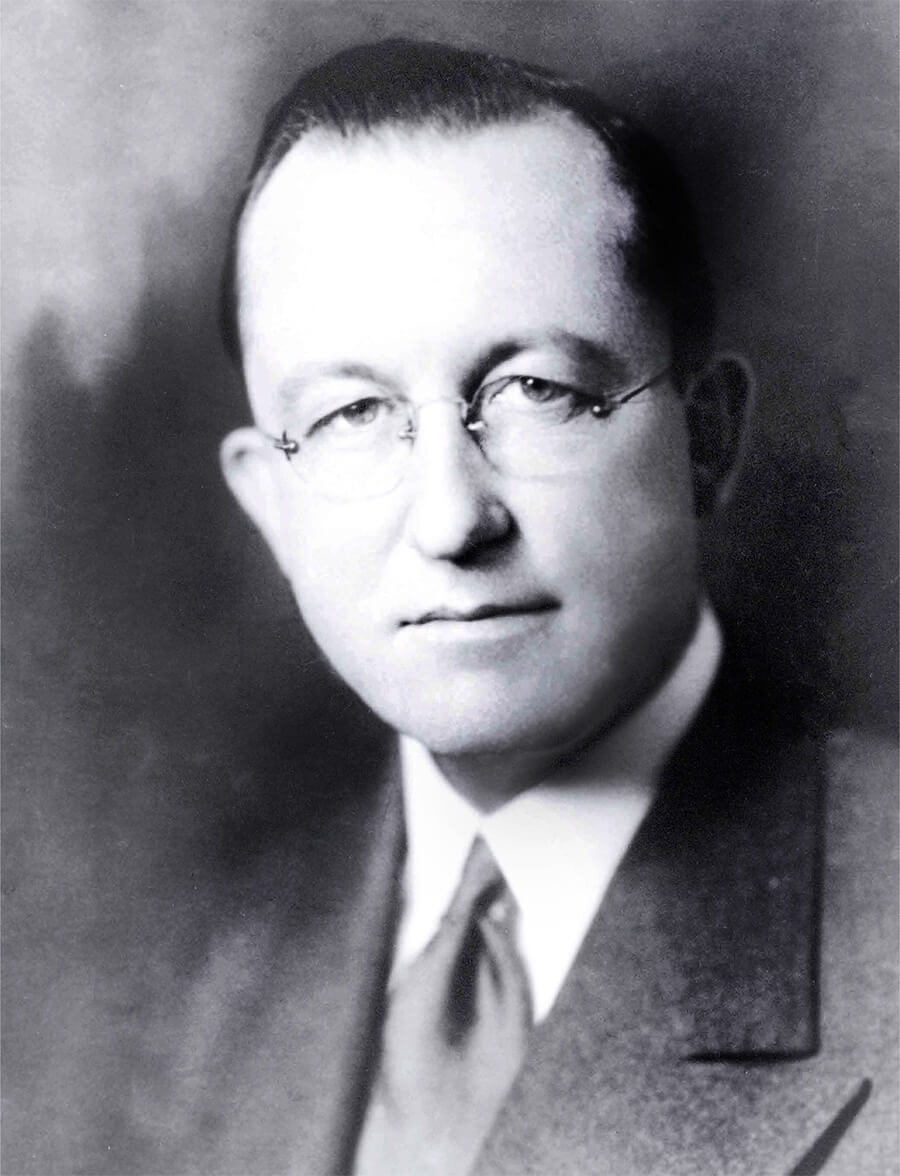
Most people know McKinsey — the storied global consulting firm. Fewer people know that James Oscar McKinsey, the firm's founder, was a mathematical prodigy born and raised in a small farmhouse. So how did a farmer’s son end up starting one of the most influential, most powerful consulting firms in the world?
Born in 1889, McKinsey grew up in the Ozark mountains of Missouri. He possessed a natural talent for numbers. Multiple biographies claim that McKinsey’s high school principal hired him to teach algebra to his own teachers whilst still a student. This was likely apocryphal, but it was a story that McKinsey himself liked to tell. He went on to earn a degree in pedagogy, followed by a law degree from the University of Arkansas. McKinsey then taught bookkeeping in St. Louis for a year, before pursuing a Bachelor of Philosophy and a Master of Arts in commerce from the University of Chicago. In Duff McDonald’s 2013 book The Firm, McDonald described James McKinsey’s self perception as ‘a man with lessons to give’.
The United States Army drafted McKinsey in 1917. Assigned to the Ordnance Department as a lieutenant, McKinsey spent the First World War traveling across the country to meet with military suppliers. He found a completely disorganised supply network. The chaos extended beyond the army, reflecting widespread administrative challenges across American industry.
By 1913, the US produced over a third of the world's industrial goods. Figures like Andrew Carnegie and Henry Ford created huge enterprises, dominating through size while lacking the administrative systems to manage their far-flung operations. Between 1895 and 1904, 1,800 companies were crunched into 157 megacorporations like U.S. Steel and General Electric. These businesses became empires that a single office in a single city could no longer manage. Giants like General Motors and Standard Oil struggled with a tension between strict top-down control over capital and the local freedom needed to keep managers motivated.
While Henry Ford revolutionised how cars were made, Alfred P. Sloan, President of General Motors, revolutionised how they were sold. By the late 1920s, the car market was maturing, and Sloan realized that people wanted choice. While Ford stayed stagnant, Sloan segmented the market into five brands: Buick, Cadillac, Chevrolet, Oldsmobile, and Pontiac. He then introduced a pioneering idea to allow customers to buy those cars on credit. Together, both moves snatched the industry lead from Ford and held it until the 1980s. Sloan belonged to a new class of professional managers who ran massive enterprises they did not own. Without the absolute authority of a founder, these executives needed outside experts to validate their strategies and prove they were utilising modern administrative practices.
It was into this shifting corporate landscape that McKinsey returned from his military service in 1918. Taking a teaching position at the University of Chicago, he published four textbooks. He also obtained a master's degree in accounting. His 1922 release, Budgetary Control, was a breakout hit. It turned accounting on its head, transforming it from a record of history into a management tool aimed at the future. The methods outlined in the book were eventually adopted by 80% of American businesses using corporate budgets. One early reader was William Hemphill, the treasurer at Armour and Company.

Forward-Looking Estimates
William Hemphill sat in his Chicago office reviewing financial reports from previous month's operations. As the treasurer of Armour and Company, he oversaw 60,000 employees across 20 slaughtering plants. The company relied on high volume because it had low margins, meaning a two-day delay in processing could turn a profit into a loss. Traditional accounting gave him historical answers but provided no method for planning future capital allocation.
The United States gross national product grew by 42 percent between 1922 and 1929. Emerging industries like radio manufacturing competed for the same regional labor pools, accelerating the broader economy. Inside Armour, livestock arrived at the facilities faster than the administrative systems could process them.
Hemphill commissioned James McKinsey in 1925 to install the framework from Budgetary Control across the entire Armour operation. McKinsey's team worked with plant managers to develop department budgets based on monthly estimates rather than historical tallies. These projections gave the treasurer the visibility required to allocate capital in advance. The results were so convincing that it served as the founding client for James O. McKinsey & Company, with Hemphill himself — the treasurer of one of Chicago’s largest meatpacking giants — resigning his position to join his former consultant.
McKinsey taught at the University of Chicago throughout the firm's early years. In 1926, age 37, he was appointed as a professor of business policy. By the end of the decade, the firm’s professional staff reached 15. Andrew Tom Kearney soon joined as the first partner, arriving from Swift and Company, Armour's chief rival. By 1934, the firm moved its operations to the 41st floor of the new Field Building on LaSalle Street, built by the estate of Marshall Field, placing McKinsey in the heart of Chicago’s financial district and its most iconic commercial landmarks.
At that time, Marshall Field was the Midwest's largest department store. By 1929, the retailer's total sales reached $179.7 million. The company's president, James Simpson, had started as an office boy and risen through the ranks to lead the retail empire. However, the wholesale division struggled. Independent retailers were disappearing as chain stores bought directly from manufacturers. Wholesale operations were scattered across 13 separate warehouses throughout Chicago.
Simpson planned to bring together these operations. He broke ground in August 1928 on the Merchandise Mart. It was a $35 million bet designed to save the wholesale division, and was slated to be the largest building in the world. Construction continued through the final year of the Roaring Twenties.
As the building neared completion, the market turned.
Thirty billion dollars disappeared in the weeks following the October 1929 stock market crash. That sudden loss exceeded the total United States expenditure for World War I. The stock market continued to fall until it lost 89 percent of its total value by July 1932.
In 1930 alone, over 1,352 banks closed, more than any other time in US history; double, in fact, the total failures during the whole 2008-2013 Great Recession. That same year, the Merchandise Mart opened.
The Purge
Marshall Field and Company posted financial losses for the next four years. The retailer lost $5 million in 1931 and $8 million the following year. Across the country, industrial clients canceled expensive consulting engagements. Manufacturing plants sat completely idle.
James McKinsey drafted the General Survey Outline in December 1931. The 30-page document provided a checklist to evaluate corporate finances, daily operations, competitive positioning, and management depth. Banks hired the firm to evaluate which companies could be saved versus liquidated. The survey generated enough revenue to keep the firm afloat during the leanest years of the Great Depression.
President Franklin D. Roosevelt signed the Glass-Steagall Banking Act in 1933. The law explicitly prohibited commercial banks from performing organizational consulting. Subsequent securities acts in 1933 and 1934 established the Securities and Exchange Commission and imposed strict due diligence requirements, forcing underwriters to hire external consultants. The number of management consulting firms grew from 100 in 1930 to 400 by 1940. McKinsey opened a New York office at 52 Wall Street as banks and underwriters sought outside help to follow the new rules.
Marshall Field accumulated $13.2 million in losses by late 1934. An $18 million loan repayment came due. The wholesale division had lost money for eight consecutive years. The company's textile mills consumed capital without generating returns. The board of directors hired McKinsey to apply his General Survey Outline to the entire retail empire.
A team of 12 consultants were deployed to audit the operation. The group included Marvin Bower, the most senior consultant from the new New York office. They reviewed 752 separate stores across 32 states alongside the textile mills and the scattered wholesale network. The spring 1935 recommendations were severe: liquidate the wholesale division, sell the mills, and convert the Merchandise Mart to commercial real estate. James Simpson sat on the board as the consultants presented a plan to destroy what he had built.
The board adopted the strategy and requested James McKinsey to implement the cuts himself. He agreed. McKinsey became the chairman of Marshall Field & Company and proceeded to implement his own advice. He fired 1,200 employees in one fell swoop — a move that came to be known as McKinsey’s Purge. The work left him physically run down. He told a colleague: “Never in my whole life before did I know how much more difficult it is to make business decisions myself than merely advising others what to do”. The Marshall Field engagement had damaged his reputation and the stress led to the pneumonia that caused his death. James McKinsey died in November 1937 at age 48.
The Split
Shortly after James McKinsey's death, the firm's massive engagement with U.S. Steel ended. The project had accounted for 55 percent of all billings. Also, McKinsey’s Purge had hurt the firm’s reputation, resulting in a $57,000 loss at the end of the year. At this point, the firm’s two leading partners diverged in direction. Tom Kearney wanted a regional Chicago practice using experienced accountants. Marvin Bower wanted a national firm.
The partnership split in 1939. Marvin Bower took over the New York practice, with the intention of growing the firm (and reinventing the nature of management consulting).. He wanted consulting to be a distinct, prestigious profession, like law. Tom Kearney kept the Chicago office and continued hiring experienced accountants. In 1947, it renamed itself A. T. Kearney and company. Today, it continues to exist, albeit under the name ‘Kearney’.
It would be Bower who would take the McKinsey name and who would grow it into the internationally famous firm we know today. The era of James O. McKinsey had come to an end. But the era of McKinsey, the firm, had just begun.
Sources
Goldman Sachs. "The Glass-Steagall Act Separates US Commercial and Investment Banking Activities." Accessed April 27, 2026. https://www.goldmansachs.com/our-firm/history/moments/1933-glass-steagall-act
McDonald, Duff. The Firm: The Story of McKinsey and Its Secret Influence on American Business. Simon & Schuster, 2013.
McKinsey & Company. "History of our firm." Accessed April 27, 2026. https://www.mckinsey.com/about-us/overview/history-of-our-firm
StrategyU. "Marvin Bower: the man who built McKinsey into a profession." https://strategyu.co/marvin-bower/
Federal Reserve History. "Stock Market Crash of 1929." https://www.federalreservehistory.org/essays/stock-market-crash-of-1929
National Bureau of Economic Research. "The Economics of World War I." https://www.nber.org/digest/jan05/economics-world-war-i?page=1&perPage=50
Encyclopedia of Chicago. "Union Stock Yard." http://www.encyclopedia.chicagohistory.org/pages/2554.html
Smithsonian Libraries. "Armour and Company, 1919." Accessed May 26, 2026. https://library.si.edu/digital-library/book/armourcompany19100armo
Federal Deposit Insurance Corporation (FDIC). "A Brief History of Deposit Insurance in the United States." https://www.fdic.gov/bank/historical/brief/brhist.pdf
Federal Deposit Insurance Corporation (FDIC). "Crisis and Response: An FDIC History, 2008–2013." https://www.fdic.gov/resources/publications/crisis-response/book/crisis-response-overview.pdf
Internet Archive. "Armour and Company Yearbook, 1919." https://archive.org/details/armourcompany19100ar/page/n5/mode/2up
Saddle and Sirloin Portrait Foundation. "Frank Edson White, Inducted between 1920 and 1936."https://www.saddleandsirloinportraitfoundation.org/post/frank-edson-white-inducted-between-1920-and-1936