Case
The Creation, Rise, and Loss of Aman
Listen to this case (Branding)
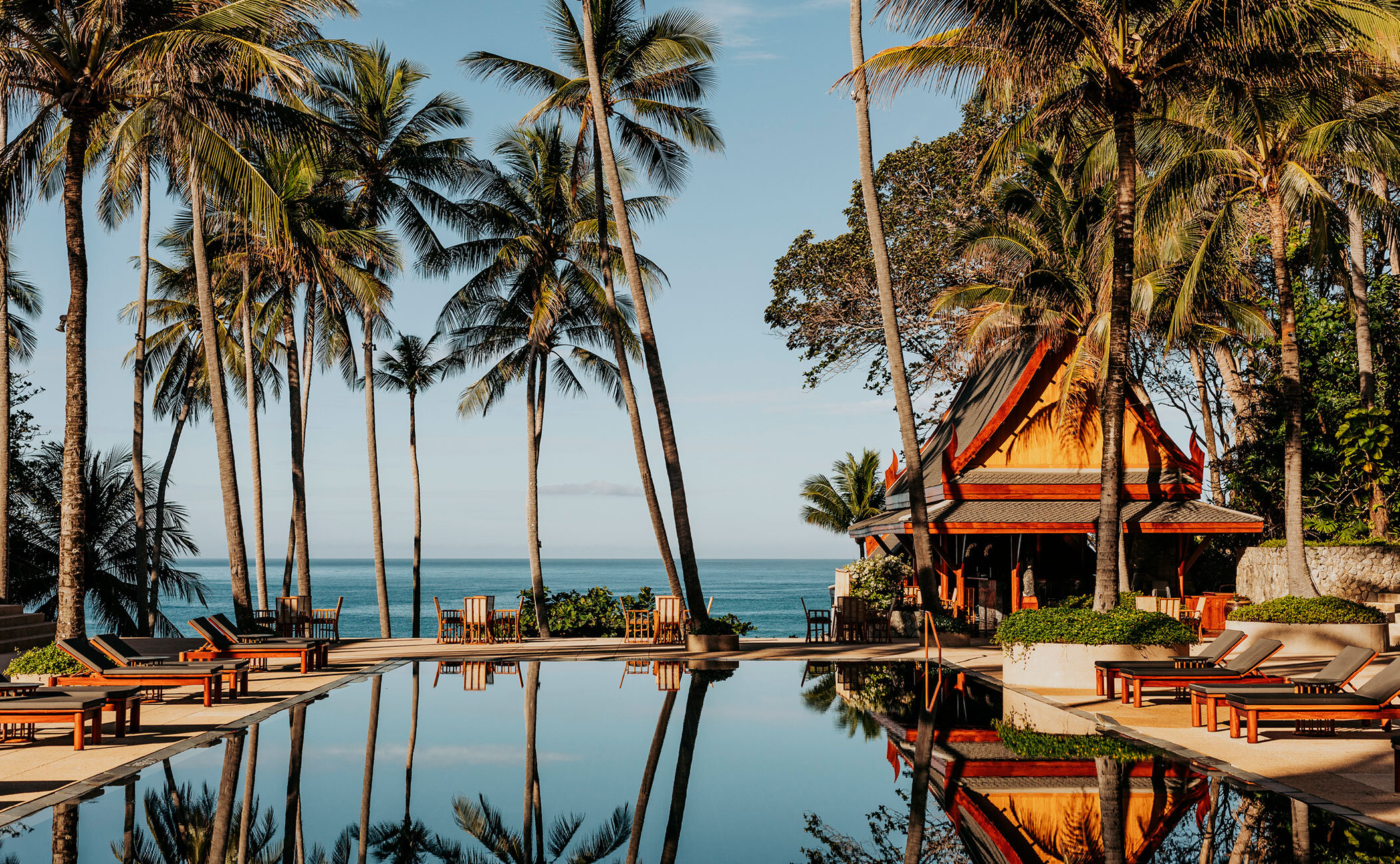
Revellers were gathered around the black-tiled swimming pool at Amanpuri in Phuket, Thailand, just before midnight on December 31, 1999. The original Amanresorts property opened its doors on New Year’s Day 1988. Under founder Adrian Zecha’s leadership, the “boutique” hotel was now legendary. Its buildings fused distinctive Thai elements with modern, clean lines, and blended seamlessly with Phuket’s Pansea beach. “The premise of my resorts,” Zecha once said, “is that you should feel as if I have asked you to be a guest at my country house for the weekend." Sitting among undisturbed coconut trees above a white-sand beach, the Amanpuri did just that.
In 1999, Aman (meaning “peace” in Sanskrit) had an estimated operating profit of $41,000 per room, while the world’s largest luxury hotel chain, Four Seasons, earned $5,500 per room. Speaking with Forbes Magazine, Four Seasons founder Isadore Sharp said: “We are a different kind of company,” before conceding, “but Zecha does have a following."
That year, the company’s estimated annual sales were $50 million. Operating profits were believed to be $15 million. Aman was consistently awarded top industry honors, including those given out annually by Zagat Survey, The Gallivanter’s Guide, and Andrew Harper’s Hideaway Report. Harper himself said: "Amanresorts still charges what people consider outrageous rates, but the occupancy rates are there." Soon afterwards, Amanresorts would open its 11th resort, Amanjena, in Marrakech, Morocco.
Zecha had shunned conventional marketing tactics. The company never made a press release. Its resorts were known for very discrete branding — most Amans barely had any signage, and little-to-no onsite branding. Still, self-described “Amanjunkies” were traipsing across the globe to stay at Zecha’s hotels. Honeymooners, monarchs, and movie stars were amongst their ranks. Whether they scrimped and saved or flew in on their private jet, the Amanjunkies desired the same things: rest, relaxation, tranquility, and privacy, with perhaps a dash of adventure. According to Forbes: “The Zecha formula has become so successful that the Ritz-Carlton, Rosewood, Oberoi, Banyan Tree and, yes, the Four Seasons have launched imitations,” adding that Aman has been “imitated but not equaled.”
That New Year's Eve, as the clock ticked down on the 20th century, Amanpuri’s guests were savoring the sweet tropical air, enjoying cocktails and conversation beneath a starry sky. These guests were paying a minimum of $600 a night, an exorbitant amount at the time. They toasted the conclusion of one millennium and the beginning of another. A few minutes before a private fireworks display began, longtime Amanpuri general manager, Anthony Lark, stepped forward. The Aussie addressed the crowd: “Thank you all for coming to celebrate this wonderful moment," continuing, "as many of you know, one of us couldn't be here tonight, and his name is Adrian Zecha, but he is with us in spirit. Now, let's celebrate." Brilliant colors lit up the sky as booms echoed across the bay.
This was the first time Adrian Zecha hadn’t rung in the New Year at Amanpuri. Zecha was no longer Amanresorts' chairman. Amid an ongoing battle with investors, he had stepped down in October 1998. The company kept it secret to avoid damaging Aman’s mystique. And though he maintained a 6% stake, Zecha had lost control of his company for the first time. It wouldn’t be the last.
How did Aman emerge — seemingly out of nowhere — to set the standard for excellence in the luxury resort industry? The story traces back to the Dutch East Indies, where Adrian Zecha’s ancestors flourished under colonial rule.
The Chinese Gentry
Adrian Zecha was born in Sukabumi, West Java, in 1933. He was born into the Lauw-Sim-Zecha family, a clan of wealthy landowners who rose to prominence under Dutch colonial rule in what is now Indonesia. Zecha grew up surrounded by wealth.
Zecha’s great-great-grandfather, Lauw Ho, was ethnically Chinese and a highly successful pachter (revenue) farmer. By the end of his life, Lauw Ho would become one of Batavia's (now Jakarta's) wealthiest men. His sons, Lauw Tek Kang and Lauw Tek Lok, achieved the political standing their father never could, when they were appointed Luitenants der Chinezen (Chinese Lieutenants). This granted the brothers Cabang Atas status (directly translated, this meant ‘upper branch’, but more specifically it referred to the Chinese Gentry in Dutch Indonesia).
To understand Zecha’s upbringing, it’s important to consider how critical this was to the family’s standing. Under Dutch colonial rule, members of the Chinese gentry were given sweeping powers. Many used those powers to suppress and effectively box out lower-status Chinese, whom the Dutch imported for labor. According to Joe Studwell’s 2007 book, Asian Godfathers:
The Dutch picked up on a tradition begun by the Portuguese – the first European power in south-east Asia – to give the foremost person in the Chinese community the military title of captain. This was expanded into a complete officer system of Majoor, Kapitan, Luitenant – a hierarchy that persisted for two centuries. The Chinese officers kept a Chinese census, levied Chinese taxes and fines, issued permits, and their opinions were important in court cases. They were extremely powerful and, simultaneously, usually held the big revenue farms and worked as compradors – intermediaries – for the Dutch. Moreover, ordinary Chinese were compelled to live in designated Chinese quarters of approved towns and travel only with permission. These restrictions did not apply to the Chinese élite and their revenue farm employees. The cabang atas, or ‘highest branch’, as the Chinese élite came to be known, had the run of the country at the same time that their compatriots – and potential competitors – were theoretically confined to urban ghettos. The pass laws were often ignored, but the officers had more than enough power, including quasi-legal authority, to make life deeply unpleasant for anyone who crossed them.
Lauw Tek Kang and Lauw Tek Lok leveraged their position for greater financial gain, further elevating the family’s wealth by acquiring critical agricultural land around Batavia. Lauw Tek Lok married Louisa Zecha, an Indo-Bohemian woman. Although the partnership raised eyebrows among the ruling class (colonial rulers strongly frowned on interracial marriage), Lauw Tek Lok continued serving as Lieutenant, and the couple had five children. After Lauw Tek Lok died in 1882, Louisa Zecha married Sim Keng Koen, her deceased husband’s former secretary. Sim was appointed Kapitein der Chinezen (Chinese Captain) of Sukabumi, making him head of the outpost’s Chinese Gentry. For decades after, the family maintained its high socioeconomic position, with Zecha’s grandfather managing their tea plantations and other business ventures that flourished during the colonial era.
Aristide William Lauw-Zecha, Adrian Zecha’s father, became the first Indonesia-born graduate of an American university, earning his degree from Iowa University in 1923. He then returned to Indonesia, where he thrived as a major plantation operator. The connections Aristide William Lauw-Zecha made in America helped ensure that all five of his sons attended American universities. In a 2019 interview with Hotels Magazine, Adrian Zecha said: “Why don’t you tell them that I am the luckiest guy in the world?” adding, “I (always) say, I’m not very bright, but I’m not dumb, but I’m very, very lucky… Luck means you are given something that you never expected and never thought of – not that you were planning it. After that, of course, you have to work.”
Zecha obtained his bachelor’s degree from Dickinson College in 1952. At his father’s urging, he briefly studied medicine at Johns Hopkins University before dropping out to earn a master’s degree in Political Science from Columbia. Zecha aced the Indonesian civil service exam, then defied his father’s wishes again to pursue a career in the written word. He worked for United Press International before landing a job at Time-Life. In 1956, he was writing for the magazine in New York City when Indonesian President Sukarno nationalized all private estates, including his family’s holdings. The Zechas were forced to flee to Singapore, leaving much of their wealth behind. Still, the stage for Zecha’s success had been set. He had connections, and he had impeccable taste.
In Asian Godfathers, Joe Studwell cites Zecha:
One-generation, rags-to-riches stories are exceptional. The domestic economies of south-east Asia are far too closely controlled by governments to make such a thing likely. As Adrian Zecha, a Chinese–Dutch–Malay–Czech–Thai–German–Indonesian luxury hotelier and socialite who knows most of the contemporary tycoons, says of the path to godfatherdom: ‘In one generation it is very difficult because it is not an open economic society. You get that in America. To a lesser extent in the UK. To a lesser extent still in continental Europe.’ Wang Gungwu, a prolific writer on the overseas Chinese based at the National University of Singapore, concurs: ‘I have yet to find a businessman who started as a coolie.’
By 1960, Adrian Zecha had set out on his own, establishing print publications that would cover art and business travel in Asia for years to come. In 1961, with Rupert Murdoch's backing, Zecha launched Asia magazine, a weekly color supplement to newspapers that ran until 1998. He built a successful career as both a journalist and a publisher. Along the way, he cultivated old relationships and built new ones that would later help him establish Aman. Per Studwell:
Relationships, as the luxury hotelier Adrian Zecha observes, are critical in South-East Asia because societies are so élite-driven. ‘If you are a developer,’ he says, ‘the chances are the planning guy was at school with you.’ It is certainly true that a tiny number of educational establishments, usually colonial in origin, are the common provenance of élites from Hong Kong to Malaysia to Singapore.
Zecha would use this knowledge to his advantage. In 1972, after cashing out on his publishing business, Zecha took a ski trip to Europe. There, he chatted with Bill Marriott, Executive Chairman of Marriott Hotels. Although Zecha had no industry experience, Bill Marriott asked him to scout potential locations for Marriott properties in Asia, saying: “Just make the deals for us.” Zecha delivered, using his connections to find suitable locations in Singapore, Hong Kong, and Bangkok. However, with the global economy floundering due to the 1973 oil crisis, Marriott pulled out. But Adrian Zecha’s interest had been piqued.
Soon, he partnered with Robert Burns and Georg Rafael, who had just established Regent Hotels, Asia's first five-star hotel chain. Over the next 14 years, the trio built and managed the company’s 12 properties.
Zecha got his feet wet by closing the deal for Regent’s flagship property in Hong Kong, though he’s quick to point out that Burns and Rafael should “get the credit for the fantastic reputation that Regent built.” The respect was mutual; Rafael said of Zecha: “You can only admire his vision and creativity.”
In 1986, Zecha sold his 30% stake in Regent to Robert Burns. For his role in the company, Zecha would often be called a co-founder of Regent Hotels. He received $30 million. Now, at 53, Adrian Zecha was spending most of his time in his Bali villa. He also kept a beautifully furnished residence in Hong Kong. Both homes would come to play a role in the Aman story.
Zecha’s Bali villa had been designed by the legendary architect and inventor of “Tropical Modernism,” Geoffrey Bawa. Zecha later brought in one of Bawa’s acolytes, Edward Tuttle, to renovate it. Tuttle would become a legendary architect in his own right. Zecha seemed to have everything he could ever want. Despite his comfortable surroundings, his contempt for the endless Indonesian monsoon rain led him to look for a new place to rest his head.
The Accidental Hotel
Adrian Zecha set out for Phuket, Thailand’s largest island. Situated in the Andaman Sea, it was a tropical paradise with a monsoon season that was the exact opposite of Bali’s. Zecha decided the island was the ideal place to build his new villa; the idea was to decamp to Phuket when Bali was rainy, and then relocate to Bali when Phuket was having its monsoon. Years later, Zecha’s friend, the private equity investor Anil Thadani, who had met him in Hong Kong, recounted:
“So, Adrian was a friend in Hong Kong. We were once in Phuket. We had lunch at a kind of an old French hotel that used to exist on Pansea Beach. It was called The Pansea. And after lunch, we just went for a walk on the beach, and then we saw this coconut plantation, and we kind of hiked up the side of the plantation. And it was one of those things that ... You know, I’m not a believer in geomancy and feng shui and stuff, but I have to say that when both of us climbed up that coconut plantation, we stood there amongst the coconut trees, we were both overcome with the same kind of sense of well-being. Like, what a great spot. So Adrian said, “Why don’t we see if we can buy some land here and we build a couple of villas here, and we’ll each have a nice home in Phuket?” And I thought that was a good idea, and land was really cheap. I’m talking about 1985 — ’84 or ’85. So we got a friend of ours from Bangkok to start, because the land belonged to 14 coconut farmers, so you had to negotiate with more than one. And so a friend of ours in Bangkok started the negotiation. As we were doing that, we realized that if we just built these two villas here, who would look after them? I mean, like, what happens when the roof leaks? What happens when the toilets don’t flush? You know, we’re gonna be stuck. So then Adrian, who’s been one of the founders of Regent, so he had that little bit of a hotel thing, and we (meaning Thadani’s fund) had also invested with him a little bit in Regent. He said, “Look, it’s so cheap here. Why don’t we see if we can buy this entire headland? Then we’ll build a small hotel, not because we want to be in the hotel business, but because then the hotel will have engineering, housekeeping, and they can look after the villas.” So the idea for Aman, there was no business plan. There was no intent to create a worldwide luxury brand. It was just really to build a hotel to look after our villas. And that’s exactly what we did.”
Zecha later told Hotels Magazine he initially thought the land was beautiful, but a “bit sinister.” However, once he scaled the ridge above the beach and took in views of the Andaman Sea, his mind was made up. An old friend, a cousin of Thailand’s former king, offered to help secure the land deal. “I had to buy it piece by piece, by piece, by piece,” Zecha said. It wasn’t long before he discovered that bringing water to the property would be a problem. As he put it to Harvard Business School case writers: “The cost of bringing in water would have to be shared so the solution would be additional villas for friends. Since my friends were spread across Asia, Europe, and America, it seemed like common sense to build a small hotel that could look after these villas and would be the center of a shared social life.”
For this first property, Zecha reached out to Edward Tuttle. After hopping a flight to Thailand, Tuttle was in awe of the little bay’s natural beauty. From there, the pair got to work. Per HBS: “We didn’t sit across from each other at a conference table trying to design something the market was asking for—the market didn’t know it wanted something new until it saw it. Our goal was simply to build something that we each would like to live in,” recounts Zecha. As Tuttle remembers it: “Aesthetically, Adrian and I think alike. We wanted the hotel to express an attitude that was far from the commercial approach that was typical in the high-end hotel industry.”
There was just one issue. Nobody wanted to fund the project. At the time, luxury hotels were all monstrosities with hundreds of rooms. It was understood that hotels needed minimum viable scale — a minimum number of rooms — in order to thrive. Who in their right mind would build a boutique hotel for jet-setters? Per Forbes Magazine:
Even Adrian's closest Thai banking contacts refused to lend him the $2.5 million he needed, a conservative amount that covered buying the land and half the cost of constructing the resort. In the end, Zecha, Thadani and other partners in Arral built the Amanpuri with their own money, $5 million for 40 rooms--at $125,000 a room, it was widely considered to be exorbitant at the time (later Amanresorts were built at a cost of $300,000 a room).
The result was Amanpuri, a luxury boutique hotel. It had no lobby. The 1,200-square-foot villas had no telephones and certainly no televisions. While the nearby Phuket Yacht Club charged guests $60-$75 a night, Amanpuri asked at least $250, plus a 20% tax on top of additional service charges. Zecha’s little hotel opened its doors on New Year’s Day 1988. “I was very concerned that it might be too elitist and therefore not attract a bigger clientele,” Zecha would later tell Wallpaper. Within months, however, it became a sensation.
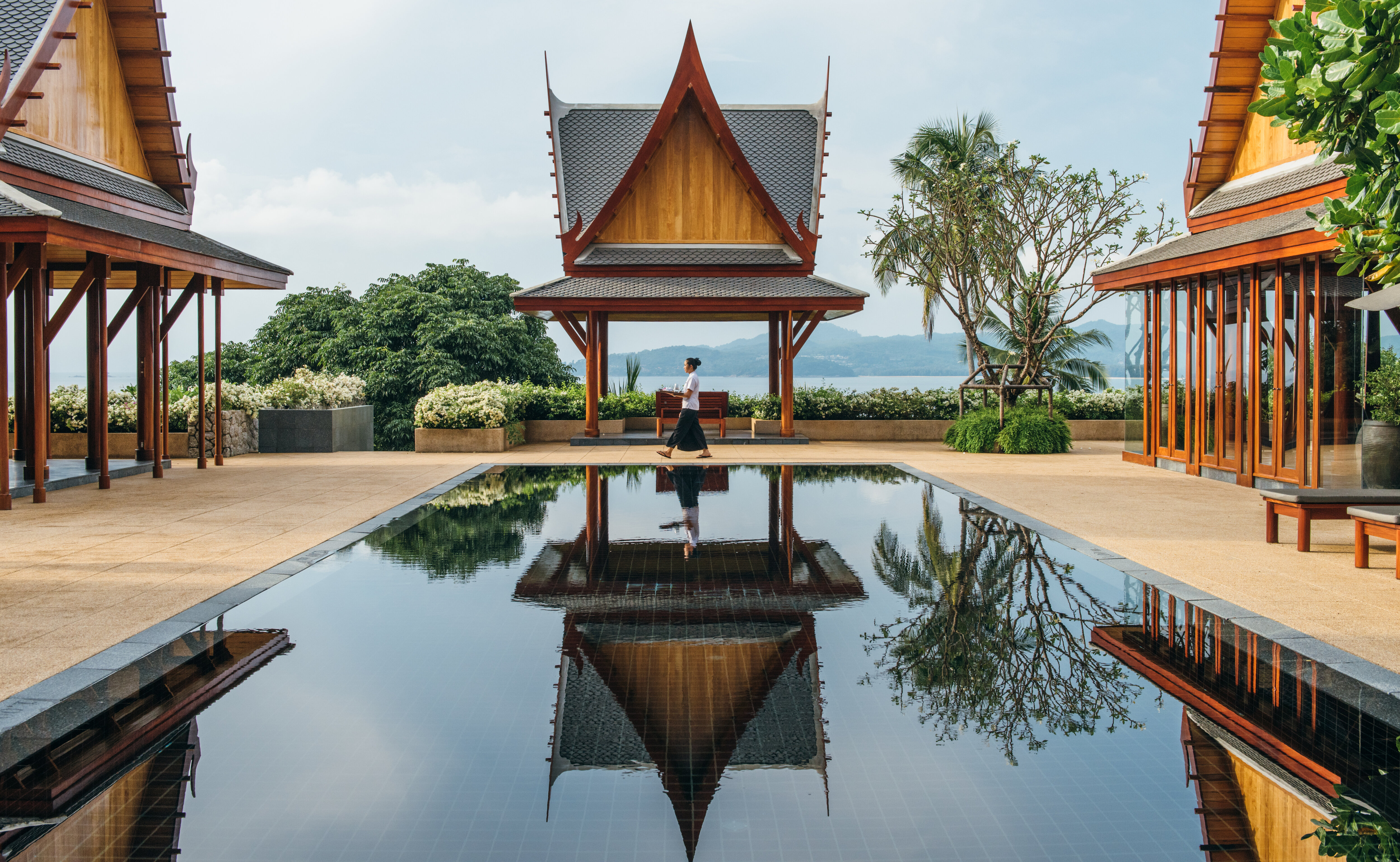
While filming Casualties of War, a Hollywood blockbuster about the Vietnam War, American actors Sean Penn and Michael J. Fox chose Amanpuri for their R&R (‘rest and relaxation’). Then the respected luxury travel newsletter, Andrew Harper's Hideaway Report, gave Amanpuri its first annual award. The property's mythos was growing. Once, an Amanpuri employee wrapped an orchid around the handle of a Condé Nast travel writer’s suitcase. Thinking this was standard operating procedure, the travel writer waxed poetic about the subtle, yet outstanding customer service. Still, as Zecha says openly, there wasn’t any grand plan at work. According to Hotels Magazine:
He figured that if they built homes, his long-distance friends would want him to look after them. “So, why don’t I build a little club here?” he says. “Then I said, why a club? Why not a little hotel? I am not in the hotel business, so why not?”
That, simply, was the genesis of Aman. “Not a farsighted view of oh, my God, I can do something (to make a difference in) the industry,” Zecha says. “That is all fucking bullshit. I’m an ex-journalist, don’t forget. I hate exaggeration of any kind.” Eventually there were 19 Aman owners. “That was the luck part, but it required energy to actually put the whole deal together,” which took several more years, he says.
By 1991, Amanpuri would feature 31 villa homes in addition to its guestrooms. Still, despite the resort’s booming popularity, Adrian Zecha had no immediate plans to build a chain of resorts.
The Look
Traditional Balinese homes consist of walled compounds built around gardens. Typically, they feature a small gate that opens onto a winding pathway leading to separate pavilions, rather than a singular structure. Each pavilion serves a different purpose. One may cover a shrine where the family prays, another might provide space for daytime relaxation, and another serves as nighttime sleeping quarters. The buildings were primarily built with stone, bamboo, and thatch, left in their natural state. Walls were used only as necessary. The result was an open, natural feel where the boundary between indoors and outdoors were blurred; much of the feeling and smell of the gardens were let into the structures.
In the mid-20th century, similar design ideas were becoming popular among leading architects worldwide. From the late 1950s on, Geoffrey Bawa began incorporating many of these characteristics into modern architecture. The Sri Lankan hadn’t become an architect until he was 38. After briefly practicing law, Bawa bought a run-down rubber plantation and worked to convert it into villa gardens like those he had seen in Italy. Frustrated by the work, he decided to study architecture and graduated from London’s Architectural Association in 1957. Bawa later designed the Bentota Beach Hotel, Sri Lanka’s Parliament, and the stunning Kandalama Hotel, built into a rockface overgrown by jungle. According to the Boston Globe:
Geoffrey Bawa, by any standard, was one of the most important architects of the 20th century. He built scores of private homes, 12 spectacular hotels, and a university campus. Like Frank Lloyd Wright, Bawa had legions of disciples who spread his style from Miami to Melbourne.
His influence was so powerful that in many parts of the world it’s hard to imagine how buildings were designed before him.
His work utilised local materials while maintaining a minimalist aesthetic. Over time, Bawa became known as the father of Tropical Modernism. The design concept is characterized by overhanging roofs and verandas, open-sided pavilions, courtyards, and a blurring of the line between indoors and outdoors. Bawa used clean, simple lines. His roofs stuck out to provide cover from torrential rains. Airflow was always a consideration. Bawa’s structures were well suited for hot, humid climates.
In the early 1970s, Bawa was commissioned by Australian artist Donald Friend to design Batujimbar, an estate in the small seaside Balinese town of Sanur. This was the villa that Zecha purchased in 1979. Zecha had long admired Bawa’s Tropical Modernism. In 1981, he hired his longtime friend, the architect Edward Tuttle, to update his home. Like Zecha, Tuttle was a fan of Bawa’s work.
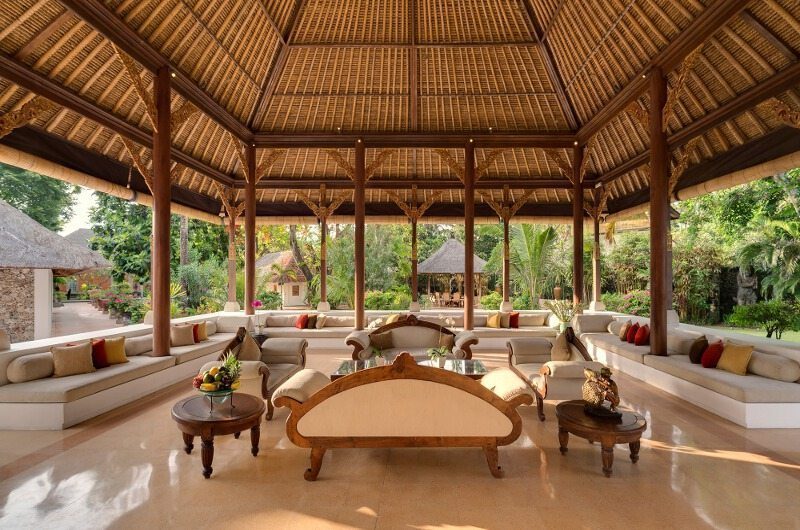
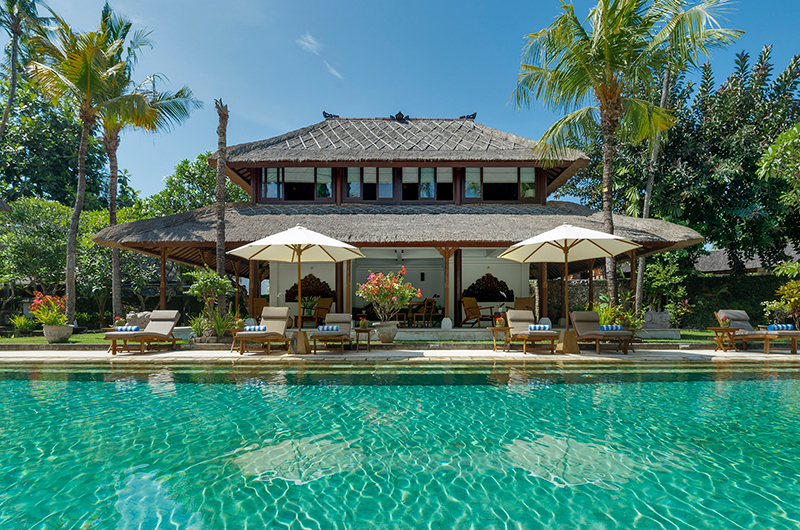
Bruce Palling writes: “It was Tuttle’s updating of the villa in 1981 which led to the creation of the black-tiled pool, which then became de rigeur throughout the Tropics. This association and their long-standing friendship, prompted Zecha to hire him to create Amanpuri and a handful of the subsequent 30 or so Amanresorts.”
Ed Tuttle was born in Seattle, Washington, in 1945. From 1963 to 1968, he studied architecture and interior design at Portland State University, the University of Oregon, and the University of Washington. After graduating, Tuttle joined Dale Keller and Associates. Based in Hong Kong, the firm designed luxury hotels across Asia, including the Taj Mahal Palace in Bombay (Mumbai) and the Hotel Okura in Tokyo. There, Tuttle met Adrian Zecha.
Impressed by the young American architect, Zecha had Tuttle redesign his Hong Kong home. Zecha hosted many wealthy friends in his Hong Kong apartment over the years — Thadani first met Zecha there. Meanwhile Tuttle’s reputation grew. Throughout the 1970s, Tuttle worked with Dale Keller to build private villas on the Greek islands of Hydra and Mykonos. He also designed the Shah of Iran’s home on Kish Island. In 1977, Tuttle set up shop in Paris, where he operated his own business, Design Realization. In an interview with Architectural Digest, Tuttle said:
“[I practice] design as a basis for the human lifestyle, whether it’s a residence or a hotel. It’s about making the individual feel comfortable and stimulated in a space that functions well. I was educated as an architect, and I see and think in an architectural sense first.”
Though Tuttle was on the road working most of the time, by 1987 he was committed to Amanpuri. Bruce Palling writes:
Before designing Amanpuri, Tuttle spent months travelling around Thailand to study traditional architecture and classical teak houses. Tuttle was also responsible for the design of every item inside the villas too. There is a slippery divide between celebrating local architecture and the world of Walt Disney, but Tuttle, with his painstaking obsession with cultural authenticity, never approached, let alone stepped across that line.
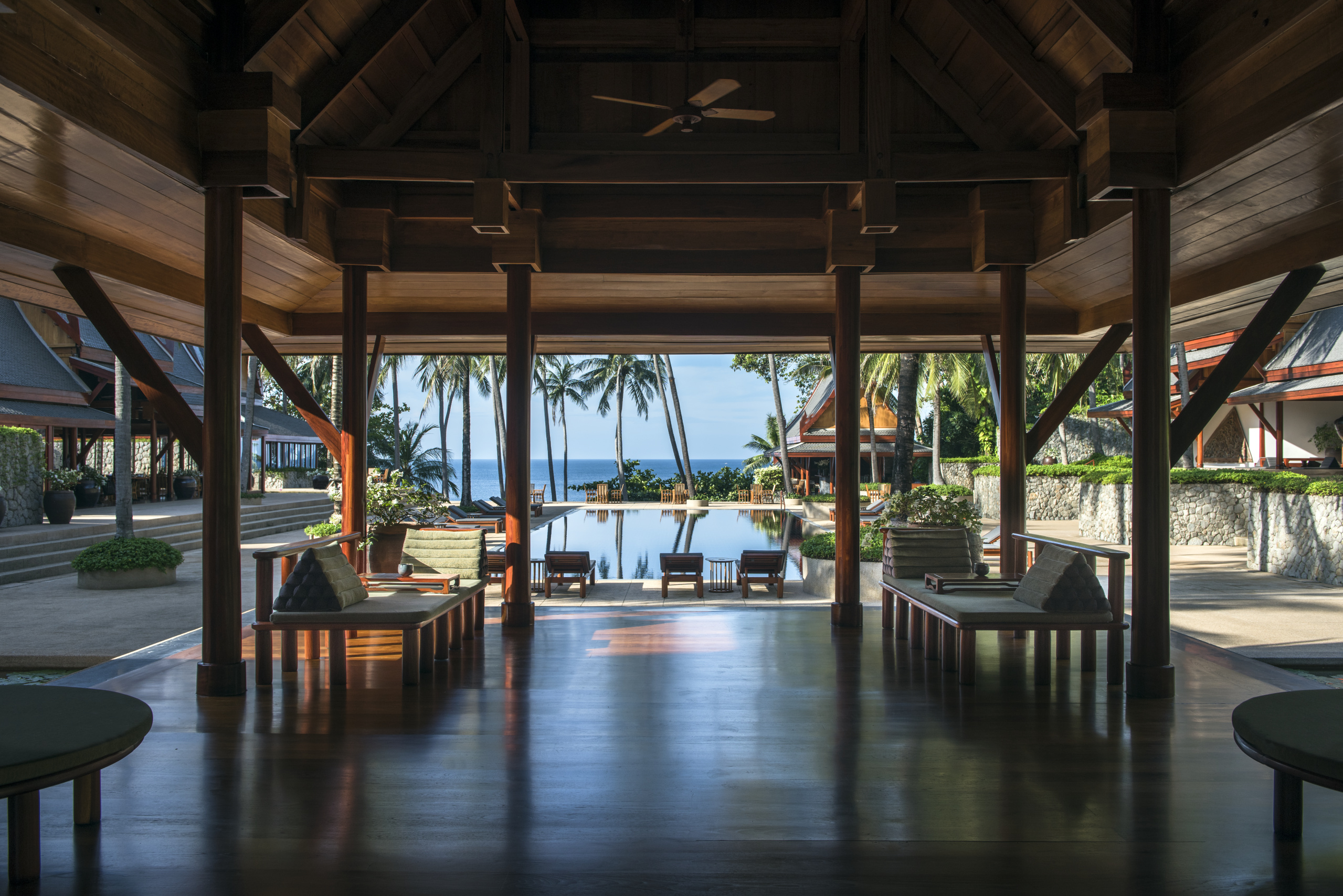
In designing Amanpuri, Tuttle inadvertently invented a new language of architecture. Or perhaps it was Zecha who was responsible for the architectural language, since he took elements of Tuttle’s initial work and carefully selected other architects who would extend it across subsequent Aman properties. Today, Aman resorts are often described as ‘minimal’ luxury, or ‘quiet luxury’. The rooms are spacious but not cold, the buildings have clean lines but are not sparse, and every structure is nestled in beautiful, natural settings. The resorts are always built out of respect for local history and with local materials. And yet they are undeniably modern designs.
Darren Wu writes, in Wallpaper:
Even today, it still takes a moment to fully absorb the experience of stepping through the vaulted ceiling of Amanpuri’s reception sala and to take in the huge granite courtyard anchored by the 27m midnight-blue-tiled freshwater pool. Hidden away among the surrounding groves of bamboo and palms are the pavilions – capacious cocoons of maka timber and local hardwoods whose interiors the architect Ed Tuttle lined in teak and dressed in silks and customised furniture.
Perhaps nowhere else is Tuttle’s influence as clear as in the eyes of other architects. The same Wallpaper piece interviewed a number of famous architects a few months before Tuttle’s death in 2020. Richard Hassell, one of the two co-founders of Singapore-based architecture firm WOHA, had the most effusive praise for Tuttle. He argues that Amanpuri, together with the Peter Muller-designed Amandari in Bali, together exerted an influence on resort architecture throughout the region. He says:
‘It’s hard to remember that these two properties invented the genre of the top-tier boutique villa resort. Before them, resorts were made of room blocks, decorated with token ethnic touches. These rooms took a Palladian attitude towards the vernacular pavilion, making them more pure and geometrically resolved, better proportioned, and invisibly serviced so as to create a comfort and perfection the original models never had.’
Even more remarkable, both these properties invented a language of architecture. As Hassell points out, Thai villa architecture never had teak pavilions with temple roofs built over sloping stone walls and hanging terraces. In Amanpuri, Tuttle invented the look of the modern Thai villa. ‘The architectural skill of Ed is highlighted by the thousands of less successful imitations, where the proportions are bad, the roofs are clumsy, and the details are crude,’ Hassell says. ‘Even with such a beautiful model to copy, most get it very badly wrong. They’re McMansions wearing badly fitted Thai costumes.’
Bill Bensley – the Bali- and Bangkok-based designer who has, himself, created a formidable spread of luxury tropical resorts including Capella Ubud and Shinta Mani Wild – is equally effusive about the pervasive influence of the Aman aesthetic. ‘I don’t think there is a resort designer on the planet who has not been influenced by Aman. I was most influenced by Tuttle’s space planning which really set the scene for a new era. Imagine, he made the bathroom the same size as the bedroom and with natural light from four sides, when the rest of us were cramming tiny bathrooms into dark corners.’
But Tuttle was an artist. He had exacting tastes, and sometimes this clashed with reality. Zecha’s friend Bruce Palling, who was there for many of the early years of Aman, writes:
The bar of the Amanpuri was run by Oreste Rossi, the head barman of the Splendido in Portofino, as their winter closure coincided with the peak season in Phuket. Ed had designed a simple beautiful black granite island, but there was nowhere to store the bottles or glasses. Lark pleaded with Adrian Zecha to intervene as Ed wouldn't budge, saying why didn't Oreste simply carry all of the glasses and bottles in every day? Finally, Adrian instructed Ed to design a storage pavilion or find another solution. Ed refused and simply stormed off. Ultimately, Adrian calmed him down and the next day an elegant bar store had been designed to sit behind the island.
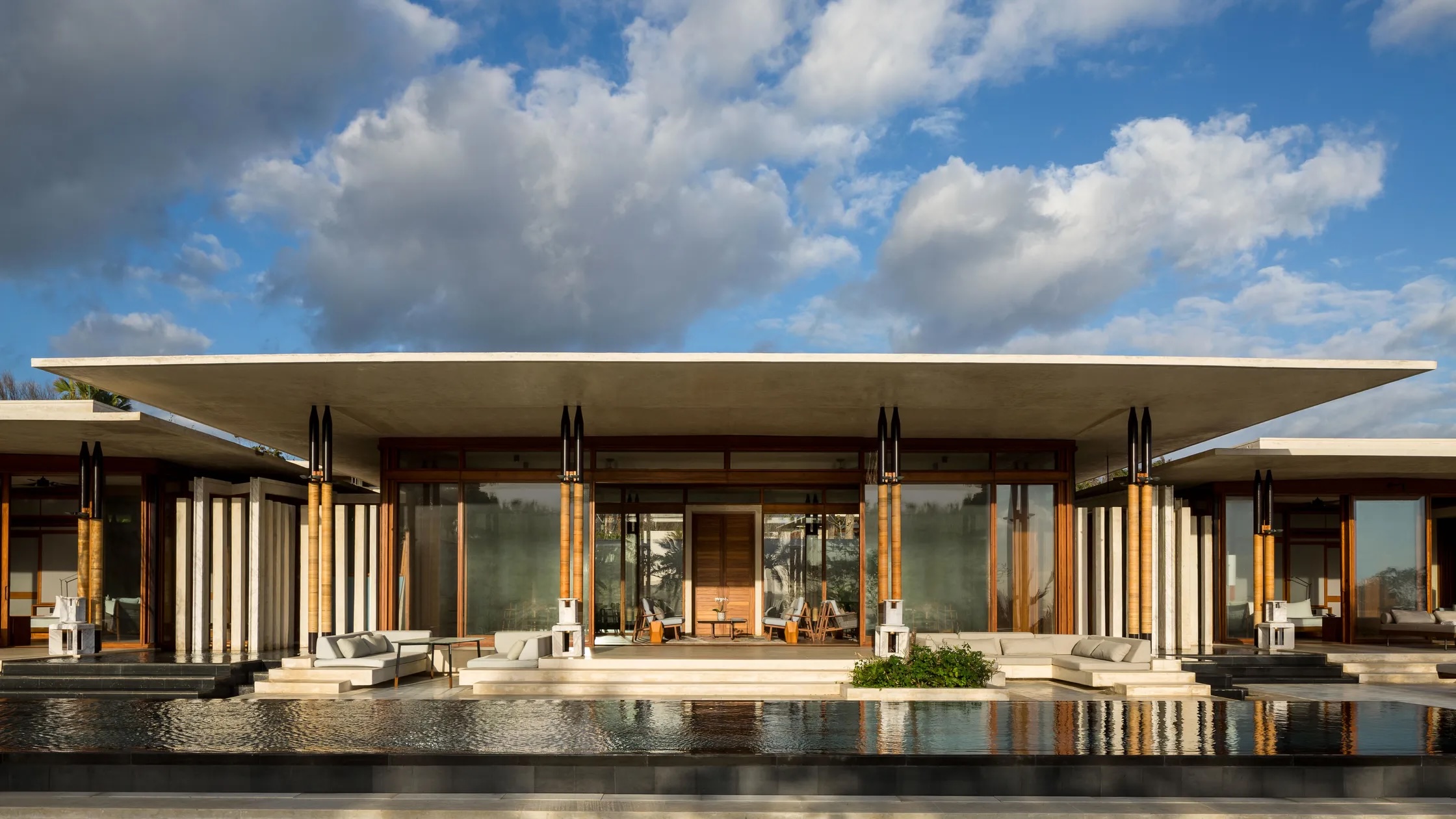
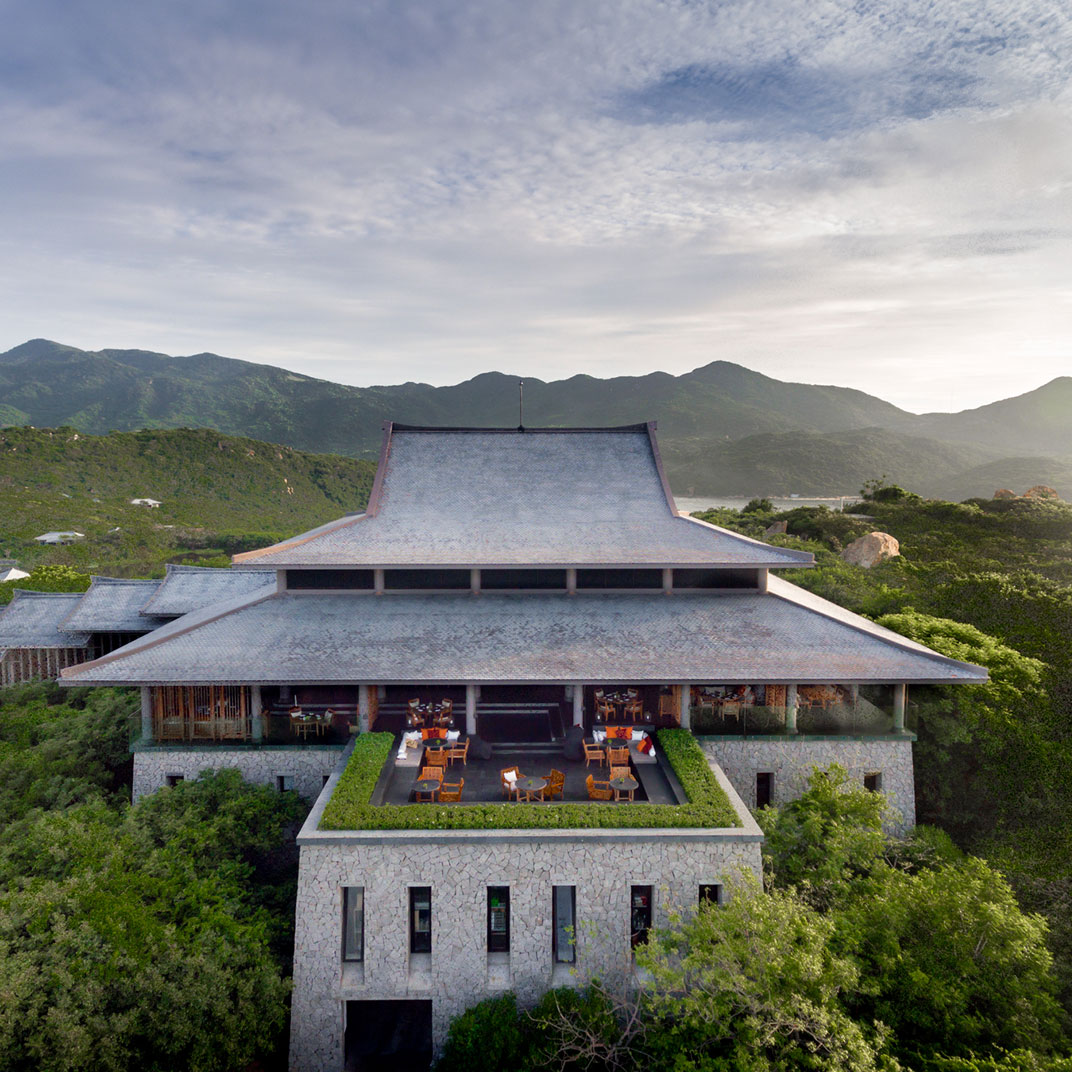
Tuttle would go on to design seven other Aman properties, including Amankila in Bali, Amanjiwo in Central Java, and Amangani in Jackson Hole. However, he was far from the only architect to shape Aman. Jean-Michel Gathy, a Belgian who ran his architectural firm, Denniston, in Kuala Lumpur, designed multiple Aman locations, including Amanoi in Vietnam, Amanyara in Turks and Caicos, and Amanwana on Moyo Island (in Indonesia). “I think the Aman look is balanced, aesthetically peaceful, pleasant, understated, and dramatic, even though it’s understated—a succession of drama and intimacy,” says Gathy.
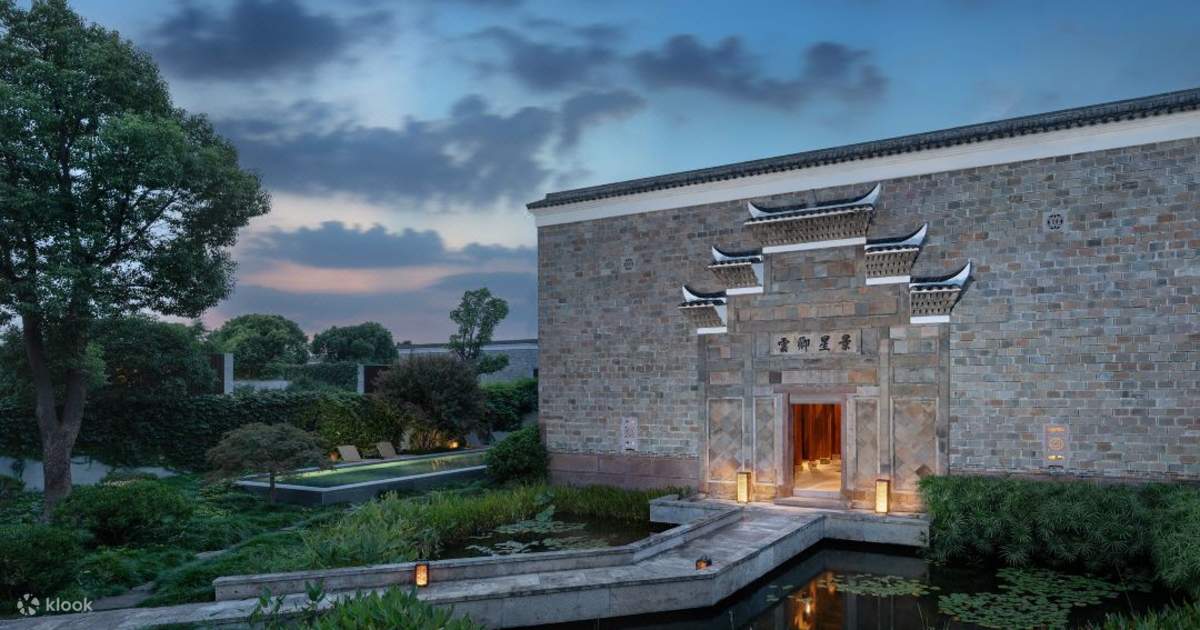
Kerry Hill, an Australian who specialized in hotel design in Asia, opened his Singapore-based firm in 1979. While constructing the Bali Hyatt, he lived at Batjuimbar, before Zecha purchased it. Like Tuttle before him, Hill was inspired by Bawa. Hill designed Amanusa and Amankora in Bhutan, Amanyangyun in China, and Amanemu in Japan, among others. Following his 2018 death, the Australian Institute of Architects said Hill’s work “has come to define tropical modernism in the region.”
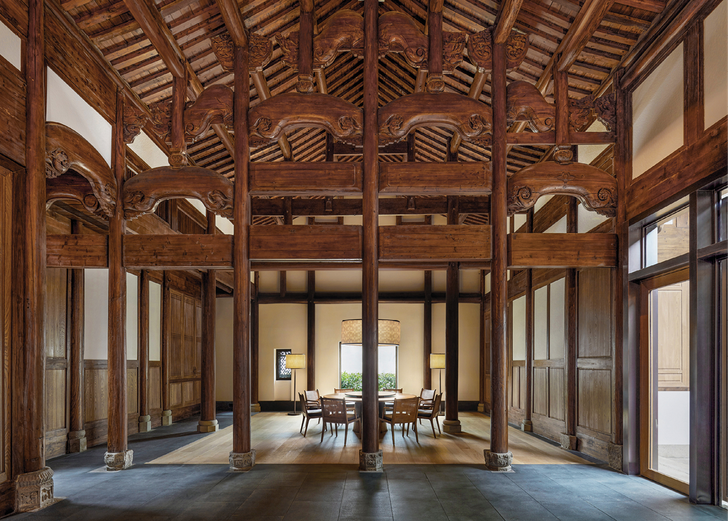
Together, Tuttle, Gathy, and Hill formed a “holy trinity” at Aman. Each was allowed a great degree of latitude, with their “various design personalities operating within a similar skeleton, that has established the look of Aman,” per Kathryn Romeyn of Architectural Digest. The small stable of architects with a shared vision has allowed Aman to maintain consistency across its properties. According to Richard Hassell:
“Other brands have been less discriminatory, and have properties of mixed architectural quality, even if they get one or two right. I would say no other brand has achieved the consistently great quality of architecture and interior design as Aman over so many properties. Building architecturally significant developments is very hard, and takes a strong personality to keep the ship on course through the long process of project development.”
This consistency was almost certainly due to Zecha.
Despite granting his architects much freedom, Zecha was an omnipresent force at Aman. He regularly visited construction sites and reportedly even ordered workers to tear down and rebuild rooms at Amankora in Bhutan. Nothing, from flower arrangements to floor tiles, escaped his watchful eye. Zecha was obsessed with the minutiae of his hotels, and no expense was spared. Stacy Perman of Fortune writes: “He would personally select the bedsheets and reportedly spent upwards of $350,000 on one room.” According to Daven Wu of Wallpaper: “It’s also difficult to express just how influential the brand’s model has been. To this day, one sees the iterations of the larger Aman imprimatur in terms of design, service and hospitality levels in luxury resorts everywhere.”
Architect Grant Kirkpatrick of KAA Design Group in Los Angeles has built numerous homes that were inspired by Aman properties and often hears references to Aman from his clients. Per Architectural Digest:
“He [Kirkpatrick] has nicknamed a current project on the Strand in Manhattan Beach, California, ‘Amanhattan,’ and says another completed home was very much inspired by Amangiri, which spawned 'one of the loveliest design recon missions I have ever had to do.'”
Friends First
Adrian Zecha had never intended to change the luxury resort industry. From day one, he relied almost entirely on word of mouth. The tactic created an aura of exclusivity. But because Aman had no actual branding, hilarious hijinks sometimes ensued. A husband once told his wife he would see her “at the Aman” that weekend; one ended up in Phuket, and the other in Bali. Zecha tapped into the vast network of wealthy friends he had made over the years, inviting everyone to come out each time he opened a new resort. Of course, if they enjoyed the experience, they were encouraged to tell their friends.
Anthony Lark, Zecha’s first General Manager at Amanpuri, would sometimes travel to Europe to catch up with guests. He’d tag along with billionaires to London’s private members’ clubs like Harry’s Bar or Annabel’s. After a few drinks, the discussion would invariably turn to Aman. Other rich patrons would overhear, look into this mysterious resort, and plan a trip for themselves. As Lark remembered it:
“Nobody even comes close to what Adrian has achieved. He has an extraordinary sense of good taste and elegance and he knew that if he built something that he and his friends liked, there was a good chance other people would like it too. Apart from being a genius at finding amazing plots of land in remote places, he created an entire new market and he made everybody understand luxury is the outcome of an experience, not a product.”
Early regulars at Aman included Rolling Stones frontman Mick Jagger, billionaire financier James “Jimmy” Goldsmith, supermodel Carla Bruni, fashion designer Kenzo Takada (who owned a villa), former British Defence Secretary Michael Heseltine, tennis champion Martina Navratilova, advertising luminary Charles Saatchi, and future chief executive of sports equipment maker Head Johan Eliasch. The atmosphere felt like a tight-knit household lazily enjoying a sunny Sunday afternoon. Saatchi and Eliasch could be found playing long games of backgammon; Navratilova would be seen volleying with Bjorn Borg on the tennis courts before retiring to Kenzo’s villa. It was all so normal, as Lark tells it: “I lived in a bubble called the Amanbubble and never went or even looked outside. I was too busy keeping my head above water.” Soon, Amanpuri had become one of the hottest tickets on the planet. Bruce Palling writes:
Within a couple of years, Amanpuri became the most sought after Christmas/New Year destination for international power-brokers, American Senators, nice billionaires and other similarly influential individuals. The fact was that while it was impossible to get a booking during this period, even harder was to find space for a private jet at Phuket airport. Ironically, until this point, the Oriental in Bangkok was the preferred celebratory bolthole for this crowd. Kurt Wachtveitl, the veteran GM of the Oriental, was gracious enough to not only concede this tectonic shift, but added that Zecha and Tuttle should be awarded medals for on occasion saving these frenzied people's lives, such was Amanpuri's uncanny ability to calm and reprogram some of the most difficult and demanding guests known to man.
Unintentionally, Adrian Zecha had a new holiday hotspot for the world’s most influential people. Anthony Lark said: “He created a new market and we're the by-product of that.” When Amanwana, Aman’s posh tented “camp,” opened on Moyo Island in 1993, Princess Diana was among its first guests. The royal, who had separated from Prince Charles the year before, was then in the midst of a particularly intense period of media attention. She arrived with “two girlfriends, three bodyguards, and several sets of Louis Vuitton luggage.” The group trekked through the jungle, swam in secluded waterfalls, and sunbathed on the beach, far from the intrusive paparazzi who followed the princess across the globe. An assistant manager said: “She was amazingly polite, just one of the guests,” adding, “she’d come to the dining room for her meals and chat with us all the time.” But celebrities and global elites weren't the only ones who patronized Adrian Zecha’s hotels. As time passed, the guests were a hodgepodge. Increasingly, the middle class were discovering Aman. Describing her boat ride to Amanwana, Travel writer Lisa Marlowe recalls (LA Times):
From the moment we were welcomed on board, the subtle pampering by the boat’s amiable, white-uniformed crew signaled pleasures to come. As the bubbly was uncorked with a resounding pop, warm goat cheese crostini, smoked salmon canapes and roast turkey finger sandwiches were circulated on silver trays. “I feel just like Thurston Howell III,” joked a fellow passenger from Texas to his young wife, “and you’re Lovey,” he said, referring to the snobby “Gilligan’s Island” characters.
Ours seemed a reservedly friendly group: a chic, middle-aged Australian couple in linen shorts, Cartier watches and Gucci sandals; a pair of French lovers wrapped tightly round each other; two other American couples in their 30s, a trio of very tanned Germans; an Indonesian-born photographer who’d done many coffee-table books; and a brittle Englishwoman traveling solo. At the helm was Gde (pronounced Gee-day), who, when pressed, confided he’d also steered Princess Di, Fergie, musician-producer Peter Gabriel, model Elle Macpherson, Ursula Andress and Paris fashion designer Kenzo across these waters.
As Aman expanded over the years, its customer base broadened. The company catered primarily to leisure travelers who were ‘in the know’. In 2010, a Harvard Business School case reported a third of Aman’s guests came from the Americas, a third from Europe, and a third from Asia. Most were regular travellers aged 30 to 70. Newlyweds who had saved up to enjoy their dream honeymoon also frequented Aman’s properties. Most importantly, Forbes reported, “Half of all the people who stay at an Aman are return guests.”
How the Service Worked
“Everything we do starts with our philosophy,” Zecha once said, before continuing, “which is based on three essential components—peace, uniqueness, and family. They must all be of equal strength to fulfill the guest experience to its utmost.” Adeline Loh of Peak Magazine writes: “Visiting an Aman resort is often described as visiting the home of a close (and extremely cultured) friend.”
In many ways, Adrian Zecha was an outside-the-box thinker. This was especially evident in his hiring practices. Rather than bringing on the best GMs from other luxury hotels, Zecha sought individuals who oozed charisma and charm and, most importantly, were willing to fully commit to the Aman philosophy. In an interview a decade later, Zecha’s partner Anil Thadani added:
“We broke a lot of the rules with Aman. We never hired a manager that came from a hotel background. We hired managers for their personalities. So there were characters, some slightly crazy, some not so crazy, but they always had, you know, something that would make guests feel interested. Good storytellers, good adventurers, maybe somebody who had hiked across the Arctic, so had stories to tell. People like that. And just basically told them that, “Look, you have to treat this property like your home. So the people coming here are your guests in your home, and that's all you really need to know. Don't worry about that, and you basically never say no. So if a guy wants to have his dinner in the middle of the swimming pool, smoking a cigar, just arrange it for him. Don't say you can't do that because that's our rule. We don't have rules for guests."
While Thadani used the word ‘we’, this was almost certainly all Zecha. Another benefit was that Aman’s GMs didn’t come in with preconceived notions of how a hotel should be run. Zecha brought in people from a wide variety of backgrounds. His GM hires included a diplomat, a naturalist, a chef, a nightclub manager, and a castle caretaker. That said, Anthony Lark did bring some experience, previously working for Regent Hotels in Sydney.
"I hadn't been to Hong Kong until I was interviewed by Adrian for the GM job. I remember it was at the old Hilton Hotel," Lark said, "Adrian was then still a publisher based here.” Raymond Bickson, who later became CEO of Taj Hotel Group, was another of Zecha’s proteges. “He created this brand that (represented), I would say, a full circle lifestyle of living, eating, travel, culture, to a higher level. He raised the bar,” Bickson would later say.
Aman GMs lived on site. They hosted guests for meals, joined all-day excursions, and ran their individual resorts with near-total autonomy. For most of Aman’s history, they reported directly to Zecha. Robyn Bickford, the co-GM of Amanbagh in Rajasthan, India, said Zecha told her, “Amanbagh is your Aman. Manage it as if it was your own.” Liv Gussing, the General Manager of Amandari, in central Bali, said her job was “to invite guests in and share my home with them.” Manav Garewal, Robyn Bickford’s co-GM, agreed, saying his goal was for “people to come as guests and leave as friends.” General Managers were expected to casually mingle with guests by the pool, in the dining area, or in the lush green areas around each resort. There was never any training manual. Francois Richli, another one of Zecha’s former managers, added:
“His most important attribute was that he trusted his managers and his philosophy was always that the best hotels in the world were privately owned, not chains. He used to give the managers their hotels to run — we didn’t even have an operations manual. His way of training them was to invite them to his mansion in Bali, where he would smoke his cigars and tell his stories. He trusted us 100%. We were empowered to do what we like and people gave their all with only a few very rare exceptions.
We just absorbed his energy – when he wandered around Amanpuri, he was just in his shorts and t-shirt. He really wasn’t interested in hotel managers from big group hotels.”
Ferdinand Wortelboer, Aman’s managing director of the Southeast Asia region, said the company tossed new employees “in the deep end, so to speak, to find out what they are made of. We do this because we believe that about 10% of what they learned in school can be used at Aman. The other 90% must be learned. They must be able to adapt to the culture where the resort is located and the unique Aman philosophy.”
Despite the latitude they were granted, GMs never set the price of a night’s stay. Room rates were controlled by company headquarters in Singapore. Still, each GM had sales targets and was expected to cut operating costs where they could. At one Aman property, a GM bought pool covers for each heated pool, significantly reducing the resort’s monthly utility bill.
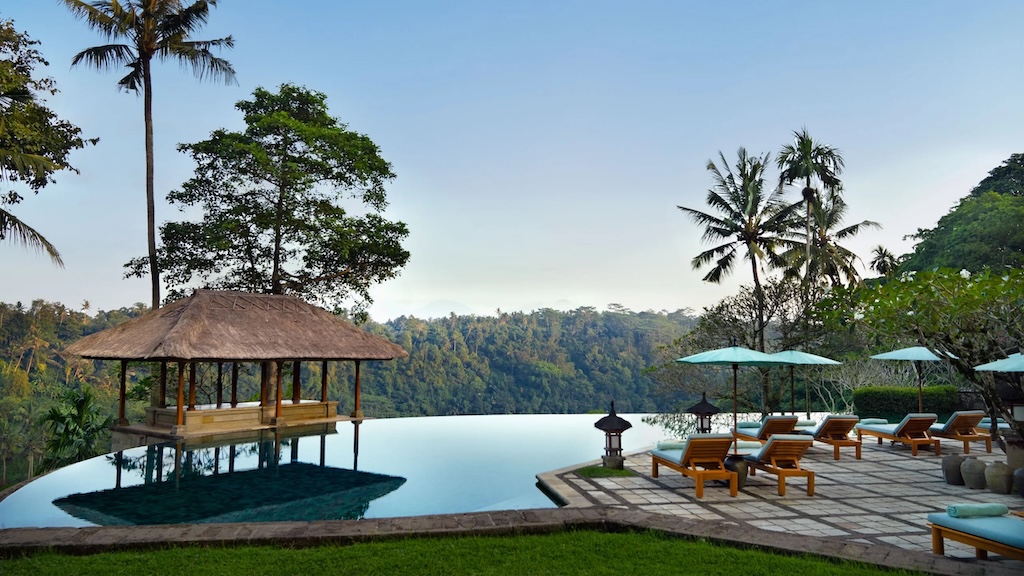
Outside the GM and executive chef roles, at least 95% of Aman employees were locals. At Amandari, more than 70% of staff grew up within two kilometres of the hotel, with 60% hailing from the same village. Personality was given preference over experience. During down periods, hires would undergo a series of role-playing situations designed to help identify a guest’s needs and instill instincts for empathetic responses. Some also underwent English training. There was very little, if any, written material.
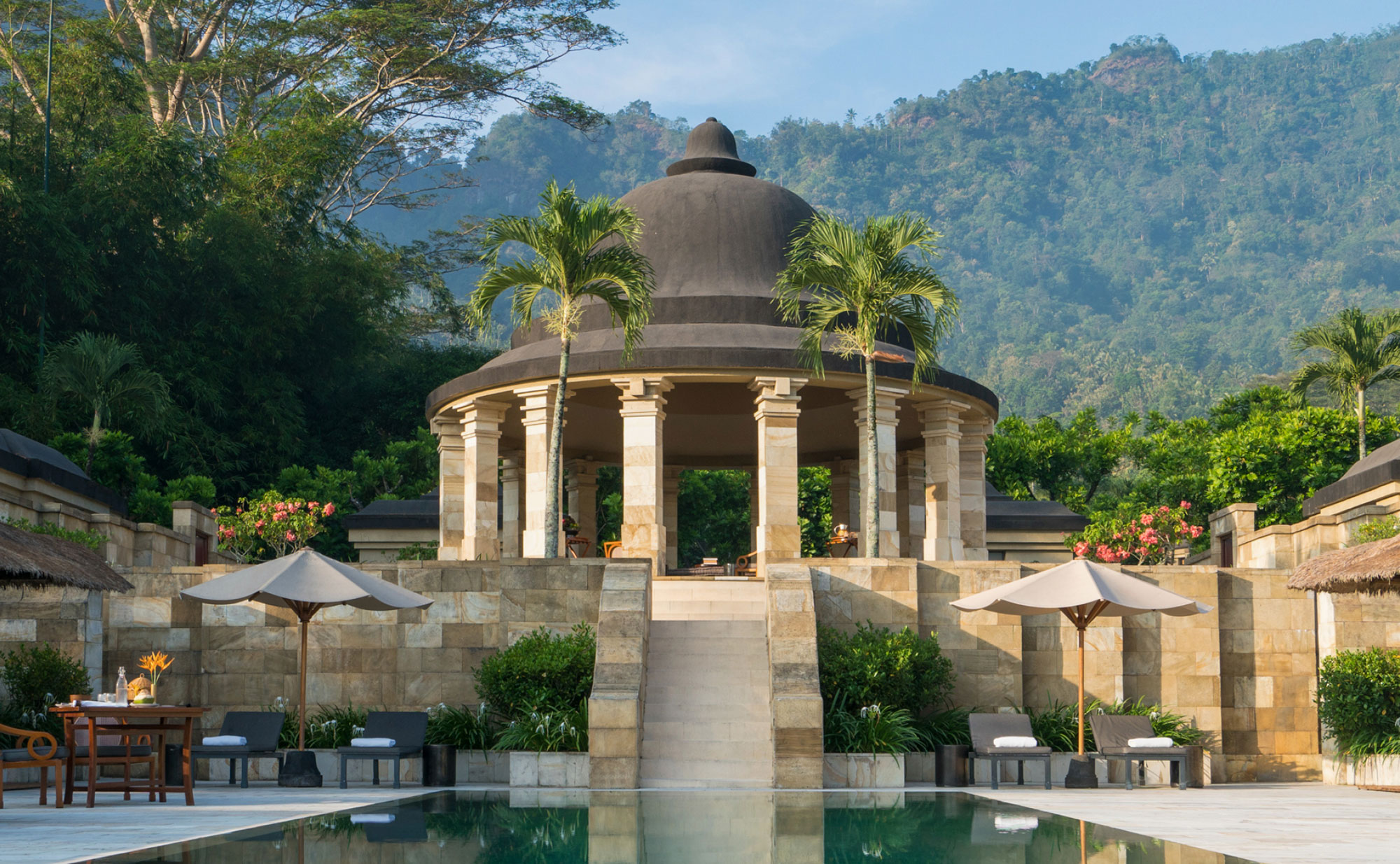
This dedication to training local staff sometimes led to hilarious interactions between billionaire guests and resort employees. Palling, probably the best public repository of early Aman stories, tells the tale of an American guest who was outraged at the discovery of a rat in his suite in Amanjiwo. Amanjiwo, designed by Tuttle, was set near the ancient ruins of Borobudur in Central Java. The resort was surrounded by padi fields. The guest found it difficult to communicate with the staff member, and overcome with anger, drew a picture of a rat. In response the helpful youth went out to the padi fields to catch a large, healthy rodent for this very strange guest.
Job descriptions at Aman could be fluid, a basis to work off of. Whether someone was a cleaner, server, or driver, they would be expected to go out of their way to extend Aman’s famous hospitality to guests. On one occasion, an Amandari driver named Kawit picked up an eager guest from the airport, only to be asked to take her shopping “on the way” to the resort. As it turned out, the guest wanted to visit the stores on the other side of the island. So, instead of making his usual one-and-a-half-hour drive from the airport to Amandari, Kawit spent the next nine hours escorting, translating, and even bargaining on the guest's behalf.
Another time, Chimi Dema, the HR supervisor at Amankora in Bhutan, heard shouting at the resort’s gate. When she went to investigate, Dema found an irate local woman who claimed that the property’s resident dogs had destroyed her garden. Though the woman had no proof, Dema went to her home and helped her repair and replant what she could. When Dema returned to work, employees and guests were startled to see that her silk kira (a traditional Bhutanese dress) was caked in mud. Despite her appearance, she had prevented any disturbance to guests while also helping maintain good relations with the local populace.
Every quarter, employees met with their supervisors to discuss performance. Both workers and managers filled out reviews for one another. Attributes like quality of work, communication, management skills, and, of course, interactions with guests were given a score. The lowest scores were given to those who simply did what their job title entailed.
Aman properties maintained staff-to-room ratios between 5:1 and 6:1, numbers unheard of in the industry. By way of comparison, the staff-to-room ratio at Four Seasons’ flagship hotel in Paris, the historic George V, was 2.5:1. The company could afford this; Aman paid local workers close to the local labor rate whilst charging guests hundreds or thousands of dollars a night. According to a 2010 Harvard Business School case, a company driver in Bali made $160 a month as a base salary; meanwhile, an HR supervisor in Bhutan made $170, and a receptionist in Marrakesh made $280. At the same time, a night at Amandari cost $1,110. However, Zecha ensured there were never any layoffs during periods of low occupancy, natural disasters, or economic downturns. If employees weren’t performing up to snuff, they simply received more training. Plus, every room paid a 10% service charge, from which the proceeds were evenly distributed among local employees on top of their salaries. (Aman’s resorts did not accept tips, but if tips were offered, all money would go into a central pool, split amongst the hotel’s staff). Aman’s workers got annual raises, some as much as 20%. Every employee of the year was awarded a free night’s stay at another Aman resort.
Guests were always called by their names from the moment they first met Aman employees. GM of Amankila in Bali, Ernst Ludick, told Travel Weekly:
“All the staff knows all the guests’ names, and it takes excellent internal communications to achieve that. Amans are typically small — under 40 rooms — so we can focus on a sense of intimacy and attention to detail. Aman means ‘peace,’ and, for instance, you’ll never see staff running. Our ethos of hospitality is not just Asian but open and big-hearted. It’s not as easy as you may think to copy this. There are lots of subtle elements, which, if well executed, come together to create a feeling that is Aman.”
Aman guests might open their room’s refrigerator to find it stocked with their favorite beverage, one they had mentioned to a company employee at another location years before. Luxury travel blogger Jarvis Marcos recalls the level of care he received at Amanoi in Vietnam:
Being told we’d been upgraded and then asked if it would be ok for the staff to move our things for us. We left our Mountain Pool Villa at 9am, were told of the change during breakfast, headed to the beach club and then returned to an Ocean Pool Villa for lunch. It contained all of our things positioned EXACTLY as they were in our old villa. I swear they must have gone in there with VR goggles overlaying images of our previous room to get things perfectly aligned. Honestly one of the most surreal experiences ever.
In the same review, Marcos would write:
Everybody knew who we were. It honestly felt a bit like being a celebrity. We never gave our room number, never signed a cheque and never waited for transport. Everything just magically fell into place. Staff at the spa would enquire if we had enjoyed our hike the previous day. Room service delivery would ask how our kayaking had been. It was almost scary how much every staff member was focused on us. Almost.
Experiences like this were not only common, but expected at Aman properties. Per Hotel Magazine’s interview with Adrian Zecha:
Zecha likens it to hardware – the physical space and amenities – and software – the service itself. “Which is more important? Well, that is ridiculous. What is that?” He claps. “That’s a clap. Which is more important? This hand or this hand? Come on. It is both.” If hardware attracts first-time guests, it’s the software that keeps them coming back.
One recurring customer complaint was the food. Aman typically served simple, locally sourced dishes, satiating but uninspiring. If one was looking for cuisine with fanfare, Aman wasn’t the place to find it. The entire model was built on Southeast Asian service culture, where those with the money to afford it were treated like royalty. Some, even within the company, doubted the model could be exported to other parts of the world, such as Africa and North America.
The “Amanjunkies”
Over time, Aman earned a cult-like following. Travel Weekly writer Arnie Weissmann proclaims: “While other hotel brands were seeking mere loyalty, Aman was creating junkies. Fans of the luxury flag planned their vacations around locations they knew had an Aman resort.” Weissmann was talking about hotel loyalty programs, that increasingly became a bigger and bigger deal as the decades passed. To this day Aman doesn’t have a loyalty program. The self-proclaimed “Amanjunkies” gushed about their experiences to anyone who would listen. In the early 1990s, affluent professionals and genuine savers, some who would trade a month’s stay somewhere else for a few nights at Aman, could be counted among the masses singing the resorts’ praises. By 1996, the term was in widespread use. Lisa Marlowe’s travel feature in the LA Times that year states:
For the last five years, my husband and I have been the unwitting victims of shameless tempting, deftly administered by a pair of well-traveled East Coast friends. This couple, Barry and Karen, are prototypic examples of an elite, hopelessly addicted coterie known as “Aman junkies.” And if you have no idea what I’m referring to, you’re not alone.
Boomer-age professionals drawn to extravagant vacation destinations (and who can afford to take at least two per year), Karen and Barry loved to regale us with tales of their trips to the luxury Aman Resorts of Indonesia. Each time we conversed by phone, Barry would twist the knife a little deeper:
“You’ll never experience Indonesia properly until you’ve stayed at an Aman,” he gushed. “And just wait until you’ve been to the one we just ‘discovered’--Amanwana on Moyo Island. It’s a private nature reserve, and you stay in these fantastic teak-floored tents in the jungle, and swim in a sacred waterfall, and you eat giant prawns that are caught right before your eyes, and . . .”
Amanjunkies existed on a spectrum. Harald and Waltra Jürgensen, a retired German couple, spent ten weeks a year at Amanpuri, spending about $70,000 annually. Yeh Yilan, a Taiwanese writer, would spend her entire annual leisure budget on a few nights at an Aman resort. The aforementioned LA Times piece also says: According to one Aman staffer we spoke with on Bali, there’s even a healthy smattering of “average” visitors who stay in moderate-priced hotels elsewhere on the isle and save for a couple of nights at an Aman “for the memories,” he said.
Middle-class “savers” did the maths. They could spend a month exploring the Great Barrier Reef, or they could go to an Aman property for a few nights. They could bounce around Europe for two weeks or spend a weekend at Amanpuri. For the business crowd, many of whom were racking up frequent flyer miles, the calculus was clear — use the miles to fly for free, then spend up on accommodations. Aman fed their habit. Across properties, employees addressed guests by name and learned their likes and dislikes, even if the guests had never been to that property. Regulars were given unexpected upgrades.
Though Zecha shunned formal advertising, his company stayed in touch with guests, sending letters and emails and regaling them with stories about Aman and news of brand-new resort openings. By 2007, Aman’s newsletter had more than 100,000 subscribers. According to Singaporean court documents that year: “It has even been written that “a new international cult of Aman junkies has arisen” (referring to people who have visited at least one Aman resort or those who stay at Aman hotels around the world, travelling to a new one every time it opens) and that their numbers exceed 130,000.”
Why was it so addictive? The architecture blended seamlessly with the natural surroundings; the layouts were built for peaceful relaxation; the surroundings were stunning; and, of course, the customer service was amazing. More than a decade later, Zecha’s partner Anil Thadani said:
“We never called Aman Resorts a hotel business. We always said it was a lifestyle business. It was not a hotel business. Because we were completely disconnected from the hotel business in terms of pricing. When we opened Amanpuri, the most expensive hotel in Phuket was, I think, the Yacht Club, $60 a night. And we opened at $250 a night. You know, four times the price and then, of course, [we] went up from there. If you’re another hotel, your competition decides or controls how much you can charge. If somebody else, if the next best hotel is charging $300, you can’t charge $1,000.
But with Aman, we found we could. We were disconnected because we were really not the hotel business.
People who came to Amanpuri didn't come to Amanpuri thinking, ‘Oh, let's go to Phuket for a holiday. Where should we stay?” And then compare five hotels and choose Amanpuri. People said, “Let's go to Amanpuri for a holiday.’ That's the difference.”
Expansion and its Price
Adrian Zecha told Bruce Palling: “If I had wanted to make a lot of money, I wouldn’t have spent my time doing this.” Zecha may have started Amanpuri by accident, but once he was committed, he expanded the chain at an ambitious rate. Between 1988 and 2010, Aman expanded by roughly one resort a year.
In 2000, the company had 11 resorts. By 2010, that number ballooned to 24 hotels across 14 countries. The portfolio included secluded destination resorts, luxurious wilderness tent camps, destination sites at historic locations, and city hotels. In 2014, Adrian Zecha said: “We have 26 hotels and six under construction in 18 different countries.” Zecha scouted and made the final decision on where to build each of them. “If there’s anything I have contributed, I spot the sites. I still do that. I go and I find the sites. And then I imagine what I would like to see there,” Zecha told Barbara Bohn of Hotels Magazine.
Amandari — Aman’s resort in Ubud — opened a year before the Four Seasons in the Ayung Valley and 13 years before the Ritz-Carlton. This was in 1989, a mere year after the opening of the first Aman in Phuket. It was also at a time when Ubud was not known as a luxury destination. Aman also opened Bhutan to tourism with its five lodges. Amanwana — a special tent-only resort — needed special permission from the Indonesian government to open its doors in what was a protected nature preserve. Aman never discounted its rack room rates. Talking to Harvard’s case writers. Zecha said:
“We have to charge more for our rooms because we are so small. We have never dropped our rates — except for Amanpuri after the 2004 tsunami. The Prime Minister of Thailand called and asked me to lower our rates since the tourist based economy [of Thailand] was suffering. Being who we are, getting us to lower our rates would signal to others in the industry to do the same. The tsunami was an extraordinary event, so we decided to drop our rates by 50% during the low season. Our occupancy rate was over 70% at Amanpuri, compared to our typical 30%, making it our most profitable low season ever. The general manager suggested we drop our rates every low season. I said no. We are in the brand business. Dropping prices simply harms a brand. Jackie Kennedy wore Pierre Cardin. Now you can buy Pierre Cardin key chains. They lost their cachet.”
By 1991, Amanpuri had 31 residential villas. Construction phases in 1992, 1994, and 2012 would add even more. Aman eventually charged developers a 10% branding fee on Aman-branded residences. Soon residential projects kicked off in the Bahamas, Greece, India, Japan, and the United States. Per a 2014 Fortune article: “Its private villas (some of which are sold to individuals) are the most lucrative aspect of Aman’s business, according to (an) adviser.” But many Aman projects of the Zecha era had no residences to speak of.
Zecha maintained loose budgetary control over what was going on. A former Aman manager said:
“Budget meetings were just an excuse to go to a new resort with your pals. Adrian would present nine budgets to be looked at in the morning but everyone knew they weren’t as important as us all getting together at a new property to gossip and compare notes. The financial controllers would be furious, but they really didn’t have that much power.”
Later regional directors were added to the corporate structure. Their primary responsibility was to impose more rigorous financial oversight. Still, as more and more Aman locations were built, aesthetics were typically placed above cost. Bruce Palling writes of Amanjiwo, Aman’s Borobudur resort:
There was a drip tray for the air conditioning units lodged between the ceiling and the roof of the villas which had to be drained every two or three months. Most architects would incorporate a hook in a detachable part of the ceiling for access but Tuttle refused to have any such blemish on the perfect ceiling space. The only way to gain access to the drip tray was by literally cutting out a portion of the ceiling every time and then plastering it back again.
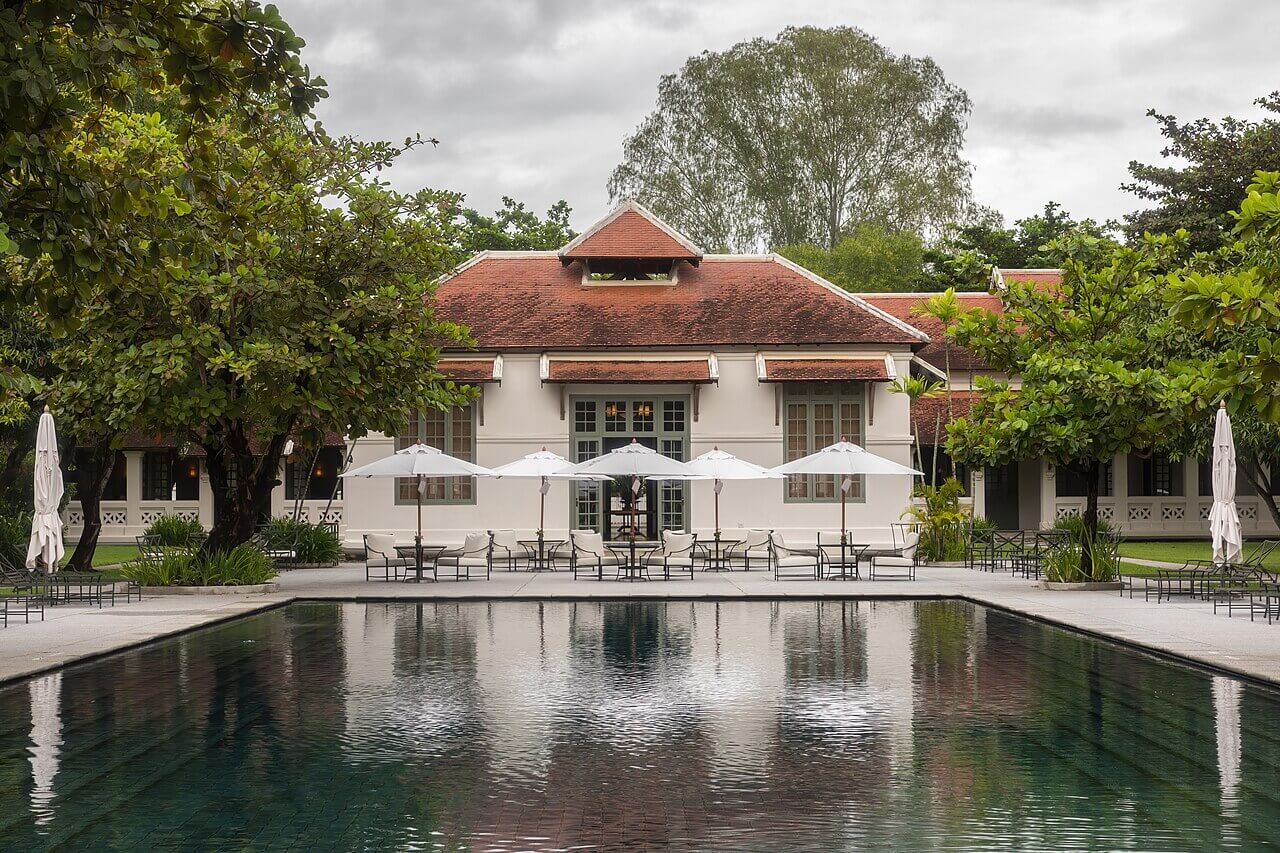
Some projects started as ruins. Amansara, in Siem Reap, Cambodia, was a 1962 royal guesthouse that had been looted and left to rot by the time Aman arrived in 2002. Amantaka, in Luang Prabang, Laos, was a French colonial hospital that had been abandoned. Both had to be painstakingly restored. Needless to say, residences were not part of these projects.

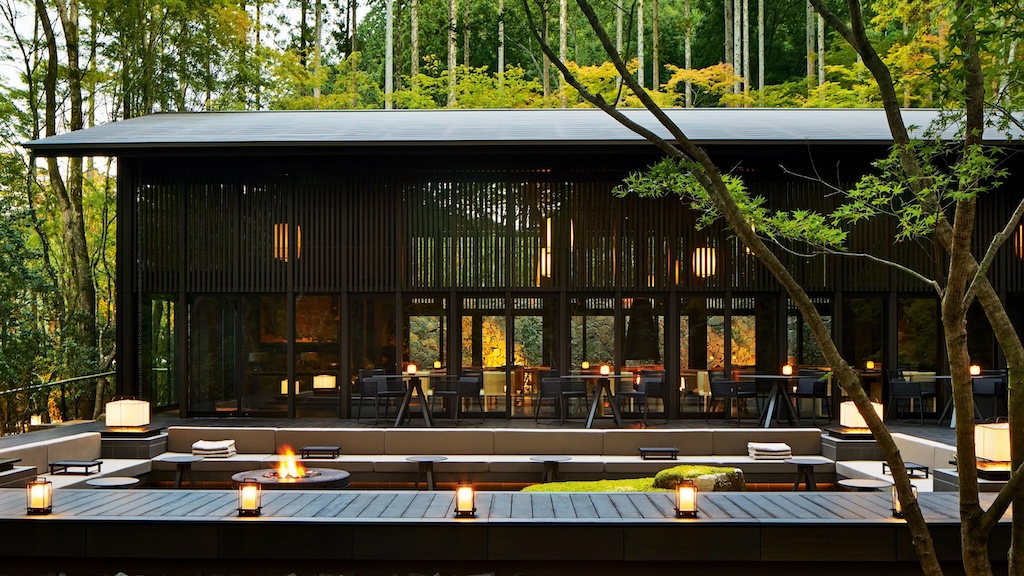
Others took even longer. Amanyangyun began in 2002, when businessman Ma Dadong set out to save ancient houses and camphor trees from a reservoir project in Jiangxi province. Aman signed on in 2011. The resort didn’t open until 2018. Aman Kyoto was another long gestation project. Kerry Hill first brought the Kyoto site to Aman in 1995. The resort finally opened in November 2019, about a year after Hill’s death. His firm later called it a “twenty-five-year journey of stops and starts.”
The numbers told a strange story. In the early days, rival hoteliers estimated an Aman could break even at just 15% to 20% occupancy. Each room made a fortune. In 1999, Aman’s estimated operating profit was about $15 million on $50 million in sales. But the rooms were often empty. That year, occupancy was 50%, down from a typical 65%, as Indonesia’s financial crisis battered Aman’s five resorts there. As the company spread to farther corners of the world, the picture didn’t improve. By 2014, Fortune put Aman’s occupancy at around 30%. The industry average for luxury hotels was 76%. A business with few rooms, half-empty resorts, and projects that took a decade or more to finish had one big problem. It needed money. And outside money meant outside owners.
Losing Control
Zecha lost control of Aman more than once. Given the way Aman started, Zecha never had majority ownership of the company. It's likely that some of these early owners caused problems. In 1993, to dilute some minority shareholders, Zecha brought in his friend, Clément Vaturi. Per Forbes:
Vaturi had borrowed heavily from Crédit Lyonnais of France. In 1996 the bank's financial problems worsened and it called in its loans to Vaturi. To keep his family company afloat, Vaturi cut a deal with Colony Capital. In exchange for what eventually became $120 million in payments to Vaturi, Colony received a stake in the holding company that indirectly gave it a 20.4% share in Amanresorts, reducing Vaturi's 56.7% to 36.3%. (Argent's 63% share of Amanresorts subsequently fell to 55%.) In brief, a camel had stuck its nose in the Aman tent.
In 1997 and 1998, Asia experienced a significant financial downturn. In October of 1998, Colony demanded $160M back from Vaturi. Because Vaturi didn’t have the cash, Colony exercised a contract clause and moved to take its stake. As a result, Colony got three of Aman’s seven board seats plus a veto.
Colony also had big plans. To boost revenue, it wanted Aman to manage some of Colony's hotels outside Asia and rebrand them as Amans. Zecha was livid. “That’s not growth, that’s poison,” he told Forbes. In his view, putting the Aman name on other hotels wouldn’t raise them to Aman’s level. It would drag Aman down to theirs. Anil Thadani, Zecha’s partner since Amanpuri, put it plainly: Aman had been an unparalleled success with its guests and nothing but trouble with its shareholders.
At that point, Zecha quietly resigned as chairman but kept a 6% stake. Half of Aman’s top executives quit. Refusing to buy back his company, Zecha started a new venture, Maharesorts, opening a location at Jimmy Goldsmith’s mountain manor in Mexico. Three years later, a new owner invited him back to Aman. In 2006, Aman was owned by Silverlink Holdings. Greg Sirois, appointed GM by Colony Capital in 2000, remained the company’s director. However, in 2007, DLF, India’s largest property developer, purchased Aman for $400 million, including debt. Zecha was retained as chairman.
Back at the top of the company, Zecha hired 35-year-old Olivier Jolivet in 2008, Club Med’s former chief development and real estate officer. Jolivet brought a fresh outlook to Aman. According to a 2016 interview in Peak magazine:
[Jolivet] cites the digital revolution as an example. When he joined Aman in 2008, Jolivet had to convince Zecha, who did not own a computer, of the importance of investing in social media and an online presence.
“I think it’s important in a company, after 30 years, that it moves forward. We have about 7,000 employees today; we need to move forward and the world is changing.”
After the 2008 financial crisis, DLF wanted to offload Aman. Zecha tried to raise capital to buy the company back, but ultimately failed to secure funding. Though many were interested, some suitors balked at letting Zecha run the company he founded over 20 years earlier.
In 2013, Zecha was approached by American entrepreneur Omar Amanat. Amanat had long been intrigued by Aman (his name is just a coincidence). “I told him I supported his vision,” Amanat later said to Fortune, “I wanted to grow and nurture this company for a lifetime. I had great ideas about how to grow the business in a way that doesn’t degrade the brand.” Soon the two decided to form a partnership to pursue Aman. However, they needed more funding.
In December 2013, Amanat met with Russian real estate mogul Vladislav Doronin, who made billions after the Soviet Union collapsed. Just two weeks later, Amanat and Doronin had rubber-stamped their alliance, producing a 13-page document outlining their plan to purchase Aman. They then put down a $30 million deposit and negotiations began. By February 7, 2014, they had secured Aman for $358 million. Doronin held 64%, while Amanat, Zecha, and their investors contributed the remaining 36%.
Before the ink had even dried on the deal, tensions rose. Doronin had paid $20 million of the $30 million deposit, expecting Amanat to pay the remaining $10 million. However, upon closer inspection, he realized that Zecha had put down the $10 million. Amanat had provided exactly $0 to the deal. According to Fortune: “In Doronin’s view, the man who had instigated the deal faced no financial risk if it fell apart.” After that, things got strange. Per Fortune:
Doronin was getting nervous about his partner. But he had put down a lot of money, and he didn’t want to back out. Amanat claims that around January and February, Doronin threatened to scuttle the deal. Because of that, Amanat says in his court filings, he acceded to a list of demands from Doronin, including giving up one of his board seats. Amanat also claims that Doronin frisked him before a board meeting in Miami to see if he was wearing a recording device. (A Doronin spokesperson denies that the billionaire threatened to scotch the deal and says Amanat volunteered to give up control as long as Doronin didn’t dilute his stake. The spokesperson says Doronin never frisked Amanat.)
It was unclear if Amanat had the cash. Though things appeared to be falling apart, Amanat was still out seeking investors for Aman. He was introduced to Johan Eliasch, chairman and CEO of sports equipment maker Head, the Amanjunkie who enjoyed long games of backgammon with Charles Saatchi at Amanpuri years earlier. Eliasch invested $25 million in Aman, loaning the company another $25 million. In exchange, he received a 14% stake. What Amanat didn’t know at the time was that Eliasch and Doronin were allegedly friends. According to Amanat's account of the events, once Eliasch joined Aman’s board, he acted in lockstep with Doronin. By April of 2014, the situation had boiled over. Stacy Perman of Fortune writes:
Zecha was growing increasingly troubled, according to his witness statement, over the rancor between his partner Amanat and Doronin. He was keenly aware that if the pair did not reach a quick rapprochement, Aman’s image and business would suffer. He held a private dinner with Doronin and Eliasch on April 21, the night before a scheduled board meeting. Zecha hoped he could broker some kind of peace between the two and Amanat.
While they dined at Doronin’s Star Island mansion, Zecha told Doronin and Eliasch he might be forced to resign if the public battle continued. The next day, after a contentious 10-hour board meeting, Zecha announced he would step down as CEO and chairman. Later, he would say he was intimidated into signing. As a result, Doronin took over as Aman’s CEO, with Eliasch serving as chairman. By April 30, things had gotten markedly darker at company headquarters. According to Fortune:
Zecha’s statement charges, he was prevented from entering his office. Two weeks later he was given three days to agree to vacate his home—whose lease belongs to Aman—where his family had lived for the previous 15 years. (“This is categorically untrue,” says a Doronin spokesperson, who states that “Mr. Zecha and his son continue to live in their luxurious homes.”)
That summer Amanat and Zecha took the feud to court. On July 14, the London High Court found a clear breach of contract and reinstated Zecha until July 31. On July 29, Zecha told Fortune: “I’m holding the fort. I’m responsible to 5,000 people all over the bloody place that made Aman what it is today,” declining to comment on the battle between Amanat and Doronin, saying the latter was “Omar’s partner, not mine.”
The die had been cast. By 2016, Doronin owned Aman outright. Olivier Jolivet was his CEO. Adrian Zecha had been pushed out. Under its new owners, Aman headed in a different direction. Prices climbed. Longtime fans remember paying around $800 a night at Amangiri and Amankila. Many were priced out. Quentin Heim, who stayed at 29 different Amans over two decades, said that he “had hoped to get to 30, but too expensive.” Amanpuri got a Thai boxing ring, a skateboard halfpipe, and a gift shop by the front entrance.
In 2010, a 77-year-old Adrian Zecha told Harvard Business School researchers what he expected would happen to Aman after he was gone. “I don’t think the company will change its philosophy,” he said. But he was no longer there to oversee it.
Sources
Eugene Soltes and Aldo Sesia Jr., “Aman Resorts,” HBS 9-111-012.
https://www.gastroenophile.com/2014/05/whats-happening-with-adrian-zecha-and.html
https://www.gastroenophile.com/2020/08/ed-tuttle-death-of-architectural-genius.html?m=1
https://www.dickinson.edu/info/20309/commencement/3772/2019_commencement_citations/3
https://www.wallpaper.com/travel/how-aman-has-influenced-the-world-of-resort-design
https://www.architecturaldigest.com/story/aman-resorts-30th-anniversary
https://www.ft.lk/Opinion-and-Issues/geoffrey-bawa-on-a-small-island-gigantic-talent-grew/14-12560#
https://www.architecture.com.au/archives/news_media_articles/vale-kerry-hill-ao
https://www.latimes.com/archives/la-xpm-1996-12-01-tr-4501-story.html
https://www.travelweekly.com/Travel-News/Hotel-News/Aman-resorts-at-31
https://fortune.com/2014/09/04/aman-resorts-nasty-battle-for-luxury-hotel-chain/
https://hotelsmag.com/news/how-adrian-zecha-rewrote-the-rules-of-luxury/
https://theluxurytraveller.com/hotel-reviews/amanpuri-phuket/#3-bedroom-villa-phase-2
https://www.theglobeandmail.com/life/the-amansara-siem-reap-cambodia/article18440897/
https://www.thetimes.com/uk/article/ed-tuttle-obituary-mmp0rk352