Case
Rolex: The Exception to the Quartz Crisis
Listen to this case (Branding)
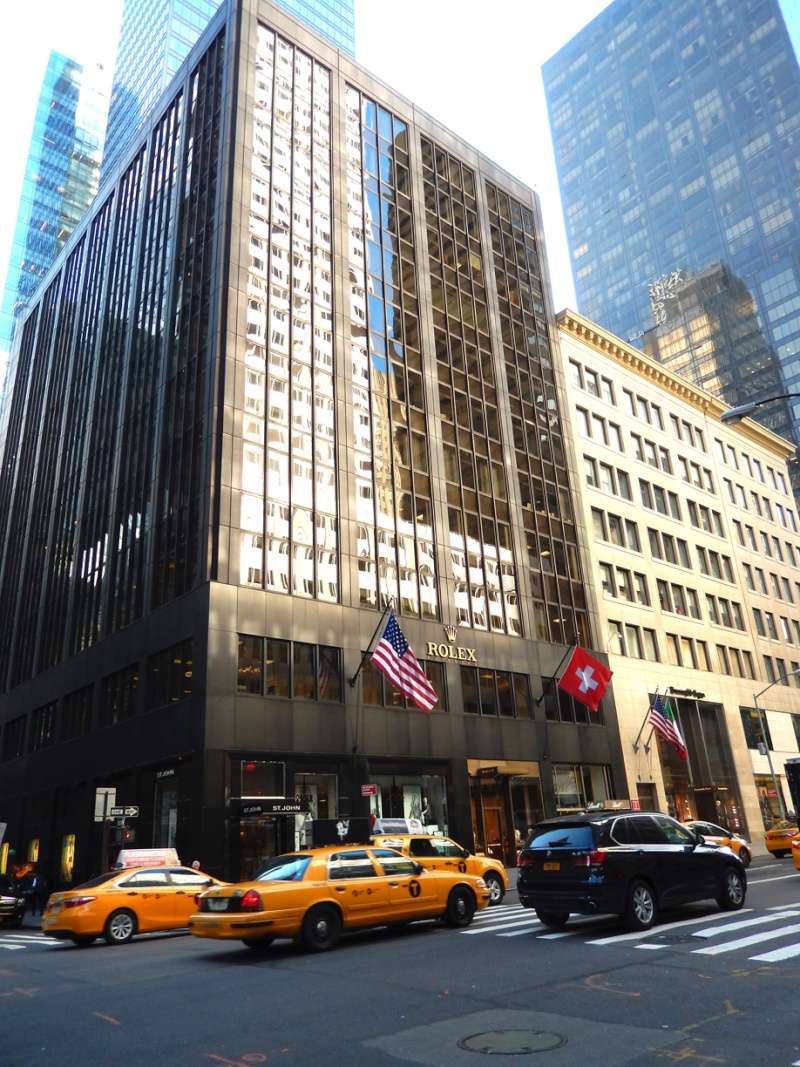
In 1977, Rolex bought a building on Manhattan’s chic Fifth Avenue for $15 million (~$83 million in 2026 dollars). The flashy acquisition raised eyebrows.
Swiss watchmakers had been crushed by a crisis that continued to worsen throughout the 1970s. Sales of Swiss watches had nosedived from 1974 onwards. By 1980, analysts believed that the industry was in its death throes. Swiss firms were shedding tens of thousands of jobs. Production slowed. Sales lagged. Eventually, almost two-thirds of all Swiss watchmakers would shutter their doors.
Rolex’s splashy purchase: “was a sign of their confidence in the expansion of the American market,” according to company directors. As it would turn out, their bravado was well-founded. Despite the prevailing sentiment (read: doom), Rolex’s numbers were pointing up. In a world flooded with cheap quartz watches, the brand was growing.
It is hard to convey just how remarkable this was. There were 1618 watchmaking firms in 1970, before the crisis started properly. By 1985, there were only 634 firms left. Think about what this means: if you were a watchmaker, and you had a child in 1970, by the time she reached 15 years of age 984 firms would have died. All your child would’ve known, growing up, is the steady stream of closure announcements and layoffs from your friends and their families. It would have felt like the end of an industry.
Rolex was one of a small handful of firms that strengthened during the crisis. By the end of the period, it was, by far, the largest watch brand in the world. It had leapfrogged pretty much all of its competition. Omega, Rolex’s fiercest competitor, was but a husk of its previous self.
How, exactly, did Rolex pull this off?
As it turns out, the seeds of this outcome were sown decades before the crisis started. Some of the contributing factors were from the very creation of Rolex itself.
Almost none of it was planned.
In 1905, Hans Wilsdorf, a young upstart salesman working out of a small London office, began importing Swiss watch movements and selling them to British retailers. By 1908, he had registered the Rolex trademark. From the earliest days, Wilsdorf acquired all of his movements from a single supplier — Aegler. Aegler was a family-operated manufacturer based in Bienne, Switzerland. It had earned a reputation for building high-quality movements since it opened in the 1880s.
Rolex’s business model was simple. Aegler manufactured every movement, and Wilsdorf sold them. At the time, this was standard practice. Most watch brands of the day were nothing but trading names stamped onto movements produced by specialty manufacturers. What made Rolex unusual was that this arrangement would never change. Even when, in 1920, in response to rising British taxes, Wilsdorf reincorporated the business as Montres Rolex SA and relocated to Geneva, the Bienne factory remained a separate entity run by the Aegler family. Through over 70 years of societal change, management overturn, and market upheaval, the division would remain, shaping everything that was to come.

Twenty-Five Movements, Not Two Hundred
By the 1920s, mass production had become central to Swiss watchmaking. Major brands like IWC, Longines, Omega, and Zenith had forgone traditional artisan craftsmanship, opting to mechanise production rapidly. Rolex’s advantage had nothing to do with its machines, but rather what it did with them.
Between 1932 and 1945, Aegler (still Rolex’s supplier) produced just 25 distinct movements. Most of these were variations of existing calibres. During that same time, Omega released 139 new movements. Like many Swiss watchmakers of the era, Omega sought to diversify and expand its catalog to reach all market segments.
In 1915, Longines technical director Alfred Pfister boasted that his workshops turned out movements in: “all types in various sizes and thicknesses, simple and complicated,” built to “satisfy all public tastes.” Most followed suit. By 1934, distinguished Swiss watchmaker Patek Philippe was on the verge of bankruptcy after its share capital was halved (from 1.6 million to 800,000 francs). Of Patek Philippe’s situation, the pre-eminent watch industry historian Pierre-Yves Donzé writes: “The excessive variety of its products, and therefore the impossibility of rationalisation, led to insurmountable financial difficulties during the first part of the 1930s.”
Rolex’s limited catalog made it a true outlier. The only other major watchmaker on the planet that was following a similar playbook was Seiko. From 1895-1939, the Japanese company produced only 25 new movements, most of which were updated versions of older models. While most watchmakers were striving to achieve variety, Rolex and Seiko were heading in the opposite direction.
Rolex wanted to control the quality of its most crucial mechanical components — the balance wheel, the hairspring, the escapement — the “regulating organs” that governed their timepieces. Rolex watches, like most of the era, were marketed as chronometers, or functional instruments for measuring time accurately regardless of changes in temperature, humidity, or air pressure. This meant that precision stood above all else. At Rolex, in-house production was key to maintaining that precision.
In 1932, the Bienne factory (Aegler) purchased a workshop that made escapements, relocating the equipment and workers into its facilities. By 1935, Aegler began manufacturing its own balance wheels. The move challenged another Swiss company, Fabriques des Balanciers Réunies SA, which had enjoyed a monopoly on the industry for three years. In 1940, after a prolonged fight with the Federal Department of Economic Affairs, the Bienne factory was finally granted authorization to produce its own balance wheels. The agreement explicitly restricted use of these balance wheels, "for your own calibres and your own needs." These actions helped consolidate Rolex’s supply chain and improve the quality of Wilsdorf’s watches.
Despite regulators' protests, Rolex was never interested in becoming a supplier. The company simply wanted to ensure it could maintain a small line of high-quality products. Donzé notes that the reasoning behind this decision may be lost to history, since there are no archives from this period (or they are unavailable to the public). However, we know the company made a conscious choice because Rolex started out like other watchmakers — with a huge range of products — and that range narrowed over time. Though we don’t have definitive confirmation, Donzé makes a compelling case that Wilsdorf and Aegler determined the company would mass-produce chronometer-grade watches, and that the only way to do so was to rationalise production and keep the product range small.
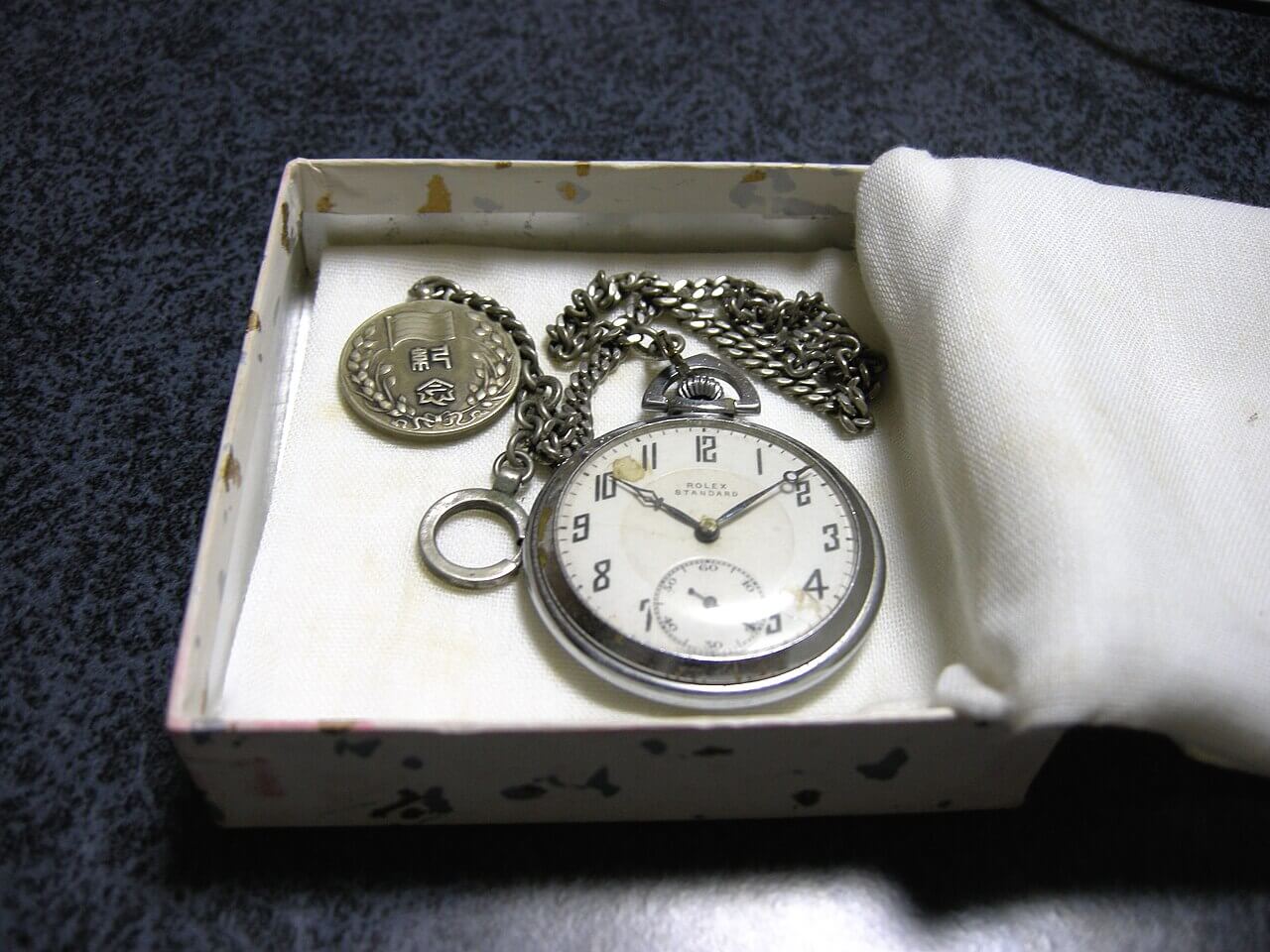
It just so happened that their goal of scaling production would eventually save the company.
But the strategy also bore fruit in the short term. The Bienne Watch Control Office (WCO), founded in 1878, served a dual purpose for Swiss watchmakers: it provided technical feedback on movement accuracy and issued bulletins providing third-party testing results. Watchmakers would voluntarily hand over their movements to the WCO. This was known as making “deposits” or “submissions.” The WCO would then test individual movements and release “bulletins” or reports on precision, or a lack thereof. Movements that performed exceptionally well would be issued bulletins with “honours” signifying that they were a cut above the rest.
In 1924, Aegler submitted just eight movements to the WCO. That same year, the Swiss watchmaker Omega submitted 53 movements, totaling about 49.5% of the total issuance. By 1926-27, Aegler’s submissions had risen to 423 before jumping to over 3,300 in 1930. From there, its share of movements receiving honours skyrocketed from 10.8% to 63.1% by the middle of the 1930s. And though its honours rate dropped to 23.9% between 1938 and 1940 (the company was rolling out a brand-new automatic chronometer movement, which accounted for 73% of all submissions to the WCO), it had recovered by 1946. That year, Aegler made more than 16,000 deposits, to cap off the 90.5% of WCO bulletins it had captured between 1942 and 1946.
Despite this growing recognition of its success, Rolex was not yet the household name it is today. In 1940, the Bienne factory employed just 338 people, far less than the 720 working at Longines or the 4,000+ at Seiko. But the company was planting its flag. Rolex had clearly chosen to mass-produce a narrow product line, one that would be made with consistently high standards. According to Pierre-Yves Donzé: “It was on this industrial base that Rolex’s extraordinary growth after 1945 was founded.”
A Brand Like All The Others
While Rolex’s industrial strategy ran counter to the groupthink of the 1920s and 1930s, during the same period, its promotional efforts remained extremely traditional. In his comprehensive chronicle, The Making of a Status Symbol: A Business History of Rolex, Pierre-Yves Donzé writes:
Wilsdorf was not particularly innovative in the advertising field. He did not question current practices in top-of-the-range watchmaking but used them to Rolex’s advantage. He adopted a follower’s strategy.
The main action was to take part in chronometric competitions organised by observatories. Since the 1870s, watchmakers had been using annual rankings and accuracy records in advertisements to promote their watches.
Since the 1920s, Rolex had chased acclaim from chronometry contests just like everyone else in the industry. European observatories — Kew, Besançon, Geneva, and Neuchâtel — hosted annual or semi-periodic competitions, acting as judge, jury, and executioner (or savior) for watch brands. At each event, manufacturers submitted movements for precision testing under various conditions. After testing, a panel of experts would assign scores. The results, which were published widely, played a significant role in shaping consumers' perceptions of timepieces.
In 1927, Rolex was outpaced by its Swiss counterparts Zenith, Longines, Omega, and Nardin at the Kew competition. The ensuing embarrassment helped drive Rolex’s urgency to establish a reliable in-house timing department. By 1932, Rolex had begun marketing itself as the only manufacturer granted first-class bulletins for “small wrist chronometers” at all four major European competitions. The positioning was intentional. The small wristwatch category was a relatively new one compared to other categories like pocket watches and marine chronometers.
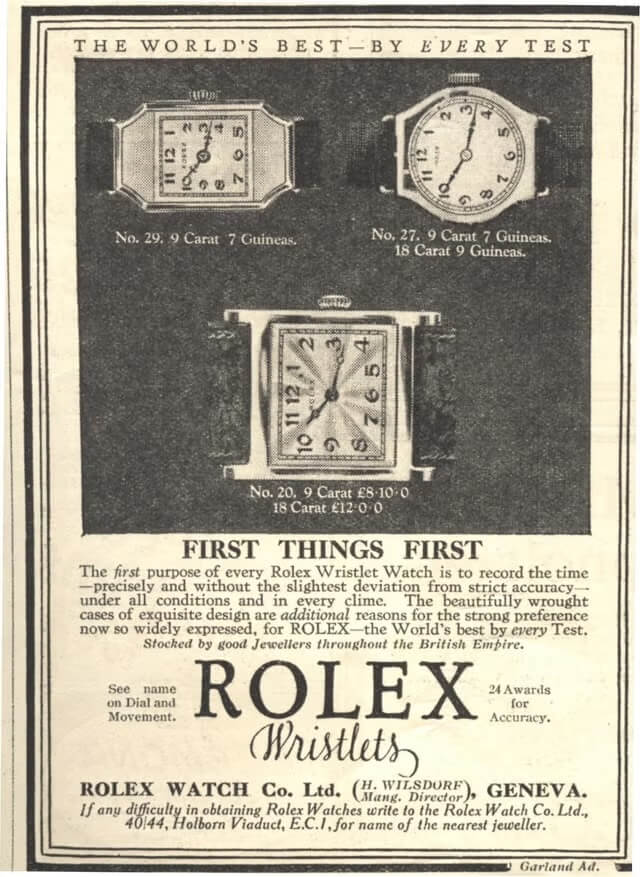
At Kew in 1933, Omega achieved what was then the best precision mark ever for a “large chronometer.” The feat allowed Omega to claim a new world record, since, as Donzé writes: “This was the only establishment open to all manufacturers worldwide.” The advertising rivalry, where each company could claim to be the best of the best, underscored the growing competition among Swiss watchmakers.
However, as the market evolved and consumer preferences changed, chronometer precision rankings alone weren’t compelling enough to sell watches. According to Sébastian Vivas, historian of the Journal Suisse d'Horlogerie, watch brands' were "no longer legitimised by physicists working in observatories, but by heroic users." Longines had gotten a head start in the space, outfitting North Pole expeditionaries in 1899 and 1904-05, then Charles Lindbergh on his solo 1927 transatlantic flight. Omega followed with football-stadium clocks and diver collaborations in the late 1920s, then the Olympics starting in 1932 (a partnership it still leans on today).
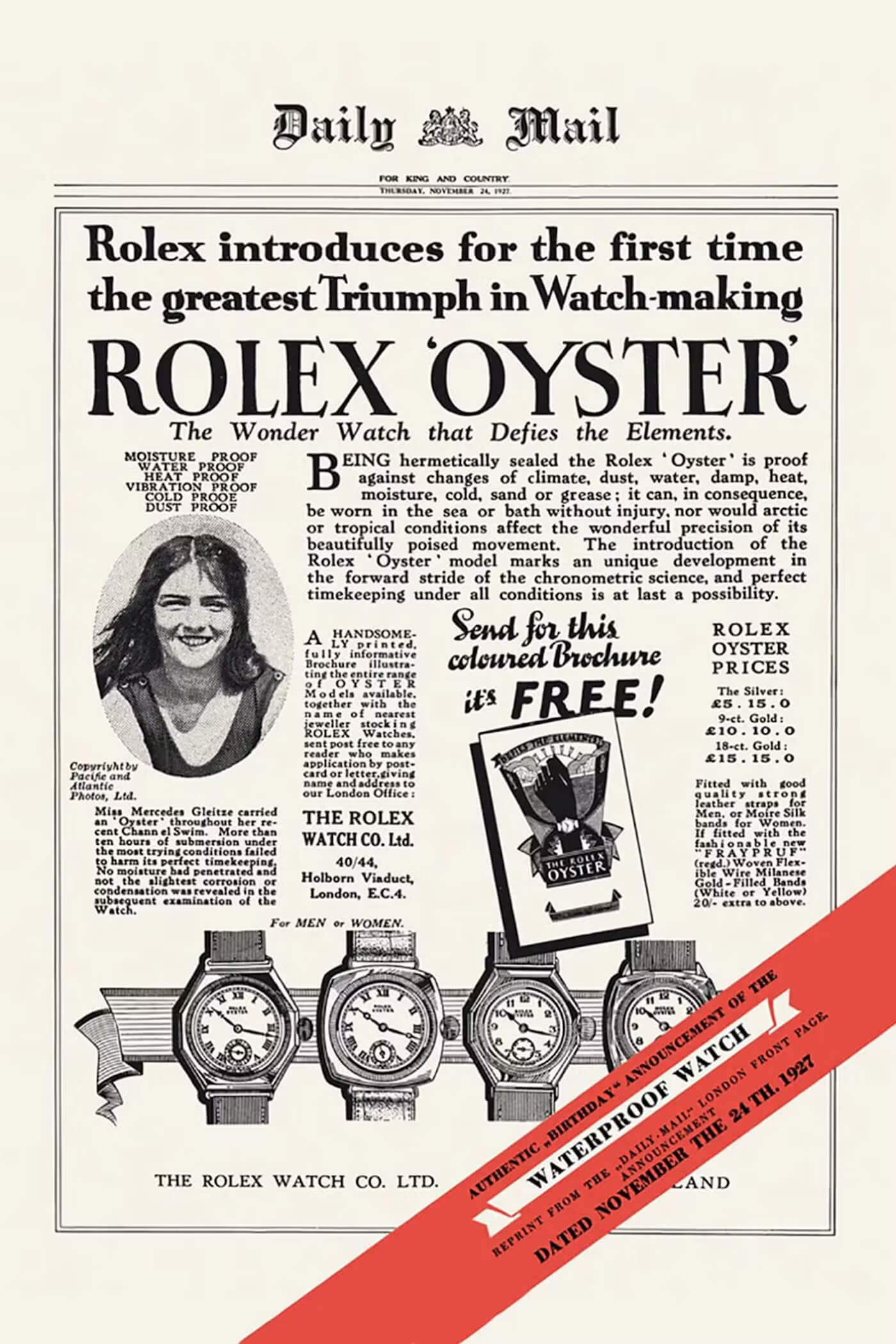
On November 24, 1927, Rolex got in on the game, taking out a full-page spread in the Daily Mail. The ad tied the waterproof Rolex Oyster model to Mercedes Gleitze, who had been the first woman to swim the English Channel that October. Under a headline that read: “the wonder watch that defies the elements,” the ad stated, “Being hermetically sealed the Rolex Oyster is proof against changes of climate, dust, water, damp, heat, moisture, cold, sand or grease.” What Daily Mail readers didn’t know was that Gleitze had not worn the Rolex Oyster on her crossing. Hans Wilsdorf approached her only after the successful attempt had gained notoriety. A few days after that first crossing, another swimmer falsely claimed she had beaten Gleitze’s time. Gleitze did a second swim, one the press dubbed the ‘Vindication Swim’. This was the crossing where she wore the Rolex Oyster, but she never completed it due to cold water.
No matter: the watch held up in the second swim, and Wilsdorf did not mind that the ad conflated the two crossings.
Whilst adhering to the industry’s standard marketing techniques, Wilsdorf was also implementing a conventional, albeit scattershot, sales-side strategy. Rolex maintained three parallel sub-brands, which hedged differing price tiers. Marconi, registered in 1911, offered lower-range models aimed at the Japanese market. Prince, launched in 1928, made rectangular Art Deco timepieces that sold at the top of the market. Tudor, an existing lower-cost brand, was acquired by Hans Wilsdorf in 1936 to reach the bottom of the market. Donzé writes, describing Wilsdorf’s strategy: “He was looking for the right watch and the right concept that would sell in his markets. But he did not know which one would yet.”
Icons, and an American Agency
In 1945, Rolex hired René-Paul Jeanneret to head its marketing department. Jeanneret was a former manager at American advertising agency J. Walter Thompson (JWT). At the time, JWT was the world’s largest marketing company. It had gained global prominence after a successful worldwide marketing campaign on behalf of General Motors.
Two years after taking on Jeanneret, Rolex hired his old firm to lead its global marketing push. JWT was adamant that Rolex needed to be established as a watch for wealthy and high-class clientele. Donzé writes:
JWT, therefore, proposed that Montres Rolex SA target a range of conservative newspapers for its advertising, including The Times and Daily Telegraph, the satirical newspaper Punch, and the upper-class fashion magazines Tatler and Vogue. Outside the UK, the initial aim was to target American citizens, both civilian and military, living and travelling around the world, through the international editions of major American magazines. In 1953, JWT explained: “Although we do not have detailed statistics we are inclined to believe that purchases made by American servicemen and civilians account for a large part of the sales in this area as they do in the European theatre.” Rolex needed to target this high-income clientele for growth.
While Rolex’s marketing strategy was taking shape, its catalog was consolidating. In 1945, the company released the Datejust. Built on the existing Oyster shell, the Datejust was an automatic, water-resistant chronometer. The timepiece would later be used as the platform for the 1956 Day-Date model, which became known as the “president’s watch” after US president Dwight Eisenhower was said to have been among the first to wear it.
In 1953, Rolex worked with famed Swiss explorer Jacques Piccard to develop another model, the Submariner. The water-resistant diving watch was “a frontal attack on Omega, which had enjoyed great success with its own Seamaster diver’s watch, launched five years earlier,” according to Donzé. Later that year, Rolex released the Explorer model, a timepiece that marked the first ascent of Mount Everest.
Then, working in collaboration with Pan Am Airlines in 1954, the company developed the GMT Master, a wristwatch featuring a second-time-zone display. Donzé, again: “These various collaborations provided the opportunity to develop a series of new watch models corresponding to the conquest of the sea (Submariner), land (Explorer), and air (GMT Master), which express the high quality and resistance of Rolex watches when subjected to extreme natural conditions.”
From there, Rolex’s product line would never really grow in any substantial way again. Between 1946 and 1960, the company would register “a total of nine watch cases, six wristwatches (including several variations of the Submariner diver’s watch), two hands, and one watch case bezel,” per Donzé.
By 1953, Rolex was charting new marketing territory, taking direct testimony from Sir John Hunt, the man who led the famed first expedition up Mount Everest. Previously, watchmakers would write their own marketing stories and then associate the tale with a brand ambassador, as Rolex did with Mercedes Gleitze in 1927.
As Rolex would come to find out, hearing directly from the heroes themselves played better with consumers. Soon, JWT’s London offices began advising their Bombay subsidiary to collect celebrity testimonials for Rolex watches. They did so in 1955 when British and French expeditions explored the Himalayas. Of the new tactic, René-Paul Jeanneret said: “In our advertisements, we relate dramatic and authentic events that prove the qualities of resistance and precision of Rolex watches.”
Concurrent with its emphasis on mechanical excellence, Rolex had begun by 1956 to link its brand to powerful political figures. JWT regularly ran ads depicting official-looking men sitting in official-looking offices, implying that history-altering decisions were being made by distinguished gentlemen in Rolexes. A 1957 ad under the banner “Men who guide the destinies of the world wear Rolex watches” read:
Wherever historical decisions are made, at top-level conferences, in Cabinet meetings, at strategic discussions, you will find these men. No day passes without some reference to them in newspapers, on radio or television. Their fame is the measure of their importance — to each of us and to the world.
We cannot mention their names or picture them. It would not be fitting to do so — for they include royalty, heads of States, great service chiefs and statesmen. But when next you see them or their pictures, look at something you might not normally notice — the watch on their wrists. That watch will most likely have been made by Rolex of Geneva.
These men expect reliable service, yet even they are amazed at the efficiency of their Rolex watches. Rolex are proud that they so soon take it for granted.
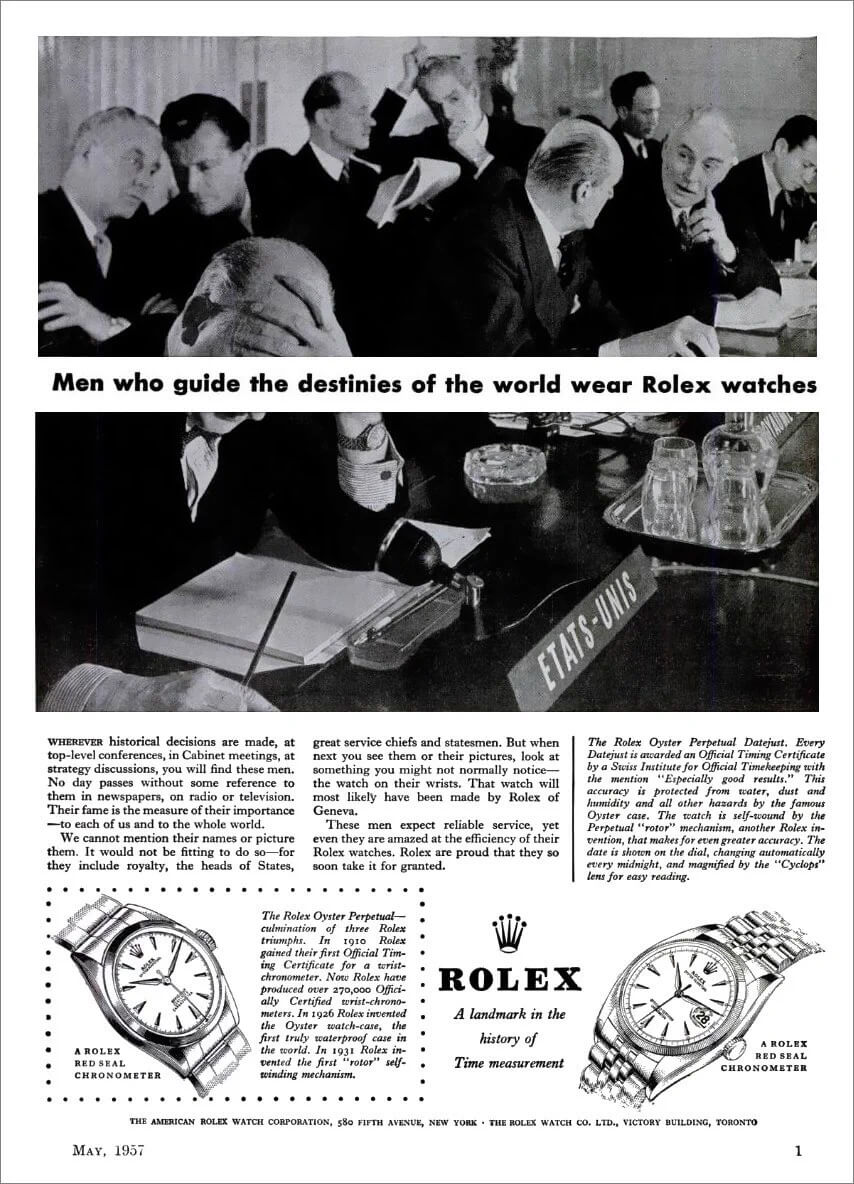
The advertisements were innovative. Rather than focusing solely on the technical aspects of its watches, as other firms did, Rolex was marketing its products by emphasising the importance of its customers. Over time, this form of marketing would evolve into something entirely new, shaping the core of Rolex’s brand image and much of the success that would come later.
Every Man Is His Own Hero
André Heiniger was named executive director at Rolex in 1964. Two years before that, Rolex had ceased advertising in the British market. The move was part of a larger strategy to remove marketing decisions from retailers, thereby standardizing the company’s image globally.
In 1966, Rolex ended its relationship with De Garmo, the advertising agency that had led its marketing campaigns in the United States since 1950. JWT took over Rolex’s advertising and public relations in the US. The American advertising agency had already been in charge of Rolex’s marketing globally through its many subsidiaries. “Contracts were signed with local JWT agencies in Belgium (1947), Mexico (1948), Argentina (1950), France (1951), Germany (1954), Japan (1959), and Brazil (1960),” writes Donzé.
By the early 1960s, JWT had proven to be an exceptional partner. In 1962, when many Rolex managers were still clinging to the technical capabilities of the company’s watches, JWT proposed something totally different. The new campaign, dubbed Great Names, “would feature leading personalities in various fields whose influence is changing the normal way of life,” per a JWT report.
But that wasn’t all. JWT wanted to back the marketing pitch with tangible relationships, ones that would forever link Rolex to the best and brightest, people everyone could look up to. The advertising agency advised Rolex’s directors to present their brand image: “to all the important executives employed in Switzerland by American companies with a personally typed letter. Rolex should send out copies, again with personal letters, to all the important executives known personally to Rolex directors.”
Rolex managers had the instinct to focus on the “traditional elite, essentially male, proud of its social status,” as Donzé writes. This meant politicians and statesmen — a customer segment that had worked so well in the previous decade. JWT decided against those instincts. They argued that Rolex should respond to the desires of the modern consumer. Rather than tying itself to world leaders, who were becoming increasingly uncool thanks to the 1960s counterculture movement, the company began focusing on associations with powerful, driven people who got what they wanted through skill and determination. Sports icons and business stars would rule the day. The idea was to appeal to individual success and glamour.
A 1967 Rolex campaign document states:
In creating a contemporary campaign, the stumbling block is the hero. Attitudes have changed. The giants of the past are regarded with some cynicism and less awe. The young, aggressive, masculine, make-his-own-world man could be called a contemporary hero. But he is in so many advertisements for whisky, suits and cigarettes, he is already a cliché.
Finding the ultimate hero of all time, universally respected and admired, intelligent, ferocious, grand centrepiece of a thousand adventures turns out to be very simple.
Every man is his own hero. No matter who a man is, he dreams of great adventures, or conquering mountains or corporations or movie stars. A man does not feel these adventures are likely to happen. He seldom consciously thinks about them. But the essential point is that he feels, however remotely, that they could possibly happen. And a Rolex watch is a visible symbol of that possibility. This is why Rolex, more than any other watch, is worn low on the wrist. This is why Rolex sells best where the shirt sleeves are the shortest. This is why non-swimmers buy the Submariner. Because a Rolex is designed for any situation, however rough or dangerous or heroic or exalted, it implies that the man who wears it is, potentially, a hero.
By 1967, the new strategy was in full swing. Unlike other watchmakers of the era, Rolex highlighted the accomplishments of the spokespeople who pitched the watches, rather than how a technically superior timepiece could serve them.
Arnold Palmer was among the first to join the team. A charismatic figure with a cult-like following, the American was considered one of the best golfers in the world in the 1960s. His agent, Mark H. McCormack, inked Palmer’s deal with Rolex’s Japanese subsidiary in 1967. The next year, JWT’s Tokyo subsidiary held the Arnold Palmer Cup and Rolex Golf Tournament, the first of its kind, in Japan. This led Rolex to sponsor several highly publicized golf tournaments in the early 1970s, many of which were televised live. Through McCormack, Rolex also signed skier Jean-Claude Killy. The French champion had gained widespread fame after sweeping the men’s alpine skiing events at the 1968 Olympics, taking gold in the downhill, slalom, and giant slalom.
At McCormack's behest, Palmer and Killy attended cocktail parties and other social events where they’d meet with Rolex employees, members of the press, and select clients. McCormack continued to bring more sports stars into the fold, as Donzé writes, “McCormack extended Rolex’s sponsorship to new sports such as tennis and polo.”Of the move, Gérard Souham, a former JWT manager who founded the Société Centrale de Conseil en Communication (S3C), would say: “Auto races? Everybody’s there. But polo, we have pre-empted the game. When you see a polo player, you see snob appeal and quality. The polo audience are the natural buyers.”
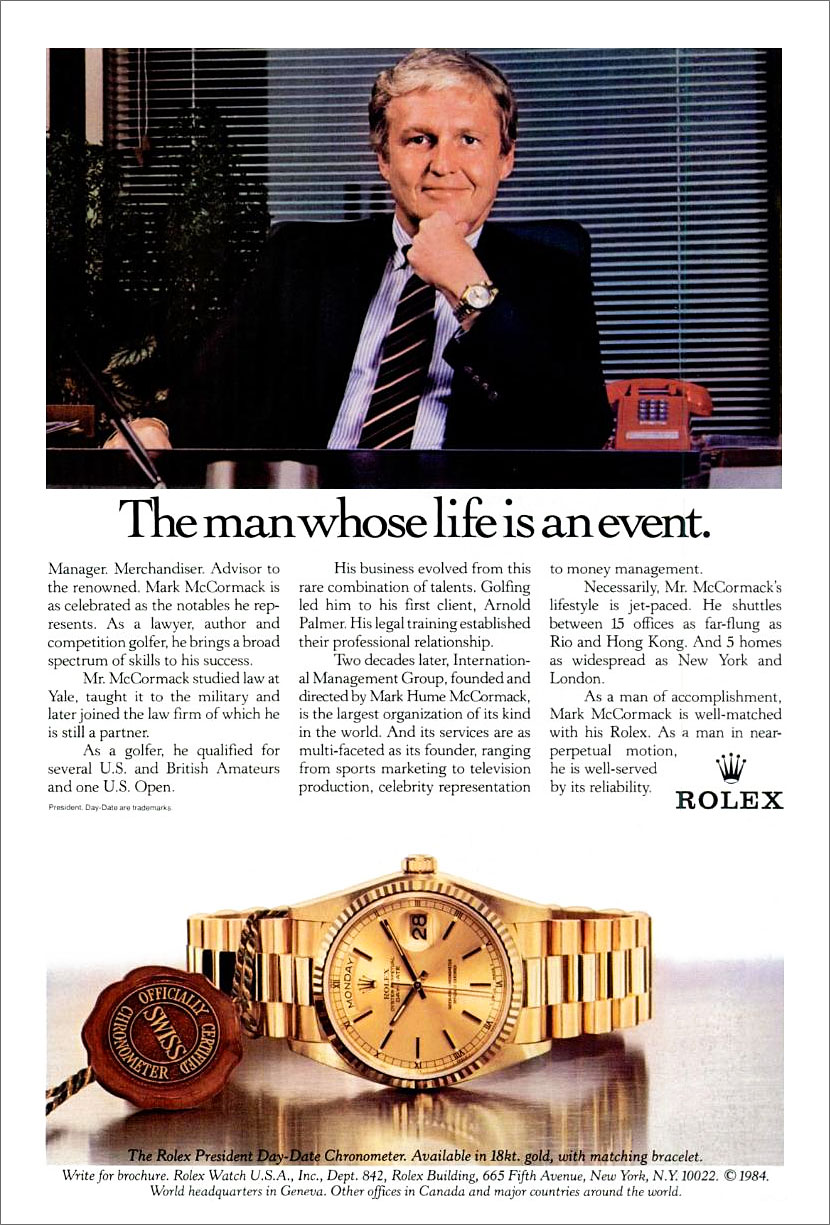
Rolex also began signing female athletes to endorsement deals. McCormack introduced André Heiniger to American golfer Nancy Lopez, of whom he said: “She is a Rolex-type person in every respect, has a charming family, and is extremely well respected throughout the US and rest of the world.” Later, McCormack, who had founded International Management Group (IMG), a global sports business powerhouse, starred in his own Rolex ad. His image appeared under the headline, “The man whose life is an event.”
The marketing pivot was well timed. Between 1959 and 1964, sales of watches under £25 in the United Kingdom fell from 35% to 11% of the market. At the same time, sales of timepieces priced between £50 and £100 increased from 15% to 20%, and those that cost more than £100 jumped from 7% to 18.5%, “leading to the veritable collapse of the entry-level segment,” as Donzé writes.
In April 1965, the price of the Rolex Oyster was increased to £44. The Omega Seamaster, its direct competitor, was selling for £36. Two of the most popular Rolex watches, the steel Datejust and the steel Submariner Date, also steadily increased in price, eventually doubling in the 1980s. Per Donzé: “We can see that it was becoming increasingly difficult for the working classes to acquire such watches. In 1989, it took 179 hours’ work to buy a Rolex Submariner and 168 for a Rolex Datejust, compared with around seventy hours’ work in the second half of the 1970s. The discourse on the exceptionality of men was accompanied by a social distancing of customers through price.” With the transition to high-end positioning, Rolex achieved sizable profits, which helped it to weather the coming storm.
The Crisis That Wasn’t
Between 1970 and 1985, employment in the Swiss watchmaking industry plummeted from almost 90,000 to 33,000, while the number of Swiss watchmaking firms fell from 1,618 to 634. The so-called ‘quartz revolution’ — led by Japanese watchmakers like Seiko — was underway.
Société Suisse pour l'Industrie Horlogère (SSIH), the parent company of Omega and Tissot, had spent years developing and selling Roskopf watches. These cheap, mass-produced pin-lever timepieces were known as the “workingman’s watch.” They were so cheaply made and so low-quality that Roskopfs were seen as disposable: not worth the money or effort to repair. SSIH was now nearly insolvent.
Donzé writes: “SSIH, which owned Omega, was facing insurmountable financial problems because of poor strategic choices characterised by massive investment in the mass production of inexpensive Roskopf watches, sales of which collapsed with the advent of quartz.”
Longines, another notable Swiss watchmaker, had long been the victim of underfunding. The family business was ailing and under the control of shareholders who lacked the capacity to run it.
Feeling they were running out of options, both SSIH and Longines leaned heavily into quartz technology. According to Donzé: “Finally, Omega and Longines opted for the technological transition to quartz, which would enable the development of watches with excellent precision, but they encountered great difficulties in industrialising this product, unlike their Japanese competitor, Seiko. The crisis led to the merger of SSIH and ASUAG to form Société Suisse de Microélectronique et d’Horlogerie SA (SMH, Swatch Group since 1998) in 1983.”
While the quartz crisis was tearing down other Swiss watchmakers, Rolex barely missed a beat. The company raised its prices twice between 1973 and August of 1974. Despite that and despite an appreciating Swiss franc, which made Swiss-made watches more expensive for Americans and others, Rolex was still experiencing strong growth.
In 1974, a JWT manager said: “This has not seemed thus far to affect consumer acceptance of Rolex in that narrow income stratum which can afford it.” That year, Rolex set a company record for chronometer certifications, receiving 230,341 certifications from the Contrôle officiel suisse des chronomètres (COSC), the successor to the WCO. In 1976, certifications dropped to 135,501, a 42% decline. However, by 1977, they were on the rise again, reaching a new record in 1980. “Rolex was a company on which the crisis had a violent but extremely short-lived effect: it was a cyclical episode,” writes Donzé.
While most Swiss watchmakers experienced severe hardship well into the mid-1980s, Rolex’s certifications continued to grow, reaching 583,108 in 1990, a 1,294% increase from 1961. And though the advent of quartz timepieces accelerated the demise of the Swiss watch industry, numerous factors were driving the decline. As Donzé writes:
It should be remembered that this major crisis did not originate with the advent of the quartz watch. This technical innovation strengthened the competitiveness of the Japanese competitor, but it was not the cause of the crisis. The causes were structural (an industry based on the existence of a very large number of small and medium-sized companies) and strategic (the desire of Swiss watchmaking companies to be present in all market segments, from the entry-level Roskopf watch to the top-of-the-range watch).
Most Swiss watchmakers thought that they could offer a wide variety of timepieces to consumers around the globe. After all, that was exactly what they had been doing since the middle of the 19th century. Why change? The problem, one they failed to realise, was that they lacked the industrial capacity to mass-produce such a wide array of products.
What Seiko and other Japanese manufacturers had done differently since the early 20th century was to focus on mass-producing a limited number of highly functional watches. This enabled those companies to flood the world market with affordable, precise watches in the 1960s.
Rolex was the only Swiss watchmaker to follow a similar model, albeit at the high end. The company was producing a small number of models in industrial quantities while focusing heavily on quality. Unlike Seiko, whose marketing centered around affordable precision, “Rolex had a unique positioning (products of excellence for personalities of excellence) that made it a luxury brand,” per Donzé.
Moreover, quartz watches were directly affecting the Swiss watchmakers whose only claim to fame was precision timekeeping. Quartz watches made that precision trivial. The new technology delivered top-notch accuracy for pennies, directly undercutting more expensive Swiss timekeepers.
Yet Rolex was largely unaffected, since it was now a status symbol rather than simply a timekeeping device. That’s not to say that Rolex had no interest in quartz. On the contrary, the company was one of the main Swiss watchmakers involved in the early research and development of quartz watches. Rolex was a partner of the Centre Electronique Horloger (CEH), the Swiss research firm that was the first to develop the quartz watch prototype unveiled in 1967.
In 1971, André Heiniger hired René Le Coultre, the engineer who had spearheaded the project. Le Coultre was tasked with developing a Rolex quartz watch. The result was the Oyster Quartz line, a series of timepieces released in 1977. However, Rolex would never fully buy into the quartz craze. In the 1980s, Rolex obtained 83,995 chronometry certificates for quartz movements, accounting for only 2.4% of the pieces it produced in the decade. Per Donzé:
This perfectly illustrates the brand’s continued concentration on mechanical products. Moreover, Rolex only held a 23.5 per cent share of the total number of chronometry certificates awarded by the COSC for quartz movements during the 1980s, compared with 90.3 per cent for all chronometers. Other companies, therefore, were much more actively involved in electronic chronometry. This is particularly true of Omega, which had virtually abandoned mechanical chronometers and had obtained more than 170,000 certificates for quartz movements. Girard Perregaux SA received more than 60,000.
By 1980, the American market accounted for 20% of Rolex's total sales, up from 7.7% in 1964. Rolex had moved into its new $15 million Fifth Avenue building in 1977. The real estate purchase wasn't blind optimism at the depth of a serious crisis. Rolex's own figures were already showing it had come through the worst of it, and growth could reasonably be expected in the coming years.
What Came of the Aegler Bet
By 1990, Rolex’s internal research efforts had ceased almost entirely. Between 1960 and 1990, the company obtained just 54 patents, an average of 1.7 per year, down from 16.6 per year in the 1950s and 4.7 per year in the 1930s. Donzé argues that “the patents filed by Rolex during these three decades reveal a real stagnation in research.”
Trademarks told a similar story, as the company filed only 58 in the same 30-year window. And all of those trademarks, other than two, Cellini and Cosmograph in the early 1960s, were related to existing collections. In other words, Rolex only released two truly new products over more than a quarter century. Given the company’s history of thoughtful execution, this cannot be accidental. It is more likely that this was a deliberate choice. Donzé argues that this was a result borne from the same decision the Bienne factory made in the 1930s.
By 1987, Rolex’s Oyster Perpetual collection, built on a dozen core models developed between 1945 and 1963, accounted for 90% of the company’s sales. As André Heiniger told the New York Times in 1980: “We’ve always avoided trends toward quantity and toward fashion.” Underpinning that discipline were the two halves of the company — Bienne, which made the movements, and Geneva, which sold them — remaining separate entities as they had since the company’s early days. And the two entities were operating in wildly different ways.
Bienne integrated hard. It opened a branch in Le Locle in 1969. Then it bought the old Gruen Watch Company factory for $1 million in 1972, renaming it Rolex II. As part of the acquisition, the manufacturer took a majority stake in numerous smaller companies, including the plating firm Doniar SA, the machine-tool maker Dynafer SA, and the stamping company Silexa SA.
Geneva did the opposite. Per Donzé: “In Geneva, on the other hand, Montres Rolex SA pursued a policy of subcontracting to a group of independent manufacturers who supplied the company with cases, bracelets, and dials.” Genex, Rolex’s primary case supplier, a company that had a Rolex manager on its board permanently, sold a third of the 300,000 units it produced in 1971 to other watchmakers. Donzé writes: “According to [historian] Laurence Marti, it was the desire to preserve competition that explains the absence of verticalisation," adding that Rolex’s goal was “to encourage its suppliers to remain innovative in terms of quality and price.”
Between 1964 and 1988, Rolex’s workforce grew 95%. During that period, Swiss watchmakers lost two-thirds of all workers. None of what Rolex did was new on its own. Other watchmakers did mechanised production. Other watchmakers deployed luxury advertising. But no other Swiss watchmaker used luxury advertising as consistently as Rolex did and had a rationalised production process when the ‘quartz crisis’ hit.
Ultimately, only a handful of decisions led to Rolex’s triumph. It just so happened that Aegler and Wilsdorf set themselves the goal of mass-producing chronometer-level timepieces. And it just so happened that Rolex hired JWT … and that it listened to JWT’s advice. These choices, and the internal discipline that led to them, set Rolex up to be the only Swiss firm to emerge from the quartz crisis stronger than ever.
Isn’t it funny how history works, sometimes?
Sources
https://www.hautehorlogerie.org/fr/watches-and-culture/bibliotheque/-panorama-de-lhorlogerie-suisse
https://www.rolexmagazine.com/2010/02/men-who-guide-destinies-of-world-wear.html