Case
The Creation of Four Seasons, and the Asset-Light Luxury Model
The Four Seasons Hotel New York is one of the most famous addresses in the brand’s portfolio. It is nestled on “Billionaires’ Row” between Park and Madison Avenues, steps away from Central Park and the boutiques of Madison Avenue. It is a grand edifice, a creation of the renowned architect I.M. Pei, who also designed the glass pyramid at the Louvre in Paris. One of its penthouses used to rent for US$50,000 a night.
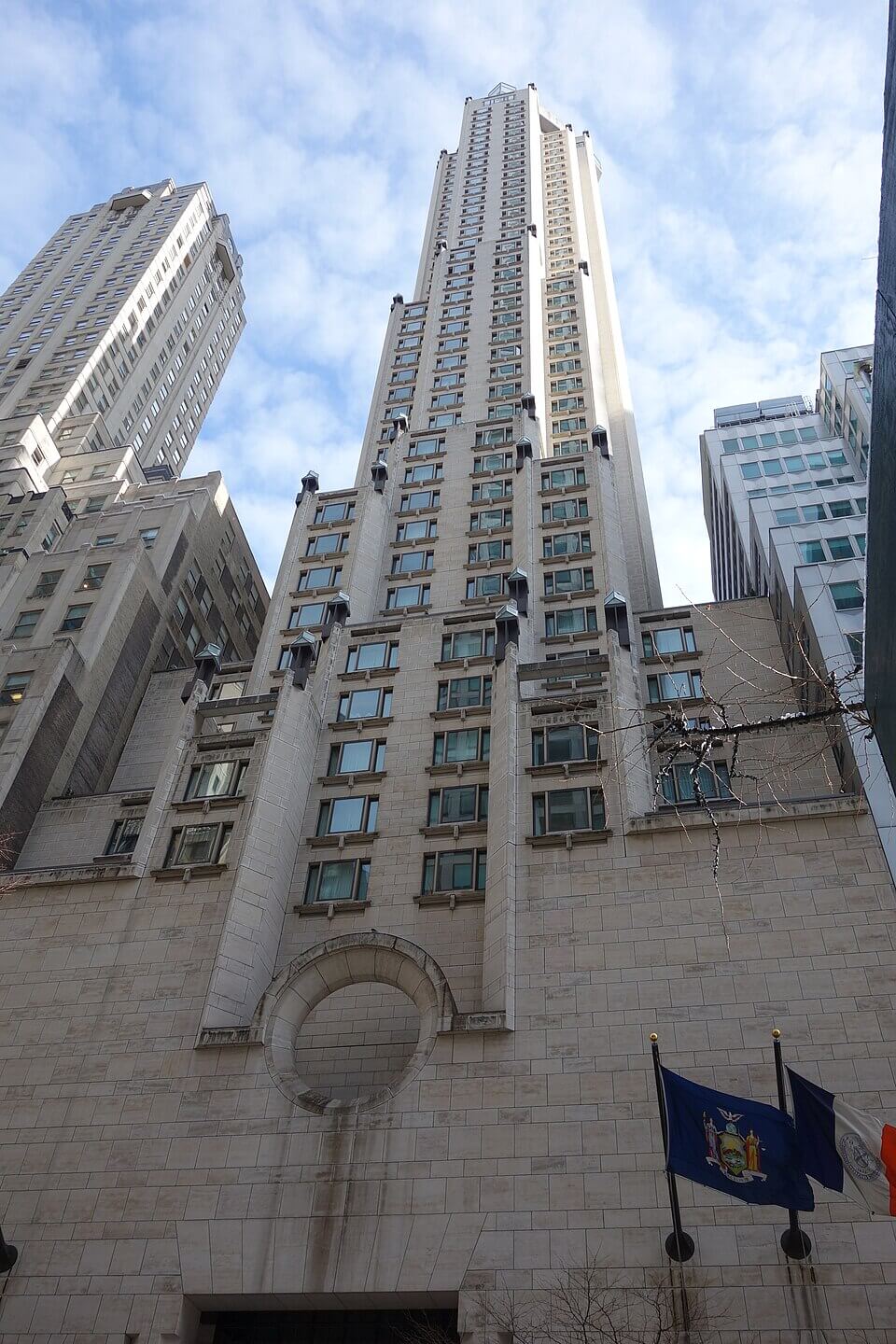

The Four Seasons Hotel New York was shuttered from 2020 to 2024.
The company website mentioned that the hotel was closed due to renovations. But sources close to the property said there was little evidence that substantial work was going on.
There had been no bankruptcy filings either.
What had happened was that the man who owned the building and the company that ran it could not agree on how much the latter should be paid to keep running it.
The owner was Ty Warner (the Beanie Babies billionaire), not Four Seasons. Four Seasons managed the hotel and earned a fee for its services.
Ty Warner wanted fees to be tied to profits. Four Seasons demanded its contracted fee. Neither side could force the other's hand cheaply, so the hotel simply remained shuttered while the dispute dragged on.
Four Seasons does not own most of the hotels that bear its name. It manages them, on contract, for people who own these properties. To industry outsiders, this may seem like an extraordinary arrangement. To insiders, this is par for the course; much of the hotel industry works like this today — a model that goes by the name ‘asset-light’. But even compared to other hotel brands; Four Seasons is remarkable. It was the first to run properties only at the top end of the luxury market; it holds contracts for 50 to 80 years, decades longer than the industry average; no other hotel brand has maintained such a consistent standard of excellent product and service for decades.
But it was not always an asset-light company.
So, how did a company synonymous with luxury hospitality worldwide end up in a situation where it owns almost none of the buildings it is famous for?
An Accidental Hotelier
Isadore Sharp did not start off as a hotelier. As he writes in Four Seasons: The Story of a Business Philosophy,
I went to Ryerson to study architecture, because it related to building and I had every intention of making construction my life’s work.
Sharp graduated in 1952 and started working for his father’s construction company. He was going about his job — building apartments and houses — when he stumbled into hotels.
Sharp’s friend asked him to build a motel for him. It was located about 11 miles (20 km) from downtown Toronto, in a hard-to-find area of the city. But it worked very well and got Sharp intrigued. He wondered: if a motel in such a far-flung location could be so successful, why wouldn’t one in the busy downtown area be too?
Hotels were on his mind even on his honeymoon.
The newlyweds mostly stayed at first-class hotels during their honeymoon, and Sharp took pictures and shot endless movies of all the exteriors, courtyards and lobbies of these hotels. In one of the hotels where they stayed — an airport hotel — the bathroom was shared by two separate rooms! That hotel was making lots of money. Sharp thought if people were willing to pay money for this standard of amenities, he could build a hotel that would make a lot more money.
Rosalie Wise Sharp, Isadore Sharp’s wife, says her husband had always been a dreamer. Sharp knew nothing about the hotel business, but he dreamed of building a motel in downtown Toronto. He was convinced his idea made good business sense; others were not.
Cecil Forsyth, head of Great-West Life insurance in Toronto, whom Sharp approached for money, was sceptical. Sharp kept hounding him for money till the veteran insurance executive snapped and blurted out,
Stop bothering me. Don’t come back until you’ve arranged to get all the financing you’ll need. I’ll give you fifty percent if you can get the other fifty.
It was more of an attempt by Forsyth to get Sharp off his back rather than an offer for help. Forsyth was confident that by laying down his terms, he would hear the last of Sharp and his hotel.
Sharp managed to scrape together financing from family and friends. He borrowed US$90,000 each from his friend Murray Koffler, brother-in-law Eddie Creed and his father. Koffler was the founder and chair of the Shoppers Drug Mart chain; Creed’s family owned a very successful high fashion emporium in Toronto. The Creeds’ were one of the most prized accounts at the Bank of Nova Scotia. Sharp banked on their name to borrow US$125,000 from the bank.
Sharp persuaded his suppliers and subcontractors to agree to receive a part of their money only after the hotel opened. He negotiated a seven-year lease-purchase contract with Simpson’s Contract Division for the furniture and equipment.
With the 50% of the money for the hotel now assured, Sharp walked back into Forsyth’s office. The insurance executive was horrified. He had expected Sharp to raise the money through equity, if ever he could. Instead, every dollar was borrowed.
But a deal is a deal. So Forsyth, very reluctantly, agreed to lend Sharp the rest of the money. Sharp was about to become a ‘part-time hotelier’. Forsyth was not very hopeful about his chances.
The Four Seasons Motor Hotel opened in 1961 on Jarvis Street, which was one of the sketchiest areas of downtown Toronto. Everybody thought it was a blunder.
There were constraints. Sharp knew he had to keep costs down. Nor could he afford advertising.
Sharp may have been new to the hotel business, but he had been checking out hotels for years. He was observing what worked for the hotels and what amenities and services customers paid for. However, he knew right away what his hotel must have: an ambience that would make it stand out.
He hired Ian Munro to manage the hotel. He explained to him, “We want class but not formality.”
Together, they agreed that their hotel shouldn’t seem pretentious. Rather, there should be an atmosphere of relaxed elegance. The ‘class’ was not in expensive objects, but in the way guests were made to feel when they stepped into the hotel. As Sharp explained later during an interview with Forbes, class meant
[...] people who come into the hotel perfectly manicured and dressed to the nines should feel comfortable, as should the person with a baseball hat turned backward and a pair of jeans.
Ian hired and trained the staff to be friendly and efficient.
Sharp explored other ways to create a classy ambience without spending a lot of money. He focused on inexpensive things that signalled affluence and excellence. The dining room was to be their showcase with food being the drawing card. He wanted it to be the talk of the town. He decided that the Four Seasons’ dining room would serve only roast beef, which would be the best in the city. The customary menu was reserved for the coffee shop.
The first Four Seasons had a lot of firsts. Sharp grew up with three sisters; he was somewhat familiar with women’s habits. For instance, he knew that women usually carried a bottle of shampoo when travelling because they hated washing their hair with soap. So he placed shampoo in all the rooms. It was a first in the hotel industry. Today, every hotel or motel room has a bottle of shampoo in its bathroom.
Sharp had observed that most hotels provided towels so thin that it took two or three to dry oneself. This is not the level of comfort or quality he wanted to offer. So, Four Seasons gave the guests bigger bath towels and thicker hand towels. The towels were all made from cotton. It was among the earliest hotels in its category to use such towels.
The marketing for the opening was innovative and low-cost. The opening was promoted as a charity event for the Toronto Symphony Orchestra and the opera. They also organised an art show. Creed’s family gave Sharp access to their store’s mailing list. So, the who’s who of Toronto’s social elite turned up on opening day to support their symphony, opera and artists. And also the Four Seasons.
More publicity came in spades and without spending too much.
The Canadian Broadcasting Corporation (CBC) had its headquarters directly across the street from the Four Seasons. Elwood Glover of the CBC hosted a popular daily radio program called Luncheon Date. Murray Koffler knew him and persuaded him to broadcast his show from the Four Seasons’ dining room and in front of a live and animated crowd.
Thus, Glover began broadcasting from one corner of the Four Seasons’ dining room. His program featured show-business celebrities from all over the world. The program was so popular that Four Seasons allotted him a permanent place in the lobby, complete with a stage and tables. The show went on to be broadcast from this space for 13 years.
This was publicity that no amount of costly advertising could match. The CBC quickly made the fledgling Four Seasons not only fashionable — a place to see and be seen in Toronto — but also profitable. It was an extraordinary launch for a small, unknown hotel company.
Sharp built another hotel in Toronto, the Inn on the Park, in 1963. It was, at that time, located on a no-man’s land and wedged between a noisy railway track and a garbage dump across the street. The site was unappealing, and not everyone was optimistic about Sharp’s chances. But Sharp thought that location had promise: Koffler, who found the land, argued that it was the geographical centre of metropolitan Toronto. He said, “There’s over a thousand industries within a five-mile radius. (...) It may seem quiet now, but it’s going to be big.” Sharp thought that Koffler had a point, but Creed couldn’t see it. Sharp brought his wife to look at the empty plot, with essentially nothing around it, and she was quietly supportive. Years later Sharp learnt what Rosalie actually thought: that they would lose their house and she would have to go back to work to support the family.
Sharp leaned into the affordances of the plot. He envisioned a ‘resort within a city’, with a pool and a courtyard surrounded by parkland. After raising money for construction from the Bank of Nova Scotia, he began thinking seriously about what was necessary for the property to succeed. He tested foam mattresses (which were then just coming on the market), found them more comfortable, and put them in all the rooms. He thought water pressure and a good showerhead were critical for a consistently good shower, and found a long-lasting, self-cleaning showerhead for the hotel. Finally, he ensured that no plumbing in any of the rooms touched concrete, and no two electrical outlets backed into each o ...
The rest of this article is for members only.