Case
A 92 Year Old Singaporean Distributor Closes Shop Forever
Listen to this case (Business Expansion)
In 1934, Ng Lim Song migrated to Singapore from Shantou, China after his first wife died. He opened a provision shop on Rochor Road selling dried seafood, shark’s fin, and other provisions. He met a woman in Singapore and remarried. Together, they ran the provision shop business. This shop was firmly in food supplies — Ng’s second wife cooked Teochew braised duck, which she would sell to other food businesses around them. They had nine children together: six sons, and three daughters.
The shop’s name was Ng Chye Mong. Soon, Ng’s sons joined the business. In the 60s, the store became famous for supplying Western food products such as HP Sauce to Western restaurants. It also became a supplier to the then-famous Cockpit and Mandarin hotels.
Decades later, granddaughter Nichol Ng would say: “Most chefs didn’t know where to get stuff. Back then, there was no Internet or Google. So they would call Ng Chye Mong to ask for what they needed. Our product range kept expanding.”
Nichol’s father, the late Michael Ng, was one of the six sons. He left the provision shop company, jointly owned with his brothers, to set up a own food distribution business. Over the next two decades, he expanded aggressively.
There’s a telling passage in the memoirs of the Asian Tycoon Robert Kuok, who described what trading was to the Chinese merchants of his day:
Say somebody comes into a tailor’s shop in Singapore. He happens to be a relative of the tailor. He says, “Long-lost cousin, I made it good in Indonesia. I’ve been given permission by the Indonesian authorities to buy 50,000 tons of sugar. Can you supply it?” If the tailor has any business sense, he will say, “Of course I can.” He will then scratch his head and think, “Now, who did I make clothes for who is in the sugar trade?” He has the connection. The tailor will make the sale, but he will draw his supplies from someone else. That simply, is trade.
This was exactly what Michael Ng did.
At the peak of the business, in the 90s, Michael owned 40 companies in 25 countries. He distributed cigarettes, alcohol, Walkmans and Swatch watches, whatever he could sell. He started a construction company that built bungalows, ran a helicopter service in India, and opened a duty-free shop in the Maldives. In a glamorous detour, he produced movies in Hong Kong, including He’s a Woman, She’s a Man, the 1994 film starring Leslie Cheung.
But in 1997, the Asian financial crisis wiped him out. Nichol Ng, Michael’s daughter, was 17 at the time. She remembered the creditors coming in to seize their home, giving the family only an hour to vacate. By the end of the crisis, the only business left standing was the family’s food distribution business. In 2007, Michael’s children, Nichol and Nicholas Ng, bought the food distribution business from their uncles for S$5 million. They renamed it FoodXervices. The Ngs used seller financing to execute the purchase — they paid their uncles back from the profits of the business over an eight year period.
The two grandchildren grew FoodXervices at a steady clip. They’d taken over the business in 2007. A mere year later, they pursued and won a distribution contract with Kimberly-Clark. This meant that they supplied all the hotels in Singapore with Kimberly-Clark products: paper towels, toilet paper, soap dispensers, toilet paper dispensers, cleaning supplies, and so on. Years later, Nichol would reflect on this period, calling it ‘the golden years’:
“Back in the day, it was unheard of that a food company would take on a non-food distributorship,” she says. “But we supplied all the hotels and those were golden years for Kimberly-Clark. There were no competitors, no China brands.”
Along the way, the siblings also set up The Food Bank Singapore, a non-governmental organisation (NGO) which collects donated food and redistributes it to needy recipients, in 2012.
In 2016, the company ran out of warehouse space. It decided to build its own. In 2016 it bought a warehouse from Sabana, a real estate investment trust, for S$14.8 million, and then tore it down to build anew. The construction of its warehouse in Pandan Loop cost S$50 million and began in 2018; the Ngs conceptualised it as a multi-purpose space for the food industry in Singapore. They took out a bank loan to finance the construction.
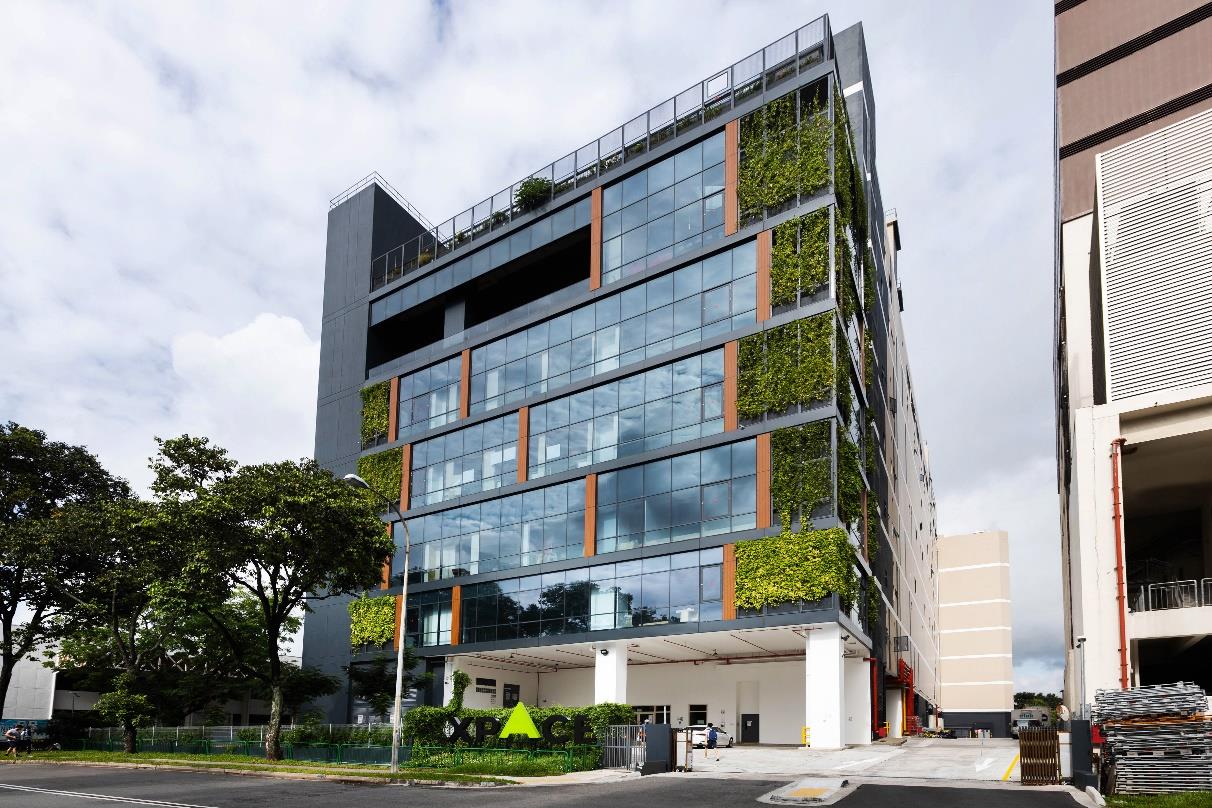
By 2019, FoodXervices had grown its food distribution client base to 5,000 customers, amongst them marquee clients like Shake Shack, Marina Bay Sands and Singapore Airlines. It did around S$65 million worth of business a year and supplied 5,000 items to these businesses. It employed 248 people.
In 2020, the Covid-19 pandemic hit. FoodXervices’s business ground to a halt. Its revenue, which was around S$5 million a month, went down to about S$500k overnight. It had zero consumer-facing businesses of its own, which meant that it was at the mercy of its customers — Shake Shack, Singapore Airlines, and the hotels it supplied across Singapore — all of which shut down in a span of days. Thanks to government support, the company was able to retain most of its employees. But it still haemorrhaged cash. Nichol said that she had food products stuck in storage, shipping containers stuck at sea, and electricity bills at their warehouse that amounted to $150k a month.
Two years later, in 2022, just as Singapore began emerging from the crisis, FoodXervices’s banks began to panic. Revenue was still anaemic. In an interview with the Straits Times, Nichol recalls:
“We’re an SME (small and medium-sized enterprise), we cannot manage such a huge asset on our balance sheet. So, the bank said it would grant us the building loan, but we had to get an investor in to help offset certain things. Where could we find an investor?”
A year later, the banks started a process to sell off the warehouse. It found a buyer — a real estate fund in Australia — in 2024. The asset sale allowed FoodXervices to pay off the building loan. But by this time, five other banks had cut off the company’s credit lines. Without credit, FoodXervices couldn’t buy inventory, which meant it couldn’t fulfil its function as distributor.
On March 26, 2026, FoodXervices notified its customers that it had lost access to its Pandan Loop warehouse. The Ngs stayed on to match long-time brand partners with new distributors. Liquidators had control of the business now, and were winding things down.
Nichol, who was CEO, spoke to journalist Tan Hsueh Yun on the event of the company’s closure. Tan writes:
Ms Ng, who had sold her home and put the money into the company, asks: “What went wrong? Did Nicholas and I spend too much on digitisation and sustainability? We were upskilling all our staff and even put our effort into building an NGO from scratch.
“We were the poster boy and girl of this trade. But the truth is that we were making less profit than before. Maybe I should have listened to my late father, who said: ‘Don’t spend on these kinds of things, like doing charity.’”
If it weren’t for the pandemic, it’s likely that FoodXervices would still be around. The company — under various names, starting from that first provision shop on Rochor road — was 92 years old at the time of its closure. A reasonable observer would likely say that the Ng siblings had done a good job over their tenure, growing the business from a mere S$5 million purchase over 19 years.
But the business was no more.