Case
The Pritzkers: Capital Allocation, Family Style
Listen to this case (Turnarounds)
One early morning in 1957, Jay Pritzker was wandering the halls of Los Angeles International Airport. His red-eye flight from Chicago had just landed. Disembarking the airplane, it was half past six: “too late to get some sleep, too early to do anything,” as he put it. Pritzker’s work had kept him up most of the night. But the bleary-eyed businessman wasn’t going to miss an appointment.
Killing time, he stumbled into the lobby of an airport hotel, where he found a bustling coffee shop operating under the moniker of Fat Eddie’s. Affluent-appearing people in business attire fuelled up on caffeine, protein, and carbohydrates, prepping for the busy day ahead. Intrigued, Pritzker sat down. Despite the name evoking images of a greasy diner, Pritzker was served a gourmet breakfast, which he thoroughly enjoyed. Savouring the final few bites, his mind began percolating. What was this place?
This was an era when airport hotels were no better than dusty roadside motels. Pritzker made a beeline to the clerk’s desk. He wanted to know who owned the hotel and how he could get in touch with them. Before long, he was speaking with the man whose name was plastered on the property — Hyatt Von Dehn. As it happened, both the cafe and the hotel were for sale. Pritzker recounts: “I wrote out a few notes on what we might offer and a few days later Von Dehn called and accepted my offer.”
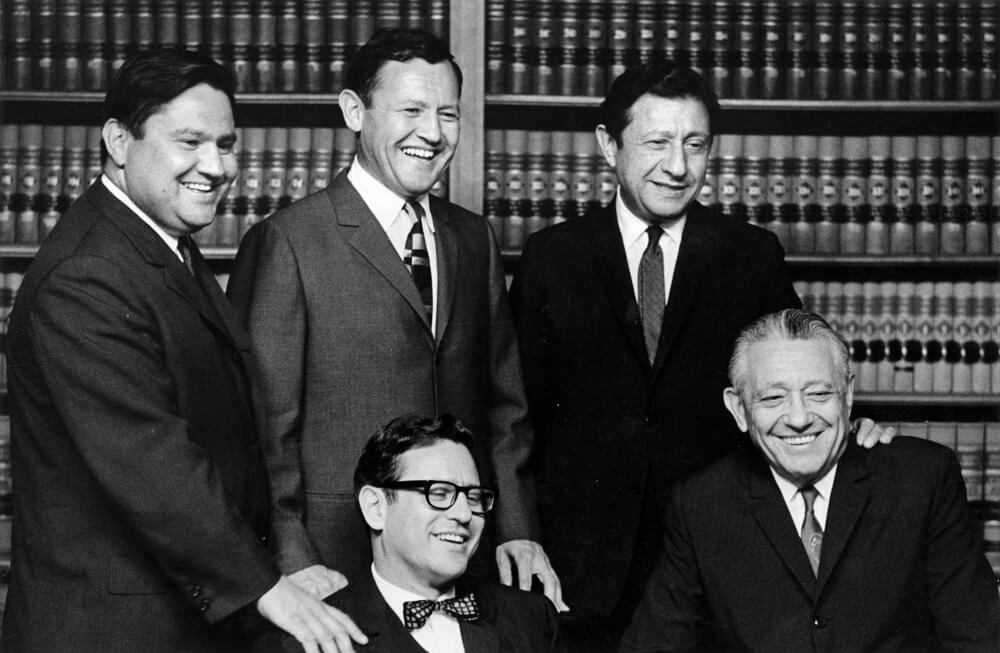
“It was a typical Pritzker operation: intuition signaled opportunity, a quick look at the books confirmed the basics,” writes Pritzker family historian Edwin Darby. Just over three decades later, thanks to a vast hotel and manufacturing empire, the Pritzkers would be “worth a minimum of $3.5 billion and almost certainly much more,” according to Fortune Magazine, writing in 1988.
This is how they did it.
Kyiv to Chicago
In 1881, Yakov “Jacob” Pritzker moved his wife and kids from Kyiv to Chicago. Violence against the Jewish population in the Russian Empire had been the impetus for their relocation. Yakov’s nine-year-old son, Nicholas, hit the ground running in his adopted country, beginning to work right away. The boy took every odd job he could find. He shined shoes, sold newspapers, and worked as a tailor’s assistant.
The youngster taught himself English by reading the Chicago Tribune with the help of English-German and German-Russian dictionaries. Eventually, he earned a pharmacist certification, no small feat for a Ukrainian immigrant in 19th-century America.
Still, Nicholas J. Pritzker wanted more. He enrolled at Northwestern University. From there, the upstart Pritzker worked his way through law school, studying nights at DePaul University. In 1901, at age 29, he opened the law firm Pritzker & Pritzker — an institution that would remain at the heart of the family’s business operations for generations.
Nicholas went on to father three sons: Abram, Jack, and Harry. And though he was raised in an Orthodox Jewish household, Nicholas was agnostic. He maintained an “important intellectual presence” in the family, sometimes challenging other Pritzkers to theological debates over dinner. In his later years, he penned a book that would be passed down from Pritzker to Pritzker. His message? “Your only immortality is the impact you have on your successors,” Fortune reported.
When Nicholas passed away as a widower in 1957, he left $75,000 (all the liquid assets in his estate) to his housekeeper, who had looked after him in his final years. Of the move, Edwin Darby writes in his Pritzker family chronicle, The Fortune Builders:
In too many families that degree of generosity would have meant a bitter squabble and lawsuits. But Nicholas’s sons approved of the grant before and after his death and over the years helped guide the housekeeper into investments that made her a wealthy woman.
Like his book, Nicholas’s free thinking and generosity helped shape the Pritzker way and played a role in everything that came later.
The Man Who Paid Back Every Penny
Born in 1896, Abram “A.N.” Pritzker was the eldest son of Nicholas J. Pritzker. Abram began his business tutelage at a young age. With his family’s wealth growing, A.N. earned a law degree from Harvard University. In his 20s, he began dabbling in finance and real estate, while also practicing corporate law.
During the boom economy of the 1920s, Abram jumped headfirst into Florida's burgeoning real estate development. When land values tanked in the Sunshine State, Abram’s syndicate went belly up. His partners lost $320,000. Though he had no legal obligation to do so, Abram paid each partner back every last cent. Darby writes: “Abram paid off his partners and ended up, he says, with $3.20. That $3.20, exact to the penny, could be kidding on the square. Abram and his sons had a real sense of humor.”
By the mid-1930s, A.N. had given up corporate law. He began purchasing distressed assets on his own. According to Fortune: “He was a compulsive negotiator who always had an envelope ready on which to scribble the terms he was offering.” Abram invested in a diverse array of small companies around Chicago. He and his brother Jack also had success buying up real estate at bargain-basement prices during the Great Depression. Soon, he expanded operations outside of his home city, even securing a hotel in Havana, Cuba.
The ex-lawyer struck gold when he bought the Cory Corp in 1941. Shrugging off the objections of his legal team, who he said “disagreed with everything in the contract,” A.N. went ahead with his acquisition of the company that made coffee percolators and small appliances. After buying Cory Corp for $25,000 cash and a $75,000 note, Abram and his business partner, James W. Alsdorf, sold the company to Hershey for $27.5 million.
During all this, Abram Pritzker was also raising three sons — Jay, Robert, and Donald — each of whom would contribute significantly to the growing Pritzker Empire. But even as his kids took over, Abram would remain a strong presence in the family business until the end of his life, telling a Sun-Times reporter in 1986 (the year he died): “My sons think I should retire because I’m 90, but I like to work. That’s all I like to do. I don’t like to sit around on my can.”
The Dealmaker, The Operator, and The Builder
Jay Pritzker, Abram’s first son, was born in 1922. Jay was an aviation enthusiast who served as a Navy pilot during World War II. He received his law degree from Northwestern University in 1947.
Edwin Darby describes Jay as “a world-class sprinter when it comes to reading a financial statement.” Jay was fond of handshake deals and distrustful of what he called “lawyer-lawyers,” whom he believed were different from “business-man-lawyers.”
This was rather unusual for him to say. Jay was, after all, a trained lawyer, and the son, a nephew, and a grandson of lawyers. To him, ‘lawyer lawyers’ could only complicate business.
The Hyatt deal was a good example of this. Jay had a hunch, looked over some numbers, and then cut a simple deal, free of convoluted protections. From that single hotel eventually grew the Hyatt empire.
Jay became the family’s primary dealmaker, a shrewd broker with an eye for untapped potential. When asked to describe the Pritzker business philosophy, he once said: “We go in and say, ‘Here’s what we’ll do—A, B, C. If you like, fine. If not, that’s okay, too.’”
Abram’s second son, Robert “Bob” Pritzker, was born in 1926. As a boy, Bob debated scripture with his grandfather Nicholas and solved math problems his father posed at the dinner table. He went on to study industrial engineering at the Illinois Institute of Technology (IIT), graduating in 1946. According to Edwin Darby: “When Bob graduated from the Illinois Institute of Technology at the early age of 19, a professor told him that he had the makings of an excellent engineer but that he was almost illiterate.”
Bob took the comments to heart. Soon, he began reading every literary classic he could get his hands on, developing an affinity for poetry that stayed with him for the rest of his life. Described as an operator’s operator, Bob Pritzker ran the Marmon Group, a collection of manufacturing companies. We shall talk about those in a bit.
Abram’s youngest boy was Donald. Born in 1932, Donald Pritzker “had a captivating smile, an uproarious laugh, and a wit that would show up a stand-up comedian,” according to Fortune Magazine. “Don,” who was “touched with the genius of the clan,” ran Hyatt Hotels until his untimely death in 1972.
Each brother played a critical role in growing the Pritzker family fortune. While Jay could spot a profitable business where everyone else saw ruin, his brothers could operate those businesses in the Pritzker manner. Along the way, they added companies to Marmon “when Jay felt the numbers indicated a good return on investment and when Bob thought the company would be fun.”
Yakov Pritzker could never have imagined that his ‘one for all, all for one’ mentality would carry across the Pritzker bloodline for so long. According to a 1968 article in Time Magazine:
Although profitable deals have carried the family a long way from the Depression, the Pritzkers retain the frugal camaraderie of those days. “We all sign each other’s bank accounts,” says Jay, “and the money goes into one common pot.” The family has even been known to sit around a luncheon table at Chicago’s Standard Club and, while discussing new business deals, divvy up a single corned-beef sandwich.
Whether it was a corned-beef sandwich or a multimillion-dollar sale, what was one Pritzker’s was the other’s as well.
Building Marmon
In 1953, a 31 year old Jay Pritzker purchased the Colson Co. Colson was a floundering Ohio manufacturer. It made bicycles and casters for hand trucks, carts, and dollies, and it also made an unsuccessful foray into rocket components.
After buying the company, Jay handed the reins over to Bob. Though Robert Pritzker was only 27, he already had six years of experience in factory production roles. He got to work restructuring Colson, which was doing under $5 million in annual sales.
Bob’s first move was to eliminate the company's bicycle and rocket component manufacturing. He leaned into the mundane business of building industrial casters. However, Bob quickly realized Colson’s facilities in Elyria, Ohio, were antiquated and couldn't meet ever-evolving production needs.
He moved the company’s manufacturing to a brand-new plant in Arkansas. There, Bob Pritzker was often seen strolling the factory floor sporting an ear-to-ear grin. Wearing his trademark bow tie, the short but solidly built man would approach company managers, engineers, and labourers, asking all manner of questions. Darby writes:
The target of the questions may be a company president, a blue-collar worker, or a customer. The questions are not necessarily for his benefit. They get his people to thinking; often they generate a more efficient way of making a gadget or even an idea for a new product.
Soon Bob had transformed Colson into a thriving enterprise. He bought small companies that possessed the infrastructure to improve Colson’s efficiency. Then he reinvested the profits in the company, purchasing new plants and equipment.
Meanwhile, Jay continued buying up distressed manufacturing firms across America. In the early 1950s, the Pritzker dealmaker flew to Oregon to look into buying a Portland-based wooden door manufacturer. Within three days of arriving, he had worked out a handshake agreement with the owners. The deal included a partnership and the Pritzkers’ acquisition of a plywood mill. Jay even moved to the area with his wife, Cindy, where they lived for a year. While there, they also bought a small company that manufactured paint rollers, bringing it into the Pritzker orbit.
The sudden opportunity to enter the lumber business seemed to come out of nowhere. The family had virtually zero experience in the industry. But as Jay Pritzker did time and time again, he saw the opportunity and seized it. Edwin Darby writes:
According to Jay, the family got into lumber by way of a “ridiculous fluke.” Bertrand Goldberg, the influential architect (Marina City), got the Pritzkers interested in a far-out idea: the manufacture of a Goldberg-designed lightweight “plywood freight car.” “Someone,” Jay says, “suggested we buy a plywood mill. It was like starting a cookie factory and deciding you needed to buy a wheat farm.” The freight car never rolled, but some people would consider the timber and lumber operation a sufficient reward.
Eventually, by the mid-1980s, the family would own over 500,000 acres of timberland across the United States and Costa Rica.
After entering the timber business, the Pritzkers partnered with the Murchison family of Texas to develop what was then America’s largest industrial park, Centex Park, in the Chicago suburbs. Through these seemingly dull dealings, Jay Pritzker and the Pritzker clan built the foundation of Marmon, a manufacturing giant that would generate much of the family’s wealth.

In 1962, the Pritzkers acquired the E.L. Bruce Company through a stroke of sheer luck. (Or misfortune, depending on how you look at it). The Memphis-based flooring manufacturer had gone bankrupt after its flamboyant financier, Edward M. Gilbert, took off for Brazil with nearly all of the company’s cash.
The First National Bank of Chicago had lent the Bruce Company a large sum. It was left holding the remnants of the insolvent firm. Desperately seeking relief, the bank reached out to Jay Pritzker and Colonel Henry Crown (the man Howard Hughes once asked to bail out TWA), business leaders to whom it had lent money in the past.
Both men hoped the other would save E.L. Bruce. Now in a bind, Gaylord Freeman of the First National suggested Pritzker and Crown flip a coin right there in his office. The men agreed. Calling heads, Jay Pritzker “won, or lost, as he later said,” writes Edwin Darby. Despite his stated uncertainty, the Pritzkers revived E.L. Bruce within six years and sold the company for a profit.
By 1966, Marmon had gone public, issuing stock to finance the purchase of the Fenestra Company (a sizable manufacturer of metal doors and windows). Soon, the Pritzkers were unhappy with the trappings of being a public firm. According to Darby: “Forced to make periodic disclosures of company operations and annoyed by the red tape generated by the lawyers of the U.S. Securities and Exchange Commission and the stock exchanges, the Pritzkers paid off their outside stockholders and were happily operating once again in a telephone booth by 1971.”
However, by 1976, continued expansion would force the Pritzkers to take Marmon public again. That year, they spent $72 million in cash and raised $88 million in preferred stock to purchase Cerro Corp. This was an international copper mining enterprise with large metal-bending and wire factories, which boasted almost $600 million in sales. The Pritzkers’ purchase was perfectly timed. On the heels of the 1974-1975 recession, Cerro’s profits were sagging. Worsening matters, the governments of Peru and Chile had expropriated all of the company’s mines in their respective countries.
Still, after crunching the numbers, Jay Pritzker and company saw an opportunity. Even if you excluded the $160 million in working capital, and you ignored the $100 million owed to it by Peru and Chile, Cerro was loaded with manufacturing infrastructure. As Darby writes: “Earnings can roller-coaster up and down, Jay says, but a factory is a factory, real wealth.” He was talking about replacement cost — the amount of money it would take to rebuild Cerro’s manufacturing assets. The Pritzkers were making a bet that Cerro’s purchasing price would still come under the cost of building (or re-building) these facilities from scratch.
After adding Cerro to the fold, Marmon acquisitions — both big and small — came quicker. By 1978, Marmon’s sales reached $1.4 billion with a profit of $63.6 million. Three years later, the Pritzkers attempted to acquire Trans Union, a Chicago company doing $1.1 billion in annual revenue. Trans Union leased rail cars, particularly tanker cars. The company was highly respected, with roots tracing back to John D. Rockefeller and Standard Oil. But it was not a distressed asset. To get it, the Pritzkers would have to pony up $688 million in cash.
To fund the deal, the Pritzkers borrowed over $450 million at the sky-high interest rates available in 1981. Trans Union’s management opposed the buyout. This was rather unusual; the Pritzkers normally acquired companies under relatively benign conditions, whilst on good terms with the management. This time, though, Jay Pritzker was adamant. He got the board to take his offer seriously, and the old railway company came under Marmon’s umbrella. A 1988 Fortune article states:
Marmon consists of some 60 different outfits, including Union Tank Car, one of the nation's largest manufacturers of railroad tank cars; Getz Corp., a 128-year-old trading firm that last year distributed over $330 million of merchandise throughout Asia; and companies that make gloves, refine copper, lease cranes, reconfigure heavy-duty trucks, and help lenders run credit checks on their customers.
While Robert Pritzker ran Marmon, Jay and Donald worked to build something entirely different on the other side of the country.
Building Hyatt
When Jay Pritzker stumbled onto the Hyatt House at Los Angeles International Airport, he suspected there might be a market for upscale airport hotels, aimed at business travelers. Jay bought the hotel from Hyatt von Dehn for a cool $2.1 million dollars ($25 million in 2026 dollars) mere days after talking to the man. This purchase occurred a mere five years after Jay’s first deal for Marmon. As always, he acted swiftly, on instinct.
Soon, the Pritzkers opened a second Hyatt, building a hotel from scratch in Burlingame, California, near the San Francisco International Airport. By 1961, under Jay Pritzker’s guidance, the original Hyatt House had expanded “into a fledgling chain of six hotels,” per Fortune Magazine. All of them were built near airports. Around this time, Donald Pritzker, who obtained his law degree in 1959, was sent to California to manage it. And though Jay made the major decisions, Donald ran Hyatt’s operations.
Donald placed a major bet in 1967. That year, the Pritzkers bought an unfinished hotel in Atlanta for $18.9 million ($189.5 million in 2026 dollars). Designed by architect John Portman Jr., the property featured a grandiose atrium. An atrium — as many of us are familiar with today — is a large, open inner space inside a building. It makes for a grand feeling, as it opens up the lobby and draws the eye upward. Unfortunately, Portman Jr.’s atrium sacrificed valuable room space to accomplish this ‘grand feeling’.
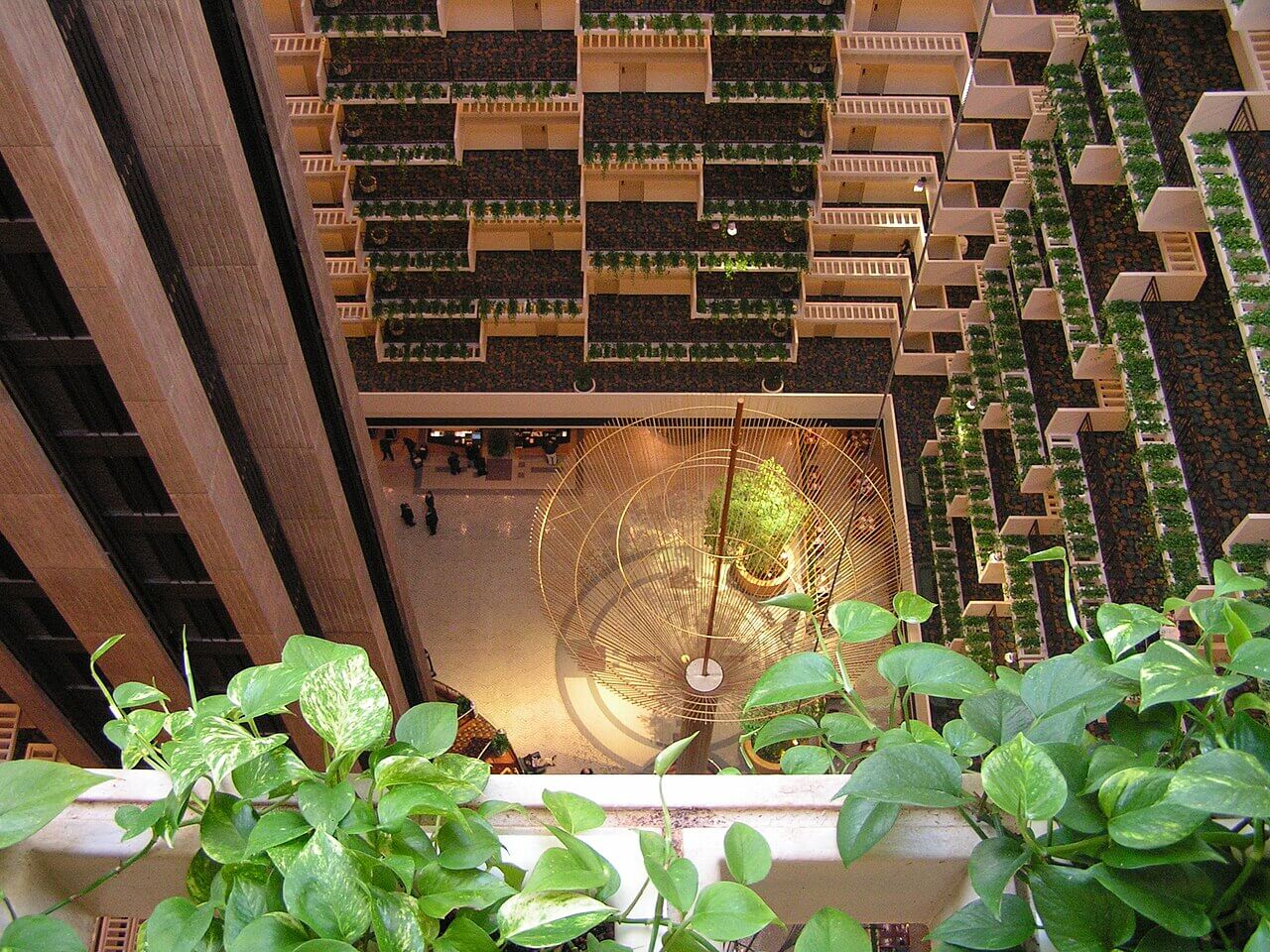

Almost every other hotelier had balked. Donald, however, was interested. Years later, Portman Jr. would say that only Donald Pritzker saw the atrium design as ‘anything but a waste of space.’ Conrad Hilton (of Hilton Hotels) reportedly said: “That concrete monster will never fly.” An interview near the end of Portman Jr’s career described the events like so:
“When our first hotel in Atlanta was under construction, no hotel company wanted any part of it. Then, I met the Pritzker family. Jay later said that he was afraid the skylight would make the space act like a giant terrarium—warm air would rise up, hit the cool glass, form condensation, and, then, it would actually rain in the lobby. But the Pritzkers went for it, and that hotel is now the Hyatt Regency Atlanta. (...) I don’t know that they were truly convinced until after the opening, when the hotel was an apparent huge success. I believe that they bought the hotel at the time because they wanted to expand their brand and it was the only hotel they could find that had financing and was under construction. Donald Pritzker wouldn’t even stay in Atlanta for the soft opening. He was so apprehensive as to how the public would receive it; he flew back to California on the day before the doors were opened.”
The Pritzkers likely saw the design as a highly asymmetric opportunity. As Portman Jr. mentioned, the hotel was already under construction and had financing lined up. If the design wasn’t such a risk, there was no way Hyatt would’ve been approached; they were then bit players in the hotel world. Fortunately for the Pritzkers, Portman Jr. turned out to be right; within three months of opening, the Hyatt Regency Atlanta was doing a 94.6% occupancy rate.
The atrium concept would be copied throughout the hotel industry — both within the US and globally. More importantly, though, it catapulted Hyatt from an airport hotel company into a serious hotel brand. Soon, atriums like the one in Atlanta would become a staple of all new Hyatt Hotels. Years later, Abram Pritzker would say: “Every hotel we have we owe to that one in Atlanta.”
Edwin Darby writes: “Very shortly the Hyatt Regency Atlanta was generating profits at a rate unheard of outside of Las Vegas.” Now the Pritzkers had a concept that worked. Donald's challenge was to scale it.
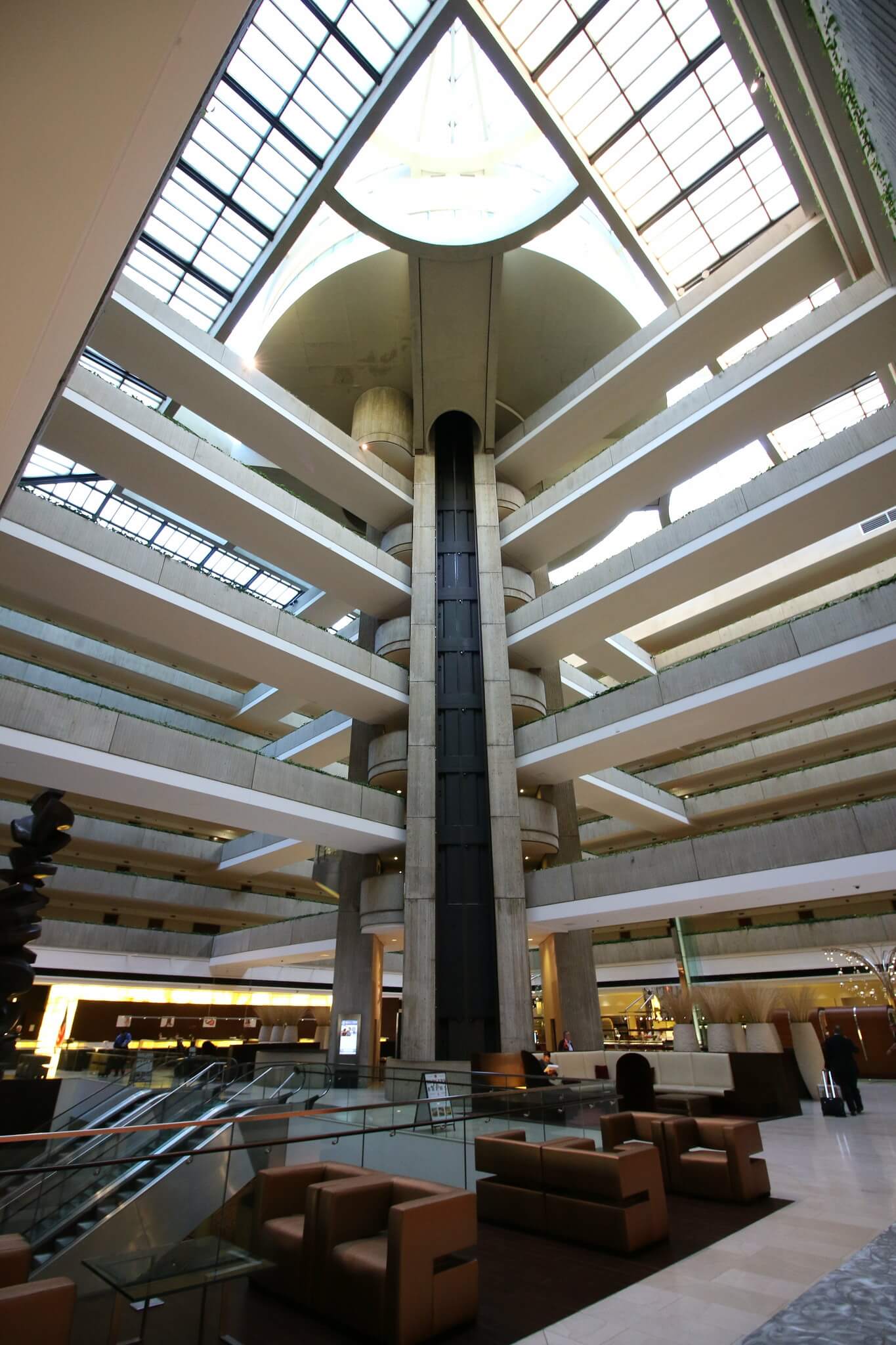
The Pritzkers took Hyatt public in 1967. Expansion continued to pick up. In 1973, the family spent $30 million to construct the Hyatt Regency O’Hare. The Chicago hotel featured a ten-story atrium, glass elevators, and copper-tinted glass towers that provided sweeping views of the airport.
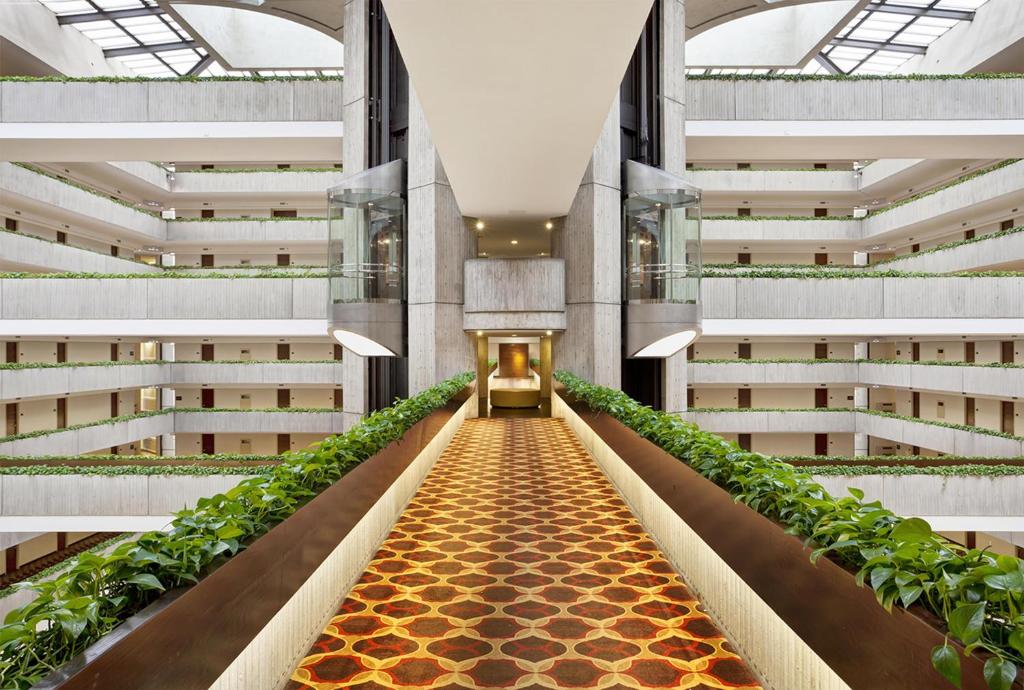
The Pritzkers hosted two parties, each with guest lists of 750 handpicked individuals, to open their new O’Hare location. Corporate titans, politicians, celebrities, and socialites were invited to dance to the Duke Ellington Orchestra, dine on gourmet dishes, and take in the splendor of what the Pritzkers had made.
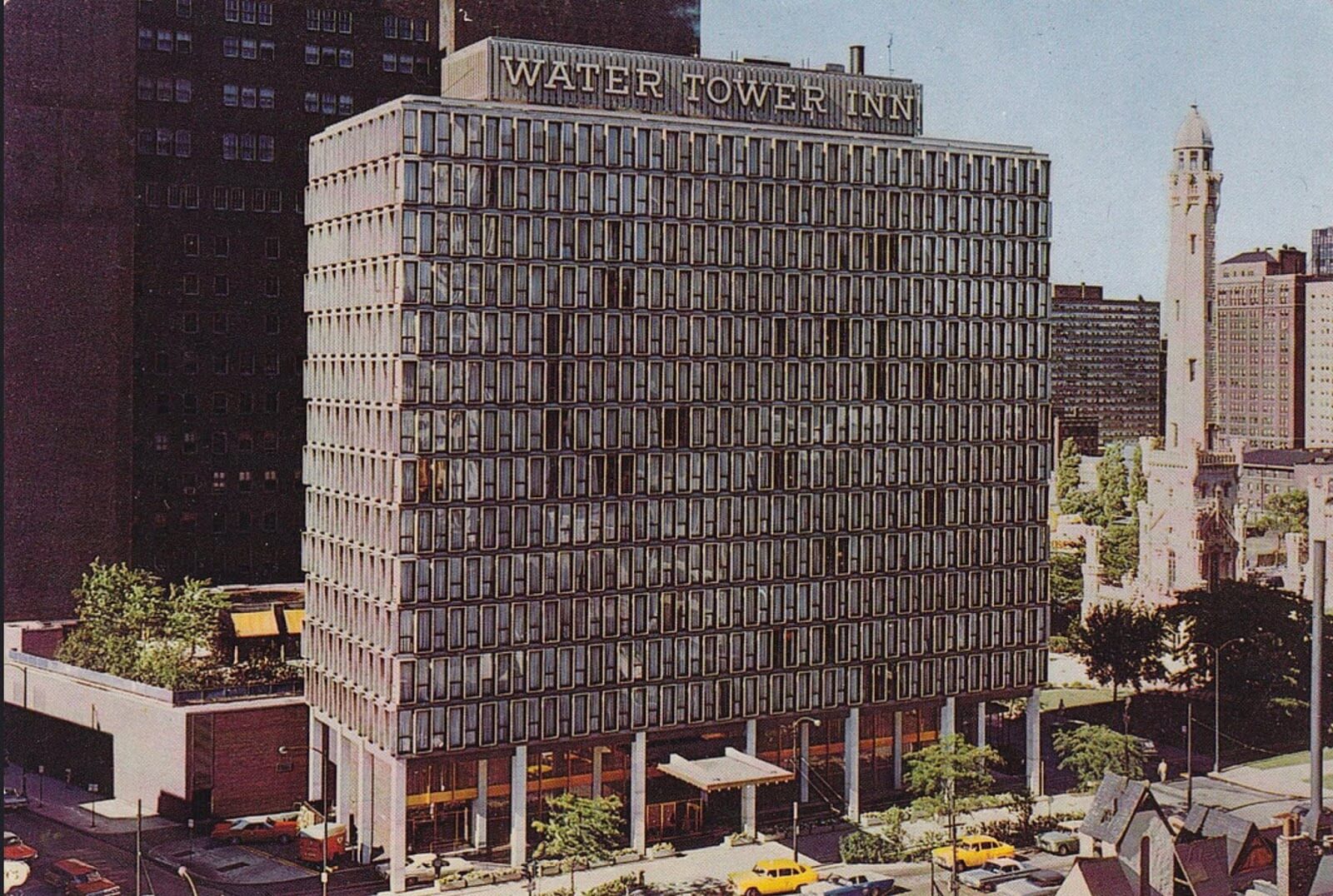
But the family wasn’t satisfied. They purchased the Water Tower Inn, renovated the facilities, and renamed it the Park Hyatt. The Pritzkers also built the 1,500-room Hyatt Regency Chicago just a stone’s throw from Lake Michigan in the city’s chic downtown area. A July 1978 issue of AIA Journal documents the result of Hyatt’s coast-to-coast expansion. According to the article:
… since his [Donald’s] first Regency, Hyatt has added 22 new ones in downtowns from coast to coast, a Regency being distinguished from more mundane Hyatt ventures by an atrium, and at least seven stories and 400 rooms. Other chains, notably Sheraton, Loews, Hilton and Western International (for whom Portman is now designer) have adopted the Regency concept.
As Hyatt's vice president for marketing and sales, Joe Kordsmeier, explains. “The idea of the open atrium is that once you walk out of your room, you're surrounded at once by that excitement, by the totality of the hotel. You’re one with the people in the glass elevators climbing an inside wall. You’re part of the bustle of the lobby with its conversation areas set beside indoor parks and reflecting pools. So guests simply feel glad to be in the hotel. The ambience is a status factor, good for self-esteem.”
The bulk of Hyatt’s business is meetings of various kinds, “and for meeting attendees,” says Kordsmeier, “the open atrium has an equally positive value. They come out of the meeting tired, looking for change-and suddenly they’re in an environment that offers the stimulation and excitement they need.” This, he adds, keeps more people in the hotel and builds its food and beverage volume.
In every city where there is a Regency, occupancy is 8 to 10 percent higher than in “neighboring conventional properties,” according to Kordsmeier. This, despite the fact that rates are 10 to 20 percent higher than in competitive hotels of more conventional design. Building costs for Hyatt Regencies, according to [Hyatt Corporation] President [Patrick J.] Foley, are also about 20 percent higher.
Between 1975 and 1978, Hyatt’s profit jumped from $2 million to $3.4 million. The Pritzkers moved company headquarters to Chicago in 1977, after a rare family controversy sparked by Jay Pritzker’s brother-in-law, Hyatt president Hugo “Skip” Friend, who spent $300,000 of company funds on personal expenses.. They then named Patrick Foley president. Though Jay Pritzker chose to demote Friend rather than fire him, Abram Pritzker, now over 80, would never speak to Friend again.
Soon after, Jay Pritzker began the process of buying out Hyatt’s shareholders, officially taking the company private in 1979.
In the first half of the 1980s, Hyatt expanded globally, opening new locations in Oakland, Long Beach, and New Delhi. By the middle of the decade, the Pritzkers owned or managed at least 109 hotels worldwide. In 1988, Hyatt had 91 locations across the United States, Canada, and the Caribbean. The mix of hotels and resorts totaled $1.8 billion in sales that year. In addition, Hyatt’s 44 international locations, fanned out across the rest of the world, generated $530 million in sales of their own.
Despite the tremendous growth, the Pritzkers were forced to continue building their hotel empire without the brother who had played a key role in the chain’s formation. Donald Pritzker passed away suddenly after experiencing a heart attack following one of his trademark vigorous tennis matches in 1972. “Don,” as his family called him, had been the CEO of Hyatt for a decade and the president of Hyatt International for almost five years.
After his brother’s death and a downturn for the company that occurred in 1975, Jay Pritzker told Business Week: “If my brother Don had been alive and running Hyatt, it would never have happened.” Edwin Darby writes: “That was high tribute to the abilities of Donald N. Pritzker.”
In 1979, the family created the Pritzker Architecture Prize. Planned in the years after Donald’s death, the prize was partly inspired by the youngest Pritzker brother’s love of the Portman-designed Atlanta hotel. Architecture, after all, helped turn Hyatt into a world-renowned brand name. Today, the Pritzker Prize is regarded as the single most prestigious international award an architect may receive. It is regularly described as both “architecture’s Nobel” and “the profession’s highest honour”.
Scaling Further
Throughout the 1970s, the Pritzkers continued to expand their business portfolio. As Jay Pritzker once said: “We like to win.”
Robert Pritzker, still a voracious reader, had long been interested in running a literary publication. In 1973, he got his chance when the family purchased McCall’s magazine from Norton Simon Inc. for $8 million. After Jay signed off on the numbers, the acquisition he called a “peanut deal” was done in three days.
McCall’s was “almost an institution,” per Edwin Darby. It had fallen on tough times, barely breaking even the year before. Once in control, the Pritzkers handed over editorial power to the magazine’s staff. The family then reduced page sizes, raised subscription prices, and increased the number of ad pages from 892 to 1,012 per year. The changes led to healthy profits that lasted for years.
But it wasn’t all wins for the Pritzker boys. They had their fair share of “clinkers,” as Jay called their failures.
In 1974, the family bought the Chicagoan magazine and stuck it out for eight monthly issues before admitting defeat. Perhaps more notably, the Pritzkers’ first investment on Wall Street, a stake in the Blair & Co investment firm, went bust in 1979. The blunder cost the family $800,000, a mere pittance compared to the toll it took on their pride.
Darby writes, “They like to win, but sometimes they do lose. ‘You pays your money and … [and you takes your choice]’ Jay says, and means it.”
In 1983, amid an industry-wide recession that cut Marmon’s first-quarter profits by 57%, Jay Pritzker was ready to take his biggest gamble yet. The aviation buff offered almost $70 million for the bankrupt, grounded Braniff Airlines.
Following weeks of negotiation, a determined Jay Pritzker put up a combination of cash and Hyatt Corp. credit to gain an 80% stake in the company. An anonymous banker said: “He’s trying to steal the goddamn airline.” As he had always done at both Marmon and Hyatt, Pritzker was acting on his instincts. Edwin Darby writes:
Braniff was a large gamble even for the Pritzkers at a time when major airlines were close to crash landings. Between recession and the turmoil of deregulation, Continental Airlines was in protective bankruptcy while Eastern and TWA flew from one financial storm to another. Originally based in Dallas, Braniff faced murderous competition from American and various regional lines. The financial pressure on the new Braniff was unrelenting; the takeover agreement signed by Jay demanded monthly lease payments of $2 to $3 million for the thirty jetliners Braniff would put in the air.
Despite the risk, Jay Pritzker saw that Braniff had generated a profit of $45 million as recently as 1978. He deduced that there was value to be had. In the years after the purchase, the Pritzker family restructured Braniff, splitting the airline into a shell renamed Dalfort. The company got “$325 million of tax benefits,” while keeping Braniff’s profitable maintenance division up and running, raking in even more revenue for the Pritzkers.
The Pritzker Way
Although mostly lawyers, the Pritzker clan invariably preferred a handshake deal over mountains of legal paperwork. As Jay puts it: “We have bought a lot of things on just a handshake or a paragraph or two.” Darby writes:
Jay says, his father always told him that it is not a contract that makes a deal but how you behave afterwards. Sounding the same theme, Bob holds that he would much rather have a business relationship with a man than with a piece of paper.
Despite being labeled as the “wheeler-dealer” type by some, the Pritzker family actually held most of the distressed assets they purchased for years, effectively turning them into profitable businesses rather than stripping them for parts. The 1988 Fortune magazine article had this to say about Jay’s deal-making style:
“There are many deals Jay probably should have done, but didn’t,” says Jerry Seslowe, managing director of a New York merchant bank partially owned by the Pritzkers. ''There are no deals he shouldn't have done but did.” Unlike some takeover entrepreneurs, who marshal all their equity and borrowing power to pursue a single acquisition, Jay prefers to spread money among many medium-size deals or to take on partners in large ones. This has helped diversify the Pritzkers’ portfolio and further reduce their risk. Paradoxically, Jay is drawn not to solid, healthy companies but to the most troubled and complex ones around.
What is more remarkable is that the family has a reputation for conducting itself ethically and generously. When it became clear that the Hyatt Regency Atlanta would be a successful venture, the property’s developers, many of whom had gone broke, came to the family hat in hand. Abram Pritzker offered them a deal, telling the destitute developers: “If the hotel made X dollars, I’d tear up half of that year’s notes, and if it made two times X, I’d tear up the whole note.” Writes Darby: “They [the developers] never did pay a dime more [on the note],”. Following the move, Abram’s sons jokingly referred to him as the “chairman of the Pritzker Giveaway Committee.”
In 1968, the Pritzkers donated $12 million to the University of Chicago Medical School. Robert Pritzker would give a $1.4 million gift to his alma mater, the Illinois Institute of Technology, to fund the creation of an environmental studies center in 1970. Bob summed up his thoughts on his philanthropic duty during a lecture when he said: “The American businessman has always been pictured as a materialistic dynamo with the social conscience of the saber-toothed tiger. This may have had some validity in 1890 but there’s no truth to the concept today.”
A passage from the Fortune magazine piece is pretty telling of Jay’s approach:
In 1976, Jay and Cindy endowed a Stanford laboratory dedicated to research in neurochemistry. Before making their gift, they toured the lab, quizzing everyone from scientists to dishwashers. Afterward, Jack Barchas, the director of the lab, asked about the questions. Jay’s answer: “Our philosophy is that we don’t buy companies to strip them of their assets. The key to us is the people who run them. It’s the same thing with the institutions to which we give money.”
By the mid-1980s, they were estimated to have donated $4.5 million annually.
The Pritzkers never adhered to a strict business plan, in any sector. The family acted largely on instincts, driven by strong moral principles, and a well-calibrated sense of risk. Decisions were made by consensus. Each brother took on his own projects with the others' tacit consent. Describing their relationship, Robert Pritzker said: “Some of my best friends are Pritzkers,” noting, “we always know what the others are thinking.”
That closeness let each of the Pritzkers — at least of that generation —operate cohesively. Jay made the deals. Robert ran the factories. Donald ran the hotels.
(Years later, an inheritance feud would break out amongst the younger Pritzkers, into the public eye. But that was after Jay had passed).
But it must be said: though the Pritzkers essentially owned everything as a collective, they treated their own companies as separate entities. As Hyatt’s president Darryl Hartley-Leonard once lamented: “For years Bob wouldn't give us any of Marmon's business because he thought we charged too much.”
Edward Gill Jr., who managed Colson Caster Corp., shared his frustration, saying: “It infuriates me to see somebody else's casters on the bellman's cart at a Hyatt. But we just have to grin and bear it.”
According to Fortune Magazine: “Robert Gluth, Marmon's executive vice president, says he has never seen any of the cash produced by Marmon go to support other family businesses.”
Years later, Jay Pritzker stated:
“No one in the family has a right to anything until he has made a contribution doing something and doing it well. He doesn't have to be in the family business. He can be a Yugoslavian poetry professor. But he had better be a good one.”