Case

How Blockbuster Nearly Killed Netflix, and then Stole Defeat from the Jaws of Victory
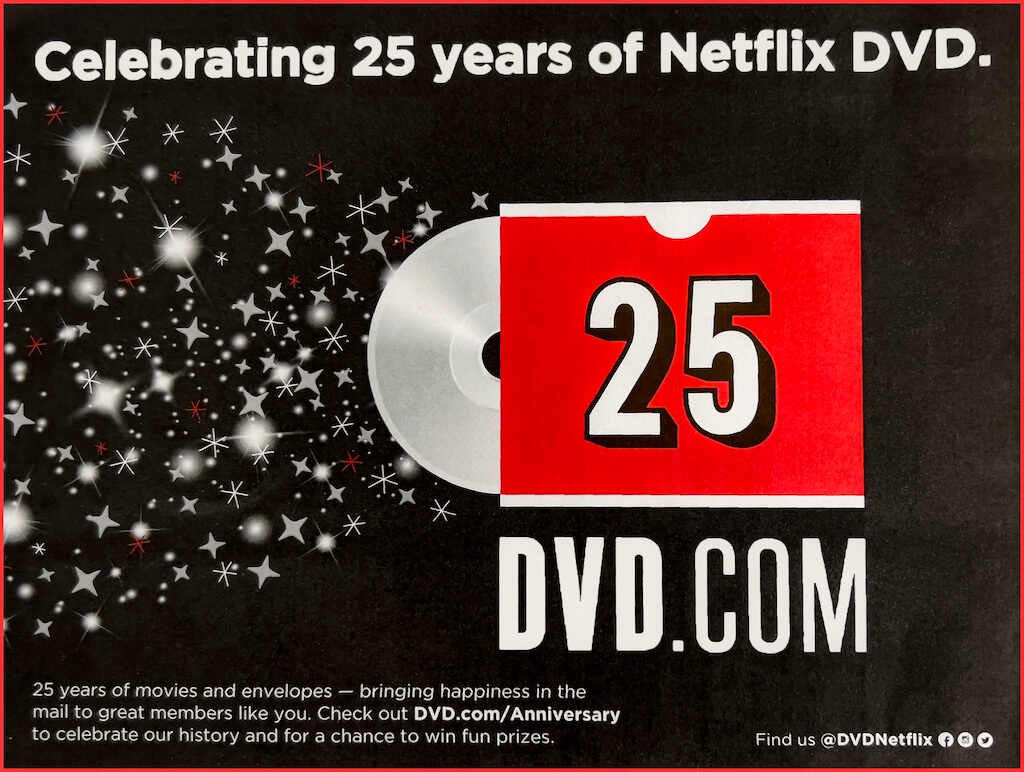
A Netflix celebratory envelope from 2023, when they finally discontinued their DVD-by-mail service. (Source)

On the afternoon of January 21, 2007, Netflix CEO and cofounder Reed Hastings was alone in his Park City, Utah home. Netflix was, at the time, known as an online DVD rental company — customers would visit the website, place their orders for DVDs, and have the DVDs shipped in the mail to them. In order to get their next rentals, customers would then have to ship their previously loaned DVDs back to the company. This was a win-win — Netflix had no physical presence, and customers paid only a monthly subscription fee for access to the entire library.

Sitting inside his residence, Hastings could hear jovial cinephiles skipping down the snow-lined streets outside the red-brick chalet, which had once been a church. The crowds were en route to the Sundance Film Festival. Sundance — then and now — was America’s top showcase for independent feature films, documentaries, series, and short films. It had become Netflix’s top marketing event. The festival, founded by big-screen icon Robert Redford, embodied the company’s sophisticated yet anti-establishment image. Anyone who was anyone in Hollywood was there. Hastings had made a practice of flying his employees out to the mountain resort community every year during Netflix’s early years. It gave them a chance to rub elbows with the best up-and-coming filmmakers, producers, studio chiefs, and all other manner of industry bigwigs. It also projected an air of inevitability for Netflix. 

In 2007, the company was hosting an invite-only party paying homage to Little Miss Sunshine. A low-budget tragicomedy that debuted at Sundance the year before, the film was nominated for four Academy Awards. Netflix’s marketing team decorated a rented warehouse with cheap patterned tablecloths and buckets of fried chicken, evoking the “suburban desolation” depicted in the hit film about a dysfunctional family road trip. There was even a battered Yellow VW bus, the movie’s enduring image, kitty-cornered in the room. Celebrities strutted down the red carpet before entering a labyrinth of open bars beside a dance floor, where they cut loose. According to business author Gina Keating: “The party was designed to echo the ironic cool that appealed to consumers about Netflix, and that the now ten-year-old company had carefully cultivated.

Across Park City, young Netflix employees strolled the affluent avenues sporting red parkas emblazoned with the company’s red-and-white logo. Swag bags and hospitality suites were packed full of Netflix caps, scarves, and bean bag chairs. The whole town seemed to be awash in Netflix red. And why not? The company had taken the entertainment industry by storm. What began as a startup with eight employees, beset later by a launch-day website crash, was now an industry leader boasting more than 6 million monthly subscribers. Netflix was winning. Or so it seemed. 

Reed Hastings, solitary on that grey Sunday afternoon, wasn’t so sure. A trained mathematician, Hastings and his analysts had run the numbers. What they found was concerning. A serious competitor had emerged. Blockbuster Online, the giant retailer’s web-based rental service, was suddenly signing up far more new subscribers than Netflix was. Before this, in the two and a half years since Blockbuster Online had entered the market, Netflix was consistently capturing about 70% of new online-rental subscribers to Blockbuster’s 30%. Now, in the span of just two months, that split had flipped. By the end of January, Netflix stock would tumble almost 12%. As Reed Hastings later told Shane Evangelist, the architect of Blockbuster Online: “You had us in checkmate.

It’s difficult to convey just how close Blockbuster came to winning in its fight against Netflix. In an alternate universe, Blockbuster would have become king-maker; Netflix would have been a has-been. When Hastings spoke to Evangelist, he wasn’t exaggerating. Blockbuster stole defeat from the jaws of victory. This is the story of how that happened.

Threat Taken Seriously 

One day in 2002, Blockbuster’s VP of business development Sam Bloom was thumbing through a report he had just been handed. Blockbuster was the incumbent to Netflix’s challenger. It operated a chain of home video rental stores throughout the country. Originally this was VHS tapes; in 2002 it was DVDs. Customers came in, paid for each DVD they took home, and then returned them. If they were late, they paid a fee.

Bloom’s boss, Blockbuster’s abrasive general counsel Ed Stead, had recently purchased DVD Rental Central, an Arizona-based business, for $1 million. Bloom was fascinated with emerging entertainment tech. He spent most of his time identifying technology startups with the potential to help Blockbuster achieve its digital growth goals. 

After handing the report to Bloom, Stead said: “We just bought this company, and you’re going to run it. Tell me what you need to make this beat Netflix.” A small father-son-run online DVD rental service, DVD Rental Central had amassed a respectable, albeit unspectacular, 10,000 subscribers. As Bloom clicked through the company’s website, he began to feel increasingly distressed. The site was functional, but it could never accommodate more than a few thousand users. He told Stead: “Ed, this is never going to beat Netflix. You need to use this as an experiment to learn about the business: about turnaround time; customer behaviour; and costs to acquire customers. That should be the ultimate goal of this.” Agreeing, the elder, less tech-savvy Stead left him to it. 

Bloom partnered up with Shane Evangelist, Blockbuster’s VP of strategy. The pair spent a year analyzing data from DVD Rental Central, which they had renamed Film Caddy, comparing the figures with Blockbuster’s in-store numbers. The idea was to paint a clearer picture of how consumers shifted between the two forms of rental. Initially, it appeared customers who rented online also liked to rent in-store. Bloom and Evangelist deduced that film buffs would often go online to rent older, more obscure titles. Then they’d head to brick-and-mortar shops when a spontaneous movie night arose or if they wanted a particular title, especially a new release. Ultimately, it seemed to be a wash. 

Later that year, Bloom was listening in on a Netflix investor conference call. He heard enthusiastic chatter about the company’s rapid subscriber growth in California’s Bay Area. A few years earlier, Netflix had quietly rolled out overnight delivery in San Francisco, which was now driving explosive subscriber growth. This was alarming. Bloom could see that Blockbuster’s Bay Area stores were experiencing significant decline. He began to doubt the findings of his and Evangelist’s Film Caddy study. Perhaps online DVD rentals — once made convenient enough — would eventually cannibalise in-store rentals? 

As it would turn out, those fears were well-founded. Gina Keating writes in her 2012 book Netflixed

First, the test run of about one year was too short to pick up on the fact that a significant percentage of subscribers cycle in and out of their online subscriptions—quitting the service and coming back later in the year. Blockbuster counted these as straight cancellations and miscalculated the average revenue per subscriber, making the online business look less lucrative than it was. Second, Bloom and his colleagues underestimated how valuable word-of-mouth recommendations would become on the Internet and how strongly consumer evangelizing would drive Netflix’s growth.

With the privilege of hindsight, it’s clear that Netflix had started to become a problem. The online DVD rental business, founded in 1997, was pilfering Blockbuster’s customers and eating away at its margins. 

At the time, however, much of Blockbuster's top brass were unaware of the threat. CEO John Antioco was among them. Antioco had gotten his start resurrecting underperforming 7-Eleven stores in New York City. He’d risk bodily harm to push delinquent franchisees, some of whom wouldn’t go without a fight. After climbing the ladder to vice president of marketing at Southland (7-Eleven’s parent company), Antioco went on to play a key role in bringing Circle K and later PepsiCo’s chain Taco Bell back from the brink. In 1997, he was named Blockbuster’s CEO. 

Blockbuster had enjoyed a period of substantial growth throughout the early 1990s. In 1994, media conglomerate Viacom purchased the movie rental store. When Antioco arrived, the company’s growth was slowing. The gregarious executive from Brooklyn saw a fatal flaw in Blockbuster’s business model: “an arrogance born of being the only game in town for too long,” writes Keating. Stores were dirty. Inventory was mismanaged. Products were overpriced. Service was poor. Customers detested the late fees Blockbuster tacked on in a seemingly trivial fashion. Internally, the company described its business plan as “managed dissatisfaction” — the late fees were a large chunk of their revenue. 

Complicating matters further, about 20% of Blockbuster’s US stores were run by franchisees, who were resistant to any change that might affect their immediate returns. Of Antioco’s situation, Keating writes: “He also encountered a demoralized, entrenched bureaucracy in the corporate-owned stores.” Antioco poured his energy into fixing what he could. He got to work cleaning up Blockbuster’s stores. He spoke with store managers and staff, looking to improve morale and customer relations. With help from Viacom’s largest shareholder, Sumner Redstone, he pursued revenue-sharing deals with big movie studios. This helped Blockbuster lower inventory costs and tripled the availability of new releases. 

Antioco’s next move was to tell his customers Blockbuster had changed. He opened a nationwide advertising campaign featuring an animated guinea pig and rabbit. The cute cartoon characters, Carl and Ray, delivered Blockbuster’s message that everyone’s favorite titles were now “guaranteed to be there.” Customer satisfaction improved. After a year, rental revenue jumped 13%. Active accounts rose 7%. Viacom’s stock price increased more than 100% during the same period. 

In August of 1999, Blockbuster went public, raising $465 million. Antioco pledged to investors that Blockbuster’s 6,500 US stores would increase the company’s share of the movie rental market from 31% to 40% within three years. That same year, Antioco publicly acknowledged Netflix’s online DVD rental service could one day pose at least some threat to their business. By 2001, nearly 25 million American households had DVD players. Netflix, which relied on DVDs exclusively, was well on its way to surpassing 500,000 subscribers. Still, many were skeptical of Netflix’s viability. P.J. McNealy, a Gartner analyst, described Netflix as a niche business, saying: “Whether everybody will pay that kind of premium remains to be seen. I don’t know whether Joe Six-Pack is going to shell out $240 a year.” McNealy set the bar for Netflix’s legitimacy at one million subscribers, adding: “That’s a goal, but they’re not there yet.

Despite those sentiments, Antioco thought it best to be somewhat proactive. To counter Netflix, he came up with a new in-store subscription service. Previously, Blockbuster rented out movies individually, charging customers a per-title fee to keep a movie for a set period of time. Now, it would allow unlimited movie rentals. Anyone could come into Blockbuster stores and take out as many movies as they wanted, two at a time, for $29.99 a month. Carl and Ray sold the deal on TV. The buses of Los Gatos, California, home of Netflix headquarters, were wrapped in Blockbuster ads pitching the new in-store subscription service. 

Netflix executives were honored that Blockbuster would see them as a potential competitor. Reed Hastings told USA Today: “Blockbuster is about a hundred times bigger than us, but they’re coming after us. They’re definitely out for a fight.” 

But recognizing a threat and funding a real fight against it were two different things. As late as 2003, Antioco still believed online DVD rental was a niche market. Sure, it wasn’t great for Blockbuster’s bottom line, but ultimately it was a separate market from in-store rental. Almost everyone seemed to agree. Gina Keating writes: “Blockbuster’s own studies continued to show limited consumer appeal and Wall Street still scoffed at Netflix as a niche player.” However, in March 2003, Netflix reached one million subscribers. 

Antioco was now paying close attention. Thanks to their Film Caddy experiments, Sam Bloom and Shane Evangelist were more attuned to the situation. They had been developing an idea for a hybrid in-store and online rental service that would better position Blockbuster to compete with Netflix. But Bloom had become increasingly frustrated with upper management’s lack of interest in the project. So, he handed the whole thing off to Shane Evangelist. 

A 28-year-old former gymnastics champion, Evangelist had made a name for himself at Blockbuster, quickly becoming a favorite of John Antioco. In late 2003, at a planning meeting in Phoenix, Antioco approached Evangelist. Antioco had taken notice of Evangelist’s work on the hybrid model. Blockbuster’s CEO, acting against the wishes of some of his closest confidantes, was fully bought in. Keating documents the resulting conversation. 

“Shane, how much money do you need?” Antioco asked. 

“I need twenty-five million dollars,” answered Evangelist. 

“All right—you’ve got it. Now leave, and don’t bother the store operators. You can take three people with you,” replied Antioco. 

Evangelist picked a pair of corporate strategy group analysts, along with a technologist. They set up shop in Dallas’s Paramount Building, an old red-brick structure in the city’s bohemian west end. Though it was just a few blocks from Blockbuster’s Renaissance Tower headquarters in the upscale business district, it felt a world away. The Paramount Building’s lobby butted up to a sandwich shop. During the lunchtime rush, the office smelled of grilled meat. An eccentric cast of characters roamed the streets at all hours, popping in and out of the hip bars and cafes just feet away. 

Soon, Evangelist realized he needed to scrap his hybrid rental model. Blockbuster stores weren’t yet online, instead relying on the same satellite system they had used since the 1980s. His solution was to recreate an online experience almost identical to Netflix, and then offer one-time free in-store rental coupons to new subscribers. On July 15, 2004, a quiet beta-test of what would become known as Blockbuster Online went live. 

That same day, Netflix released its second-quarter earnings. It wasn’t a coincidence. Evangelist was firing a shot across Netflix’s bow. Within a week, Netflix stock would lose nearly 60% of its value. When looking through Blockbuster Online signups, Evangelist found several Netflix employees' email addresses, including rhastings@netflix.com. 

Netflix’s top executive had noticed their supposedly quiet launch. 

Two Wars 

In September 2004, Viacom finalized a plan to split off Blockbuster. Wanting to keep Antioco around, Sumner Redstone had offered the CEO an improved compensation package ahead of the split. It boosted Antioco’s stake in Blockbuster to 3%. This would allow Antioco to earn as much as $50 million through salary and stock-based compensation, assuming Blockbuster’s share price rose. As a bonus, Redstone gave Antioco a $54 million severance package that he could claim if he were to lose his title as chairman or if he were fired without cause. 

Of the split’s terms, Gina Keating writes: “Viacom shareholders received 5.15 shares of Blockbuster stock plus a $5 special dividend for each share of Viacom stock they relinquished. Blockbuster took on $1.2 billion in debt to finance the special dividend, including paying Viacom $738 million to buy back its Blockbuster shares.” 

As a result, Blockbuster was now beholden to the demands of its creditors, who — as a condition of offering the debt — required the movie rental chain to adhere to a strict debt-to-income ratio. 

Once the deal was done, Antioco laid out a three-point plan he believed would help Blockbuster meet its goals. The first point was to correct the overabundance of video rental stores. Antioco wanted to purchase Blockbuster’s biggest brick-and-mortar competitor, Hollywood Video. He’d then shut down approximately 50% of the combined store base, shuttering underperforming locations. This would buy time for the healthy-performing stores while the rental industry was transitioning to digital. Second, Antioco wanted to get rid of the late fees that Blockbuster’s customers loathed so deeply. End of Late Fees, as he called it, would help bring back disaffected customers who had left for Netflix, which publicly boasted it had “no late fees ever.” Third, Antioco planned to make substantial investments in online rental and digital delivery. 

In October 2004, Antioco made his move, proposing a merger of Blockbuster and Hollywood Video. The deal would give his company a 45% share of the US store-based video rental market. That August, Hollywood Video’s founder, Mark Wattles, had shown receptiveness to an offer of $10.25 per share from the buyout firm Leonard Green & Partners. On November 12, Blockbuster came in offering $11.50 per share. Soon, Movie Gallery, an Alabama-based movie rental chain, the third-largest in America, made its own private offer — reported to be in the neighborhood of $760 million. But Antioco wasn’t giving up, volunteering to sweeten the deal if Wattles opened up his books. 

The bidding war attracted the attention of billionaire investor Carl Icahn. At 69 years old, the legendary hedge fund manager and corporate raider had amassed an $8.5 billion fortune by “taking over corporations in leveraged buyouts, pulling them apart, and selling the pieces off,” as Keating writes. Icahn was a “greenmailing” maestro. Greenmailing is when an investor secretly buys up a large stake in a company then uses that leverage to be disruptive. A greenmailer might threaten a hostile takeover, a proxy fight, or a public campaign against top executives. Their goal is to force the company to buy back shares at a premium. Then, and only then, would the greenmailer go away. This was exactly what Icahn specialised in — and everyone knew it. Keating writes: 

Although he had worked to rehabilitate his image since the days when he was grouped with Michael Milken and Ivan Boesky as a parasite on the financial world, his tactics remained the same. Icahn maintained an office in the General Motors Building in Midtown Manhattan, overlooking Central Park and the Plaza Hotel. The decor, with its rich, bold colors and original artwork depicting famous battles, conveyed a sense of power and state. The conference room, where Icahn had hung framed news clippings detailing the companies he had raided and the CEOs he had fired, drove the point home.

Soon, Icahn quietly purchased $150 million worth of Blockbuster stock and another $60 million of Hollywood Video stock. He had initially planned to short Blockbuster, but Michael Pachter, an analyst at Wedbush Morgan (now Wedbush Securities), convinced him to hold. Pachter thought Netflix was a sort of rental Ponzi scheme destined to collapse, at which time an established brand would either buy Netflix out or crush it with a better product. When Icahn reached out to introduce himself to Antioco, the Blockbuster CEO smelled trouble. Antioco knew that though Icahn portrayed himself as a shareholder advocate, his real goal was to force share buybacks and take board seats. 

Initially, Antioco hoped to win over Icahn by presenting the billionaire investor with Blockbuster’s road map. His general counsel, Ed Stead, advised against it. Legally, he could not disclose such information to a single investor. Regardless, Antioco was determined to keep Icahn out of Blockbuster’s operations. He found a staunch ally in Stead, who made a point of alienating Icahn every chance he got. At a charity dinner in New York, Stead and his wife crossed paths with Carl Icahn and his wife, Gail Golden. When Icahn introduced Golden, she laughed and looked directly at Stead, saying, “Ah yes, so you’re Ed Fucking Stead. I’ve heard all about you.

On March 26, 2005, amid threats from FTC regulators, Blockbuster pulled its offer for Hollywood Video, allowing Movie Gallery to purchase America’s second largest video rental store. In a statement, Antioco said: “Given the current circumstances, in our judgment it is not in Blockbuster’s best interest to continue to pursue the acquisition.” On March 28, Blockbuster’s stock fell 6%, dropping below $9, to cap off a yearlong decline of 43%. Meanwhile, Movie Gallery’s stock price increased by $5. 

Icahn was left holding the bag. He now had a substantial stake in a company that was losing value. Antioco contacted Icahn immediately, trying to ease tensions and avoid a public battle. Icahn lashed out at the CEO, vowing to take Blockbuster on a new course by himself. The corporate raider targeted Antioco’s compensation, calling the $51 million pay package “unconscionable.” Antioco responded: “The turmoil and uncertainty you have created threatens to destroy the organisation, jeopardise our success and could prove damaging to shareholder value,” addressing Icahn in a letter filed with the SEC. 

Tensions boiled over during a May earnings conference call, when Icahn asked: “Are you willing to agree that if these initiatives don’t work, and things don’t work out, that you would allow your whole board to be up for election next year, so that the shareholders would have the right to remove the board if they so wished?” 

“That’s not up to me to make that decision. The board will make that decision, so that’s the best answer I can give you,” Antioco retorted. Eventually, Antioco had to have the call operator cut Icahn off just to maintain order. At Blockbuster’s annual shareholder meeting on May 11, Icahn, aided by two dissident directors, was able to take 77% of the shareholder vote, seizing control of three seats on the board. 

Antioco was stripped of his chairmanship. “I’d be lying if I told you this is a happy day, because it is not,” Antioco said, before adding: “But we’ll roll with the punches.” Blockbuster’s CEO then threatened to trigger his $54 million severance payout. The next day, the board voted in favor of adding an eighth seat, a move to restore Antioco’s chairmanship. Blockbuster’s stock price shot up. However, a day later the rating agencies Fitch and S&P dropped the company’s credit rating into junk territory, citing concerns about ballooning debt and growing competition. The situation was exacerbated by Antioco’s End of Late Fees initiative, which was set to cost the company somewhere between $250-$300 million a year. Though franchisees were upset over the loss of income, Antioco and his market research team had determined that doing away with late fees was the best way to lure customers back into their stores. 

Throughout the latter half of 2004, rumors were persisting that Amazon was set to enter the online DVD rental market. The talk spooked Netflix. The company’s executives assumed that Amazon would undercut its flagship three-out program (allowing subscribers to rent three DVDs at a time) and carve into its growing user base. On October 14, 2004, Netflix announced it was lowering the price of a three-out subscription plan to $17.99, an 18% reduction. The news was tucked away in the last paragraph of a media release detailing Netflix’s third-quarter financials.

In a call with investors, Reed Hastings admitted that the market had become increasingly competitive, explicitly citing the impending entry of Amazon, while vaguely alluding to Blockbuster Online. During the call, investors also learned that Netflix CFO Barry McCarthy, who had been scheduled to retire, would stay on. McCarthy wanted to take the fight to Netflix’s competitors, saying, “There are very few challenges as exciting as the one we face, if in fact Amazon enters the marketplace,” before adding, “This is going to be epic, and it will be part of the lore of Silicon Valley.” “Besides,” he said, “you don’t leave your friends in the middle of a knife fight.” The Blockbuster Online team took note. Keating writes: 

At the Paramount Building, Evangelist listened rapt as Hastings laid out his plans, wondering how Blockbuster Online should respond. The call echoed from speakerphones all over the office. A jeer had gone up when McCarthy made his knife-fight comment, and within minutes, one of the developers had photoshopped a knife-wielding McCarthy facing off against a gun-toting Antioco under a headline that read: “This dumb ass thinks he’s in a knife fight.”

Evangelist and chief of subscriber acquisitions Ben Cooper immediately put their heads together, determining that they could price Blockbuster Online half a dollar below Netflix’s three-out plan. Antioco saw the move as a weak, half measure, one he likened to “kissing your sister,” Keating writes. Working on the theory that Netflix had more to lose on a per-subscriber basis, Antioco argued that Blockbuster Online should slash its price to $14.99 a month. Dining with Antioco that night, Nick Shepherd, the executive overseeing Blockbuster’s End of Late Fees, wasn’t so sure. Shepherd didn’t think that lowering the price a few dollars would yield tangible subscriber gains. Worse, it could hurt the company’s precarious financial health. 

Shepherd turned to his thirteen-year-old son, who was eating with them, jokingly asking for his opinion. The younger Shepherd agreed with Antioco; a larger price cut was the move. “The kid says drop the price,” Antioco proclaimed, asking Shepherd, “What are you going to do?” Blockbuster Online’s advertised price would be cut to $14.99 within weeks. 

Antioco and Evangelist, now holding nightly strategy sessions, believed they had sparked a price war that would sink Netflix. Perhaps, they could drive down Netflix’s stock price low enough to scoop up the entire company at a massive discount. But Netflix wasn’t going away without a fight. Keating writes: 

Hastings had remarked on a conference call in April that Blockbuster had thrown everything at Netflix “but the kitchen sink.” When he arrived at the University Drive headquarters the next day, a giant box from a home improvement store was waiting. Inside was a kitchen sink, courtesy of Ed Stead and the executives at Blockbuster. Hastings got a kick out of the gesture, but he had no intention of again underestimating the seriousness of the challenge that Blockbuster had laid down. Netflix was under siege, and Hastings knew he needed to rouse his company to its peak performance. 

Hastings was preparing his own act of showmanship, readying his troops for battle; he “handed out wooden harpoons to managers to exhort them to wait patiently for the whale that was Blockbuster to come up for air.” An existential fight was underway. 

Total Access 

By 2006, the price war had been grinding on for almost two years with no decisive winner. Blockbuster Online had created a low-end tier offering limited one-at-a-time rentals for $7.99 a month. Netflix countered by allowing subscribers to rent two movies a month for $4.99. Analysts were becoming alarmed by the rapid race to the bottom. Just how low would prices go? 

Antioco and Evangelist knew that their thousands of brick-and-mortar stores gave them an advantage over Netflix. They just weren’t sure how exactly to capitalise on it. Keating described it like this: “The problem lay in how to track online subscribers when they went into stores to return movies: Without Internet access, the stores could not connect to Blockbuster Online to track how many DVDs its subscribers had out and what they had returned, or to signal the distribution system to send the next disks in their queues.

One night that spring, Antioco and Evangelist were sitting in Blockbuster’s Dallas headquarters, wrestling with how to overcome their problem. Outfitting every Blockbuster store with modern internet connections would be expensive and messy. A light went on for Antioco, as he turned to Evangelist, saying: “Put a free rental coupon on the mailer. Just print the coupon on the mailer and have them bring the mailer into the stores for free rentals.” There was no need to count the individual disks rented by Blockbuster Online subscribers at Blockbuster’s stores. Instead, they could simply give subscribers the continual in-store rentals they were entitled to when they returned disks in the mailer. According to Gina Keating: 

The coupon printed directly on the mailer would include a bar code with the subscriber’s account information. When store employees swiped it at the cash register, the next DVD in the subscriber’s queue would be released—after the accumulated data was uploaded in the stores’ nightly satellite feed. The stores then would mail the DVDs to Blockbuster Online’s distribution centers, where they would be checked back in.

While it wasn’t the advanced system Evangelist had envisioned, it sounded like a good idea. It would allow for the integration of in-store and online rental, facilitating the hybrid model that Evangelist’s studies suggested was capable of beating Netflix. In a matter of weeks, they were putting the idea to the test, rolling it out in Colorado Springs, Colorado, Raleigh, North Carolina, and Fresno, California. The system was simple enough for consumers to understand. Pay a monthly subscription fee, and you could rent DVDs online and in-store. You could also return the mailer through post, or bring it into a Blockbuster store for your next rental. It was “a melding of the deep online DVD catalog and stores’ convenience that would drive traffic and online sign-ups past Netflix,” writes Keating. 

A month into the test, Evangelist and Ben Cooper went to Colorado Springs to see the results with their own eyes. They drove their rental car into the parking lot of a Blockbuster store downtown. It was the middle of a weekday afternoon and the movie rental shop was hopping. A steady stream of customers carrying yellow-and-blue Blockbuster Online mailers went into the store. The manager confirmed that what Evangelist and Cooper were seeing was not a one-off. Ever since the promotion began, the Colorado Springs location had seen an uptick in traffic, with many store-only customers signing up for Blockbuster Online on the store’s computer. Meanwhile, the Hollywood Video down the street was a ghost town — normal for a weekday afternoon. 

Evangelist was shocked by what he was witnessing. Colorado Springs was considered a bellwether market for Blockbuster. Testing in Raleigh and Fresno confirmed that the program was yielding results. Evangelist couldn’t wait. He called Antioco, who was vacationing in Mexico, to report the good news. Antioco chartered a plane and flew to Colorado Springs the next day to see it for himself. The hybrid model, coined Total Access, addressed all of the problems Blockbuster had been struggling to solve since 2001. Blockbuster’s CEO immediately ordered the program’s rollout across the country. Karen Raskopf, VP of corporate communications, hired Texan Jessica Simpson, one of America’s most relatable stars, to promote Total Access at an event on the Walk of Fame in Hollywood. Gina Keating covered that event. Years later, she wrote: 

Backstage, Antioco looked elated and relieved—like a man still absorbing his escape from certain death. He and Evangelist—who reminded me of almost a father and son in the similarity of their wiry, compact statures and barely leashed energy—were all smiles and swagger in our brief interview, and I came away reminded that, for all its recent woes, Blockbuster was more than capable of crushing Netflix.

On November 2, 2006, Total Access became available for Blockbuster Online subscribers across the country. The integrated program cut into both Netflix and Hollywood Video’s market share, cleaving away customers from both rivals. Within six weeks, 750,000 new subscribers had signed up. By the end of the year, Total Access subscribers climbed above two million. The program flipped new online DVD rental subscriber numbers in Blockbuster’s favour. 

That reversal is what had Reed Hastings sitting nervously in his Park City chalet a month later. Netflix was in crisis. Chief analyst Paul Kirincich and marketing analyst Erich Ziegler, the key pieces of Netflix’s numbers team, began looking into Blockbuster’s costs and debts. They determined that Antioco could keep Total Access running for up to two more years. If Netflix were to continue losing subscribers at its current rate, the company’s share price would collapse well before that. The result would be a painful march downward for Netflix, culminating in death. 

Hastings had been traveling back and forth between California and Rome, where his wife and children had moved to study abroad. He was planning to join them in the ancient Italian city, but now those plans were shelved. The exhaustion of constant travel, along with the stress brought on by Total Access, began to wear Hastings down. Leslie Kilgore, Netflix’s head of marketing, took to camping out outside Blockbuster stores. She interviewed Total Access customers, attempting to understand why so many were flocking to Blockbuster’s new service. Reporting back, visibly rattled, she told her team: “They really like this.” 

Barry McCarthy, Netflix’s CFO, urged caution. He reasoned that if they continued working to optimize their operations and focused on executing their business plan perfectly, they could find a way out of this. McCarthy pulled out his financial models, which he used as evidence for staying the course. Arguing in favor of price cuts to attract more subscribers, Hastings barked: “Your spreadsheet math is bullshit,” before adding: “We won’t know ’til we know, so let’s just try it.

Self-Destruction 

As John Antioco rode in a taxi winding up into the mountains above Park City’s congested streets, he found himself reminiscing on the previous three years. He and his team had fought hard — and appeared to be on the cusp of total victory against a formidable upstart. There had been so many twists. But now it seemed to have all paid off. Rumors had been flying since the Sundance Film Festival kicked off a few days earlier. Industry observers and insiders alike believed that Total Access had hit Netflix hard in the fourth quarter. Netflix’s company leadership was in disarray. So, when Reed Hastings finally got a hold of John Antioco and asked the Blockbuster CEO to meet, an explanation wasn’t necessary. The two men agreed to talk later that day at Hastings’ chalet. 

Hoping to keep things informal and to allow Hastings to speak his mind truly, Antioco showed up by himself. Stepping out of the cab after paying the driver, Antioco strode onto the porch outside of the steepled red-brick structure. Hastings was there to greet him at the door. Inside, they sat down with drinks. Hastings was short on the pleasantries, getting right down to business. He offered congratulations on Total Access, conceding that the program grabbed Netflix’s attention. Hastings had spent the last few months publicly bashing Blockbuster Online, calling it “technologically inferior” when speaking with financial analysts and journalists. Now, he wasn’t so blustering. 

Hastings admitted Total Access was a great proposition for customers. Netflix couldn’t match it — they simply didn’t have the store footprint. However, he let Antioco know that his analysts had determined Blockbuster was losing $2 every time a customer swapped a movie in-store. And since Total Access afforded its subscribers — now numbering three million — unlimited movie rentals, Blockbuster would surely have to keep going back to creditors to stay afloat. So whilst the growth of Total Access was impressive, Blockbuster would soon spend itself into an untenable position. The moment Blockbuster decided to limit movie rentals and raise prices, Netflix would be back on top. 

Antioco waited for Hastings to get to the point: what, exactly, was he proposing? 

Finally, the Netflix CEO made his pitch: he’d buy Blockbuster’s Total Access subscribers. Netflix was better at online rental, and more technologically adept, anyway. Gina Keating writes: “Hastings made the proposal sound like he was doing Blockbuster a favor, but Antioco knew it was the closest he’d get to an admission that he had won.” Antioco countered that they were doing alright. After all, he doubted that kind of deal would be approved by the FTC. Hastings was ready for that, throwing out an idea about a joint venture, a workaround to gobble up subscribers, without interference from regulatory agencies. Wrapping up the meeting, the CEOs agreed to talk it over with their teams. According to Keating: “Antioco left the chalet with a sense of exultation.

When Netflix released its first-quarter earnings, indicating a sharp decline in growth, Wedbush Morgan analyst Michael Pachter stated: “I don’t know how Netflix can win this thing,” surmising, “The only way they get back to growth is if Blockbuster goes away.” Hastings soon sent Antioco an informal offer. He’d pay $200 per subscriber, or about $600 million in total. Netflix would also compensate Blockbuster stores to cover the service needed for Total Access customers after the takeover was completed. 

Blockbuster executive Nick Shepherd saw an opportunity. He argued that they should play ball. Shepherd, then executive vice president and president of international operations, was running worldwide stores — the retail side of the company. Selling off Evangelist’s department wouldn’t hurt him; he wasn’t emotionally invested in it. And it was true that the deal would put Blockbuster’s balance sheet in a much better place. Of course, Shepherd thought that Blockbuster would be able to command a much better offer through negotiations. Antioco and Evangelist were outraged. To them, the lowball offer was an insult. They recommended to Blockbuster’s board that they let Hastings sweat. Maybe he’d come back with a serious offer after watching scores of customers flee his service in favor of Total Access. 

Blockbuster’s board took up the Netflix offer at their February meeting in Carl Icahn’s General Motors Building office in Manhattan. Laying out the numbers, Evangelist argued against selling. Blockbuster Online was adding 20,000-25,000 subscribers a day, on track to reach four million by the summer. With that kind of momentum, selling made no sense. Icahn and the board agreed. Next up on the agenda was the approval of annual bonuses. For hitting his 2006 targets, John Antioco was set to double his $3.8 million performance bonus, collecting $7.6 million. Seeing the figure on paper, Carl Icahn appeared shocked, a look that quickly transformed to anger. Keating documents what happened next.

“There is no way we are going to pay you this money,” he told Antioco. 

“What do you mean?” protested Antioco before adding: “You approved it. You’re on the compensation committee.” 

“I didn’t know it was going to be this big,” said Icahn. 

“Well, you should have done the math,” Antioco fired back. 

Under the terms of Antioco’s contract, if Blockbuster attained $285 million in adjusted gross income and Blockbuster Online reached two million subscribers by the end of 2006, Antioco would get the double bonus. He knew it, and they knew it. Antioco had worked hard, and he felt he had earned his pay. In 2005, Blockbuster posted a $500 million loss. Antioco had to renegotiate the company’s debt-to-income ratios on its credit deals four times just to keep cash flowing into Blockbuster Online. In 2006, things had turned around. Blockbuster posted a small profit. It didn’t matter. 

Compelled by Icahn, the board voted to slash Antioco’s bonus by half. Later that month, the board cut Antioco a $2 million check. Blockbuster’s CFO, Larry Zine, was tasked with delivering the bonus check. After handing it over, Antioco gave it back, saying: “Thank you very much; you can have it back.”

In short order, Antioco’s attorney delivered a copy of an arbitration claim. It alleged board misconduct. And Antioco planned to file it with Blockbuster’s outside counsel the following Monday. In response, the Blockbuster board voted to keep $4 million in escrow in case it had to hand over disputed funds. On February 23, the company informed investors that it was feuding with its CEO. 

The Friday night before the Monday arbitration, Antioco was at home. He was in his bedroom watching a movie when the phone rang. It was Icahn, in New York, where it was after midnight. The corporate raider was up late, looking for a fight, having had a few martinis. “Hi, Carl,” Antioco said. Icahn was in no mood for niceties, tearing into Blockbuster’s CEO straight away. He wanted to know why Antioco was dragging this out, as Keating writes: “Why couldn’t he just accept the lower bonus? Didn’t he care how a double bonus looked to people who had lost 40 percent of their investment in Blockbuster in just three years?” Antioco was driven to his breaking point. Having had a few tequila shots himself, he began screaming back at Icahn. Eventually, Antioco realized it was useless. He was already rich; he would most likely just give the bonus to charity anyway; what was he doing getting into a shouting match with Carl Icahn, who had the backing of the board? “Let’s negotiate my exit,” said Antioco. Icahn agreed. They got into the finer details of how Antioco’s departure would go. 

On March 20, Blockbuster announced Antioco would leave the company. He’d receive $8 million in severance and a bonus of five million stock options that vested by December 31, 2007, which would officially be his last day with the company. Icahn said the terms of Antioco’s exit: “are clearly in the best interests of the shareholders.” The day before, Antioco had met with his closest executives, including Shane Evangelist, to break the news. Stunned silence filled the room before Antioco urged his colleagues to keep their noses to the grindstone and focus on sustaining Total Access's success. Though he was meant to stay on board until the end of the calendar year, Antioco wouldn’t survive the summer. Carl Icahn was eager to push Antioco out. He felt that the only thing Antioco had ever cared about was money. To Icahn, Antioco had no allegiance to Blockbuster. 

Rumblings of a new CEO hire had begun. The name Jim Keyes was coming up again and again. A round-faced fifty-year-old, Keyes had retired after spending 20 years at 7-Eleven. As vice president of planning, Keyes had helped lead the convenience store chain’s revival in the US after it was losing market share to mini-marts in the early 1990s. Icahn thought he could do the same for Blockbuster. In 2005, just before his retirement, Keyes faced embarrassing allegations that he and other 7-Eleven executives had taken improper gifts from suppliers, which came to light in a lawsuit filed by food broker Milissa Boisseau. Gina Keating writes: 

The discovery process revealed, however, that Keyes himself had attended a fantasy baseball camp with the St. Louis Cardinals for several years, courtesy of Anheuser-Busch, and had accepted a spot on the AT&T Pebble Beach National Pro-Am tournament from AT&T, among other gifts from vendors. Other executives accepted special treatment from vendors at the same time that they decided to fire the four low-level assistants for accepting money to type up reports for Boisseau on how her products were selling in 7-Eleven stores, according to lawsuit documents.

Keyes was never punished. Antioco was familiar with the man, given his own history at 7-Eleven, but was surprised to hear the name being bandied about for CEO. Antioco was adamant that Nick Shepherd, whom he had promoted to chief operating officer in April, would be a natural fit. He saw no world in which the board would select Keyes over Shepherd. After all, Shepherd was pivotal in rolling out the No Late Fees initiative and Total Access. Unfortunately, Icahn found Keyes’s ideas for the future of digital business to be intriguing. On July 2, Keyes took over as Blockbuster’s CEO. Two days earlier, John Antioco had left the company. As he sat in a private jet on the tarmac at Dallas’s Love Field that night, he felt immense relief. He was finished. Blockbuster’s board seemed to believe that Keyes would continue to carry Antioco’s flame, leaning into Blockbuster Online. As it turned out, the opposite was true. 

Shane Evangelist realised relatively quickly that the new CEO was the anti-Antioco. Keyes seemed to have a personal animosity towards online commerce, telling Evangelist: “Total Access is killing the business,” adding, “You’re bankrupting the business. You can’t continue to operate at a deficit.” Evangelist countered that while he and Antioco had figured Blockbuster Online would operate at a loss in 2007, it was on track to be profitable in 2008. Soon, Evangelist discovered that Keyes planned to do away with Total Access entirely. Evangelist told him: “Jim, you’re missing this thing,” explaining, “This is a singular program that attacks both Hollywood Video and Netflix. You don’t have another deal for that.” 

On July 30, Keyes put forth his store-centric strategy for Blockbuster’s future. Of the plan, Keating writes: “Blockbuster stores would become “great” again as entertainment destinations that would sell a new mix of prepared foods, such as pizza and fountain sodas, as well as electronics, such as iPods and DVD players.” 

Veteran employees were horrified. Blockbuster had tried similar initiatives in the 1990s and failed spectacularly. Several top Blockbuster executives rushed to offload their stock when they heard about Keyes’s plans. Still, Keyes had Icahn’s full support, and at Icahn's urging, the board’s support. 

Keyes would go on to raise all subscription prices for Blockbuster Online, including a 40% hike on the Total Access premium plan. Evangelist pleaded with Keyes to sell Blockbuster Online. Netflix would pay close to $1 billion for it. Keyes refused. At the time Keyes took over as CEO, Blockbuster Online boasted 3.7 million subscribers. Evangelist predicted that without ads, by the end of 2007, that number would plummet to 1.5 million. To be fair, this didn’t happen: by November, Blockbuster Online fell to only 3.1 million subscribers

One day when Keyes was reiterating his plan to gut Blockbuster Online, he turned to Evangelist and said: “If you don’t like it, get the hell out.” On his way home, Evangelist got a call from the human resources department. They wanted to know what his response to Keyes’s ultimatum was. “Just trigger my contract,” he said, “I don’t want to work for him.” That night, Evangelist sat on his back porch watching the Texas sun sink lower. He sobbed as he thought about how the last four years of his life had been all for nought. 

A few weeks later, Evangelist attended a dinner at the San Francisco home of Silicon Valley investors Ellen and David Siminoff. Sitting across the table from Evangelist was Reed Hastings. Evangelist and the Netflix CEO made small talk while they ate. Eventually Evangelist’s curiosity won out. He wanted to know how serious a threat Blockbuster Online had actually been. Hastings admitted that he had been prepared to pay $300 per subscriber just to make Evangelist and his team go away. 

From there they began talking about Keyes’s new initiatives. It was clear to both men that Keyes would fail in his plans to rebuild the Blockbuster store base. It was only a question of when, not if, the board would realize his follies and replace him with a more tech-savvy executive. “How long do you think I have?” Hastings asked. “Two years, tops,” Evangelist replied. In 2008, when Keyes shut off spending on Total Access marketing, Netflix suddenly snapped back, beginning to grow like a weed again. According to Gina Keating: “It was as if a spigot had been turned on.

Sources

  1. The primary source for this case was Gina Keating’s Netflixed.

  2. https://www.digrin.com/stocks/detail/NFLX/price

  3. https://www.nbcnews.com/id/wbna21586579

Finished reading this case?

Member Comments