Case
How BlackBerry Died
Listen to this case (Technological Windows)
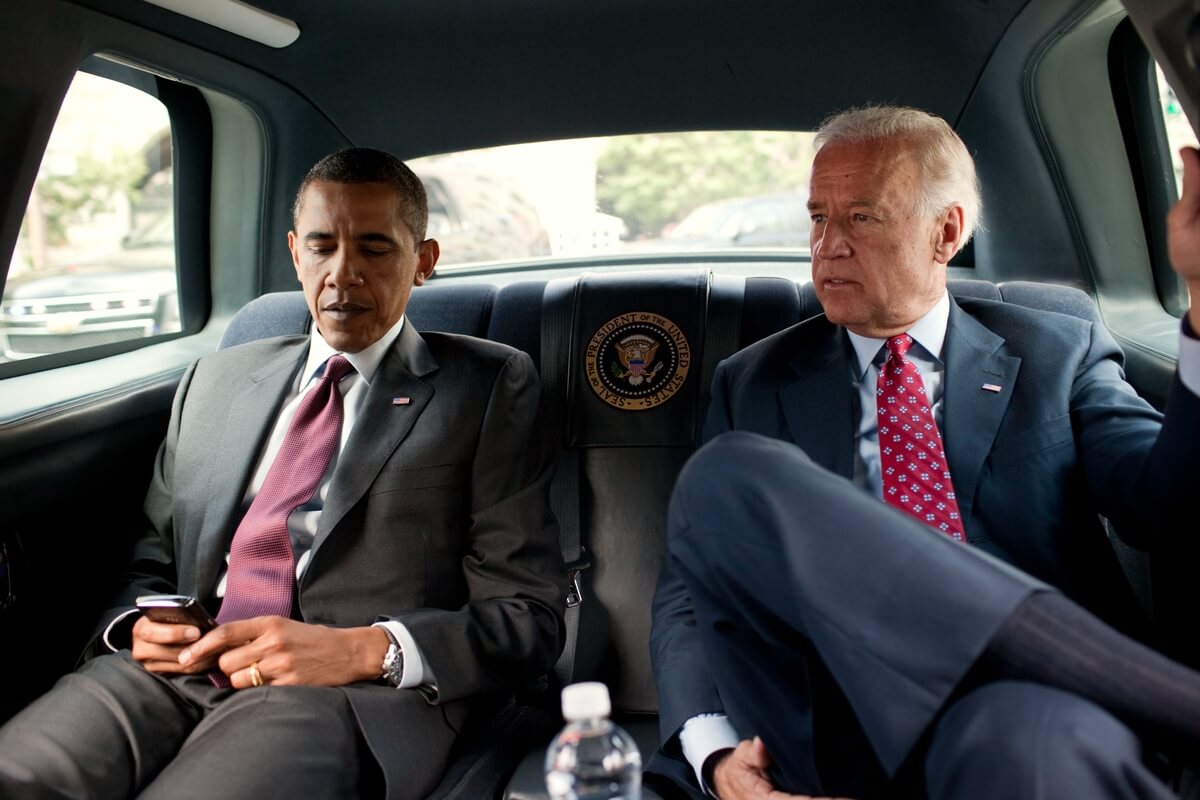
When Barack Obama entered the White House in 2009, he refused to give up his BlackBerry phone. It was protocol for the president-elect to surrender his personal communication device to avoid hacking risks. But even one of the most protected people in the United States did not want to give up the device that kept him connected.
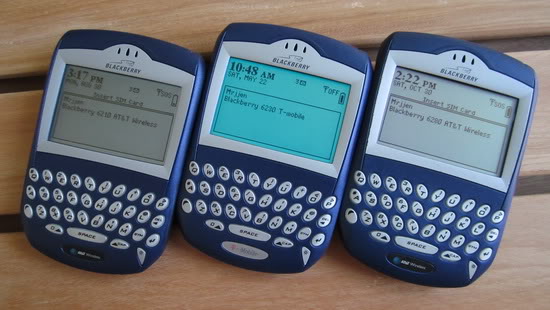
The rectangular handset with its distinctive berry-shaped keypads was a symbol of status in the early 2000s. If you were a banker, lawyer, businessperson or a celebrity, you had a BlackBerry.
BlackBerry, along with pioneering ‘always-on’ mobile email, also pioneered the compulsion to constantly be on the phone. The familiar posture of a professional standing on a sidewalk, head bowed deeply over a glowing screen, became known as the “BlackBerry prayer”. The device was so addictive it was nicknamed “CrackBerry” – a word that later made its way into Webster as word of the year. People who typed too much on the phone started suffering from what the doctors called the “BlackBerry thumb”.
Behind this mania was a Canadian company called Research in Motion (or RIM).
In those days, if you wanted to check your email, you had to manually dial into the internet, download your email every time to check if you got a new one. The BlackBerry simply buzzed when an email was ready to read. At the time, this was like magic.
This was before 3G, when wireless networks could carry very small amounts of data. RIM had figured out a way to compress and encrypt emails and deliver them to the receiver’s phone, and alert them automatically, without the receiver having to refresh their inbox.
RIM rose from being a niche maker of pagers in the late 1990s to the centre of the smartphone market in the 2000s. In the spring of 2008, it commanded 40% of the US smartphone market and was selling 60,000 BlackBerrys a single day. At its height, RIM was one of the world’s leading smartphone sellers making almost $20B in revenue.
That was, until Steve Jobs walked onto the stage.
On January 9, 2007, at Apple’s iconic MacWorld keynote in San Francisco, Jobs displayed the Motorola Q, Palm Treo, Nokia E62 and BlackBerry on a giant screen, calling them the “usual suspects” of the smartphone world. He pointed to the physical keyboards occupying the lower half of each device. “The problem with them is really sort of in the bottom 40 [percent] there,” Jobs told the giggling audience. “They all have these keyboards that are there whether you need them or not.”
Apple’s alternative was a smooth sheet of glass completely devoid of keys, except for a single home button.
BlackBerry had put email in people’s pockets, but now Apple was putting the entire internet, music, photographs, and video in there too. Its playful touchscreen made people want to explore it and show it off. Even before the first iPhone had gone on sale, it accumulated 11,000 print articles and 69 million searches on Google. Gizmodo editor Brian Lam dubbed it the ‘Jesus Phone’. Five months later, when it finally went on sale, people bought a million iPhones in 74 days.
Publicly, RIM’s co-CEOs, Mike Lazaridis and Jim Balsillie played down the threat. They were convinced that serious professionals will continue to prefer the BlackBerry and dismissed the iPhone as a competitor.
Inside RIM however, the two CEOs were alarmed at Apple’s engineering feat. Mike Lazaridis told his team that if the device caught on, BlackBerry would not be competing with just another phone manufacturer, but against a full Mac computer shrunk down to fit in a pocket.
So how did Apple, a company with no experience making phones, upend the pioneers in wireless communication?
RIM’s Early Years
Research In Motion’s story began in 1984 with childhood friends Mike Lazaridis and Douglas Fregin. Lazaridis was studying engineering at the University of Waterloo while Fregin studied at the University of Windsor; during Fregin’s visits to Waterloo, they developed Budgie, a device that could display information “cards” on a television screen.
With a government loan of $15,000, they pursued Budgie as an advertisement system for businesses to display promotions or prices without having to replace physical signs.
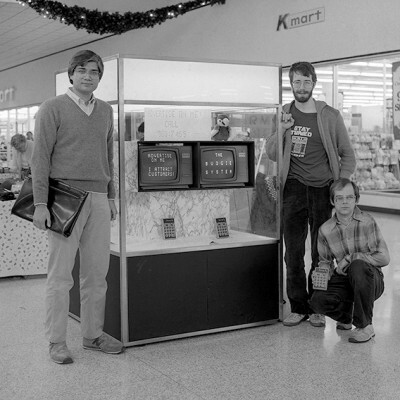
Budgie ended up becoming a commercial failure. But it attracted the attention of General Motors, who signed the young duo to manufacture LED notification systems for their assembly lines. They secured many other engineering contracts along the way, such as designing circuit boards for factory equipment and barcode readers for film-editing machines. However, these contracts were scarce and the company struggled to stay afloat because many of its biggest customers lagged in their payments.
One such customer was Sutherland-Schultz, where a young executive called Jim Balsillie had risen quickly through the ranks.
When Sutherland-Schultz was sold in 1991, Balsillie looked for a small company to invest in and considered acquiring RIM.
Through the negotiations, Lazaridis realized that Balsillie possessed qualities he lacked but the company desperately needed: a natural ability to sell. The connection was immediate, and Lazaridis was convinced that he wanted Balsillie to work with him.
Instead of acquiring RIM, Balsillie joined as a partner in 1992.
Thus began a two-decade-long, unusual relationship where Lazaridis and Balsillie both occupied the position of CEO of RIM. For the most part, this relationship worked beautifully. Mike Lazaridis, the brilliant engineering visionary, oversaw product development, manufacturing, and technical infrastructure. Jim Balsillie, the aggressive, smooth-talking Harvard MBA, managed finance, corporate sales, marketing, and legal strategy.
Over the next few years, it became increasingly clear that supplying technology to larger companies just left them dependent on them, who would delay payments or cancel contracts. The co-CEOs concluded that they had to build and sell their own device.
Building on its experience developing portable radio modems, RIM began exploring a wireless device that could be used to send and receive emails while professionals were away from their desks.
Because the wireless networks were so narrow, an email needed to be broken down into small packets, sent separately and assembled at their destination. RIM designed their entire delivery chain around this constraint.
RIM’s Inter@ctive Pager 950 was released in 1998, followed closely by Blackberry 850 in 1999, both targeting corporate employees. These were both pagers, but with an added email functionality.
Motorola, RIM’s biggest competitor, was the undisputed king of pagers at the time. But even Motorola’s pagers could not send messages over 500 characters, which paled in comparison to Blackberry, whose technical breakthrough resulted in an astonishing 16,000 character limit.
Another differentiator was BlackBerry’s “push” email. On other devices, users had to log in and request new messages. RIM instead routed work email automatically from the desktop through its network to the handheld, which buzzed once the message was processed and ready to read.
This was an incredible technical achievement — albeit one that required considerable technical investment in addition to usage of relatively new mobile data networks. In effect, BlackBerry had to run a large network of relay servers, routing notifications and emails through its own infrastructure. This adaptation to the technological limitations of its day had its benefits — but also drawbacks, as we shall soon see.
RIM designed the device around battery and bandwidth efficiency. The Inter@ctive 950 could run for nearly a month on a single AA battery. Its compact QWERTY keyboard was shaped specifically for two-thumb typing, making email much faster to compose on the move.
The early pagers also established RIM’s proprietary security architecture. Since messages were passed through RIM’s servers, RIM designed its pagers so that they compressed and encrypted the messages as it travelled through RIM’s relay system. The same relay and encryption model was then carried into BlackBerry mobile phones.
For enterprise users, emails were encrypted all the way from the company’s server to the employee’s BlackBerry, making them a preferred corporate communication device. Quite quickly, BlackBerry began to overtake established handheld manufactures.
RIM then expanded from pagers to its first true phone with c ...
The rest of this article is for members only.