Case
No Room for Error: Four Seasons and the George V
Listen to this case (Business Expansion)
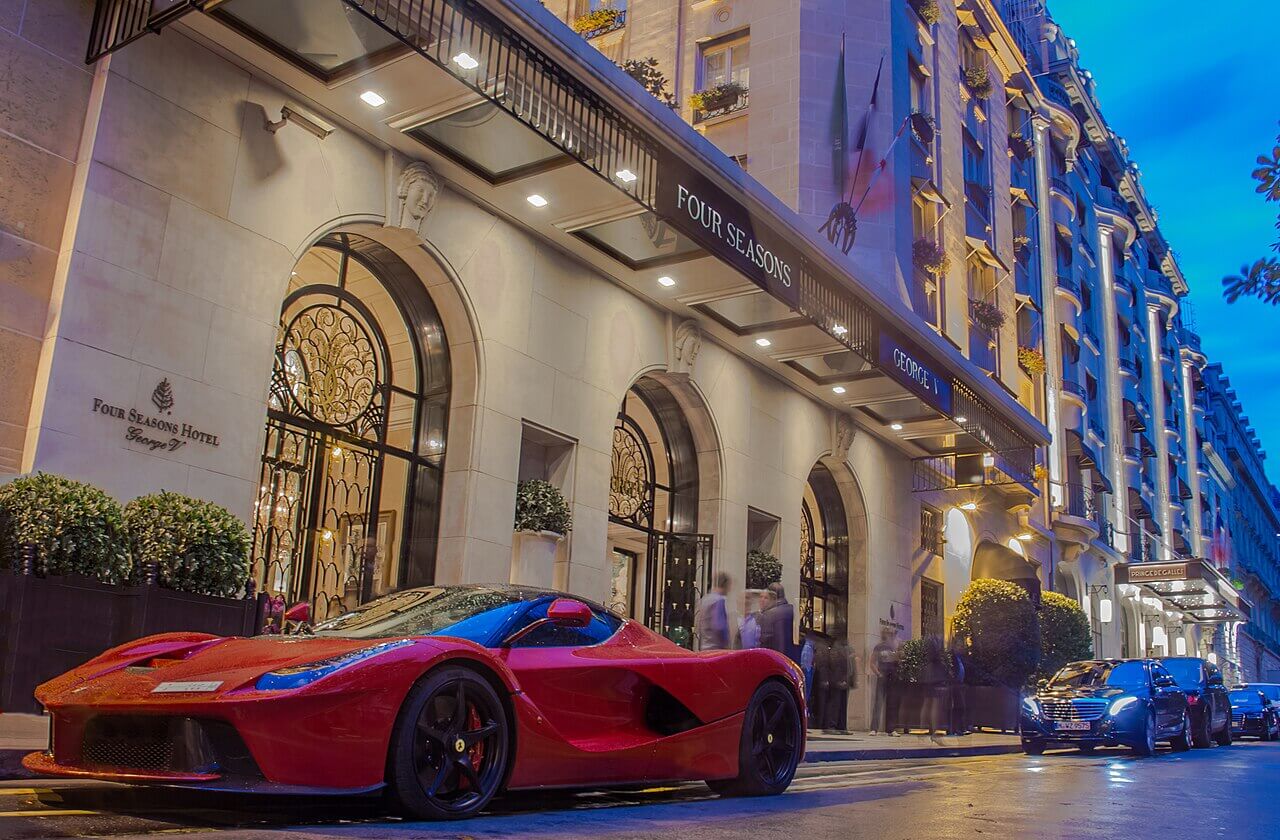

Isadore Sharp’s ambition was to ‘build the best hotel chain in the world’. At the start of the decade of the 1990s, Four Seasons had a network of 23 hotels in North America, Hawaii, the Caribbean, and London. But the portfolio was concentrated in just a few countries, with no European flagship beyond London.
So why couldn’t Four Seasons replicate its North American playbook in Europe?
The truth is that Four Seasons had been struggling to acquire hotels in Europe for more than 20 years. Finding a suitable empty parcel of land for a hotel was harder in European cities than in North America. Four Seasons could find just one site — in Rome in early 1972 — after combing through all the major cities.
The Four Seasons had always wanted Paris. Now it needed Paris to complete its transformation from a respected North American luxury operator into a credible global luxury brand. But Paris presented an additional challenge.
At the time, it was very hard to obtain planning permission for a new building in Paris. During the mid-eighties, Four Seasons partnered with a large construction firm to build a hotel on a parcel of land the latter owned. The property was on the Bois de Boulogne and near a school that didn’t want a hotel to come up in its vicinity. The bureaucratic gridlock dragged on for several years before the deal eventually fell through.
Paris remained elusive until an opportunity came from outside.
H.R.H. Prince Al Waleed Bin Talal Bin Abdulaziz al Saud purchased the historic George V in Paris in December 1996 for US$170M. As chairman of the Kingdom Holding Company (KHC), he was also a shareholder in Four Seasons — Sharp had let the prince buy shares in 1994. In his memoirs, Sharp recounts his conversation about the George V:
He asked Sharp, “If I bought the George V, could you make it the best hotel in the world?”
“If you followed through in doing everything required,” Sharp replied, “We could. And it would give us a major strategic position in Europe.”
In November 1997, Four Seasons signed a long-term agreement to manage the hotel.
The George V became one of the most complex and challenging international openings for Four Seasons.
Why?
“Europe is different from North America, and Paris is very different. I did not say difficult. I said different”, said a Four Seasons manager in a 2002 case, titled Four Seasons Goes to Paris, published in the journal Academy of Management Executive.
The George V was and still is classified as a ‘palace hotel’. It was one of only six such hotels in Paris in 1999.
At the time, a palace hotel was a special group among 5-star hotels in France, which were hotels that provided ‘very high-end’ accommodation. The French government introduced a distinct palace rating in 2010, a notch above the 5-star category, to recognise hotels ‘offering an extraordinary hospitality experience, embodying excellence in service and French art de vivre in all its forms’.
So the George V was not just any hotel. It was a cultural institution, and Four Seasons would be judged by French standards of luxury as well as its own, all the while competing for the same clients with the five other palace hotels.
There was another distinctly French challenge. The French style of hospitality didn’t really fit Four Seasons’ culture of service. The French aren’t exactly known for their hospitality. And to make things worse, the French people were sceptical of Four Seasons’ warm, smile-at-the-guest standards and dismissed the Golden Rule — Four Seasons’ credo — as being ‘way too American’. Their reaction made sense: in 1992, the Euro Disney opening was widely considered to be a monumental cultural blunder (a French theatre director famously called it a ‘cultural Chernobyl’; Disney initially banned alcohol in the park).
Finally, in Paris, Four Seasons would be operating in a unionised, legally protective labour environment. It had to employ the existing George V workers. It wasn't allowed to fire staff. Even worse, during the renovation, the hotel’s best people quit, leaving Four Seasons with a less-than-ideal group of employees.
So, the coveted Paris address came with high stakes. Four Seasons had to rebuild a palace hotel and change an existing staff culture, within the span of a year or two, all at the same time, whilst the hotel was closed and the brand’s reputation in a new continent was on the line.
This case explains how Four Seasons did it.
Renovating a palace hotel
The George V was closed for renovations, which the owner wanted to be completed within 12 months.
Four Seasons’ central challenge was to preserve the soul of the legendary, almost mythical, hotel while modernising it. The nine-story George V, built in the 1920s, was an Art Deco landmark in the Golden Triangle, just off the historic Champs-Élysées. Its exterior, therefore, had to be retained. Skilled artisans refurbished the Art Deco windows and balconies, the first-floor wood panelling, historic artworks, and the 17th-century Flemish tapestries.
Internally, the hotel was almost gutted.
Four Seasons reconfigured the hotel’s 300 rooms and suites into 245 larger accommodations, including 61 suites. The bathrooms became bigger, infrastructure was updated, and double-glazed windows were installed.
The property was also redeveloped keeping in mind Paris’ significance as a business destination. Meeting spaces were meticulously designed and included wood panelling, hardwood floors, antique fireplaces, and book-lined walls.
Ramsey Mankarious, Executive Vice President of Development for KHC, told Hotels magazine, “The George V renovation became one of the biggest construction projects in France at the time… You could see workers in every window.”
Four Seasons was rebuilding the hotel to American life-safety standards. However, it had to comply with French rules governing hygiene and workplace conditions, a requirement that added to the scope and complexities of the renovation project.
French law, for instance, stipulated that food ...
The rest of this article is for members only.